


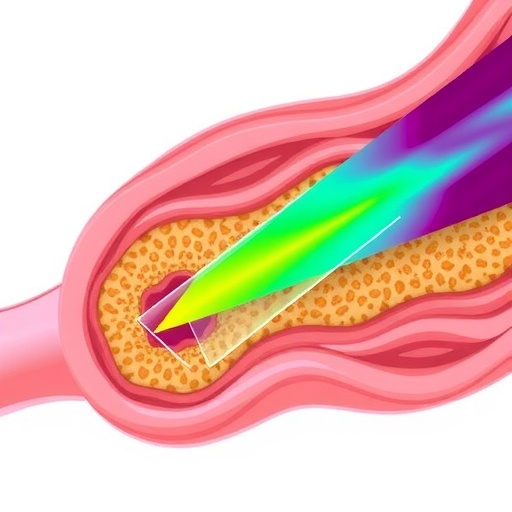
In a groundbreaking study poised to reshape our understanding of vascular diseases, researchers have unveiled the pivotal role of ferroptosis—a specialized form of programmed cell death—in the fate of smooth muscle cells within the cardiovascular system. This revelation opens new frontiers for therapeutic interventions aimed at addressing a wide spectrum of vascular pathologies, from atherosclerosis to aneurysms, by targeting molecular mechanisms that govern cell death and survival in vascular smooth muscle cells (VSMCs).
Ferroptosis distinguishes itself from other forms of cell death by its reliance on iron-dependent lipid peroxidation, leading to catastrophic membrane damage and cell demise. Unlike apoptosis or necrosis, ferroptosis involves a unique metabolic pathway that hinges on the accumulation of reactive oxygen species (ROS) and dysregulation of iron homeostasis, marking it as a critical mediator in the cellular response to oxidative stress. The implications of such a process in vascular smooth muscle cells have been largely underappreciated until now.
Yang, Nawabi, Yao, and colleagues have comprehensively mapped out the biochemical landscape of ferroptosis within VSMCs, demonstrating that excessive ferroptotic activity contributes to the deterioration of vascular integrity and progression of disease. Through a series of sophisticated molecular assays and in vivo modeling, the team delineated how ferroptotic triggers incite oxidative damage selectively in smooth muscle cells, amplifying vascular inflammation and promoting plaque instability in arterial walls.
At the core of this phenomenon is the interplay between iron metabolism and lipid peroxidation pathways in smooth muscle cells. The study highlights the role of enzymatic antioxidants such as glutathione peroxidase 4 (GPX4), which normally counterbalances oxidative insults. Loss or inhibition of GPX4 function precipitates unchecked lipid peroxidation, precipitating ferroptotic death. This mechanistic insight provides an elegant molecular target for potential drug development focused on preserving VSMC viability.
In vascular diseases, the death of VSMCs through ferroptosis appears intricately linked to pathological remodeling processes. As these cells perish, the vessel wall loses critical structural components, leading to weakened arterial segments vulnerable to rupture or maladaptive proliferation. This knowledge sheds light on mechanisms previously ascribed solely to inflammatory cytokines or mechanical stress, adding a novel layer of complexity to vascular pathophysiology.
One of the study’s particularly innovative aspects lies in its translational prospects. The researchers explored pharmacological agents capable of modulating ferroptosis, including iron chelators and lipid peroxidation inhibitors. These interventions demonstrated significant efficacy in experimental models, rescuing smooth muscle cells from ferroptotic demise and attenuating vascular damage, underscoring a promising therapeutic avenue.
Moreover, the investigation into ferroptosis dovetails with emerging data on iron’s dual role as a vital nutrient and a catalyst for oxidative damage in vascular tissues. By unraveling how iron overload or dysregulation fosters ferroptotic cascades, this work redefines iron’s contribution from a mere bystander to a central protagonist in vascular disease development.
The study also addresses the intricate cross-talk between smooth muscle cells and other vascular components during ferroptosis. Immune cells, endothelial cells, and extracellular matrix components interact dynamically within the ferroptotic microenvironment, influencing disease outcomes. Such insights urge a holistic approach to vascular treatment strategies that consider the entire cellular ecosystem.
From a clinical translation perspective, these findings could revolutionize diagnostic and prognostic methodologies. Biomarkers specific to ferroptotic activity in vascular tissues may emerge as sensitive indicators of disease progression or therapeutic response, facilitating personalized medicine approaches in cardiovascular care.
The implications of ferroptosis extend beyond the vascular domain as well, potentially connecting to metabolic disorders, neurodegeneration, and cancer, where cell death pathways have critical intersections. However, the vascular focus of this study concentrates on identifying precise molecular interventions that harness ferroptosis modulation for maximal clinical benefit.
Importantly, the authors underscore that while targeting ferroptosis holds promise, a delicate balance must be maintained. Complete inhibition of ferroptosis could impede normal physiological functions, including immune defense and tissue remodeling, necessitating finely tuned therapeutic designs to avoid adverse consequences.
This study’s integration of basic biochemical research with clinical perspectives exemplifies the power of interdisciplinary collaboration. It sets a new benchmark for investigating cellular death mechanisms not merely as end-stage phenomena but as active players in disease initiation and progression, thereby shifting paradigms in vascular biology.
Future research directions include exploring gene therapy vectors to restore antioxidant defenses in VSMCs or developing nanoparticles capable of targeted delivery of ferroptosis inhibitors to diseased vascular sites. Such innovative approaches hold the potential to overcome current limitations in systemic pharmacotherapy, maximizing efficacy while minimizing off-target effects.
In conclusion, by elucidating the central role of ferroptosis in smooth muscle cell pathology within vascular diseases, Yang and colleagues have opened a transformative chapter in cardiovascular research. Their work beckons a new era where manipulating cell death pathways becomes a cornerstone of combating vascular morbidity and mortality worldwide. As the scientific community rallies to translate these insights into tangible treatments, the promise of ferroptosis-targeted therapies shines brighter than ever.
Cite Scienmag News
Ophelia Keating. (March 10, 2026). Ferroptosis in Vascular Smooth Muscle: From Basics to Clinic. Scienmag. https://scienmag.com/ferroptosis-in-vascular-smooth-muscle-from-basics-to-clinic/
Ophelia Keating. "Ferroptosis in Vascular Smooth Muscle: From Basics to Clinic." Scienmag, 10 March 2026, https://scienmag.com/ferroptosis-in-vascular-smooth-muscle-from-basics-to-clinic/. Accessed 3 September 2026.
Ophelia Keating. "Ferroptosis in Vascular Smooth Muscle: From Basics to Clinic." Scienmag. March 10, 2026. https://scienmag.com/ferroptosis-in-vascular-smooth-muscle-from-basics-to-clinic/


