


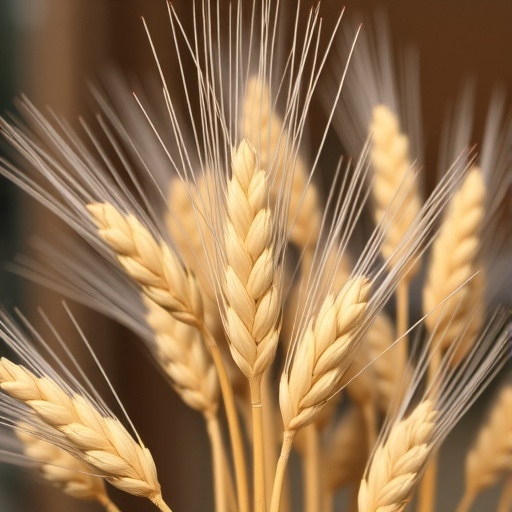
In the ongoing global quest to combat malnutrition and micronutrient deficiencies, recent research highlights a significant challenge embedded within one of humanity’s most fundamental staples: wheat. A groundbreaking study published in Nature Food reveals that contemporary wheat cultivars, despite advances in agricultural technology and breeding programs, are falling short of the zinc, iron, and protein targets critical for human health. This revelation not only calls attention to the nutritional quality of wheat but also raises pressing questions about food security, diet-related diseases, and strategies to enhance the nutritional value of cereal grains worldwide.
Wheat is a primary source of calories and nutrients for a large portion of the global population, underpinning diets in many developing and developed nations. Historically, breeding efforts have prioritized yield, pest resistance, and environmental adaptability. However, nutrient densities—particularly of essential micronutrients like zinc and iron—have often been overlooked. The new study by Devkota et al. systematically evaluates the grain composition of contemporary wheat varieties, revealing a worrying decline in zinc, iron, and protein concentrations compared to the established nutritional targets aimed at mitigating global malnutrition burdens.
The researchers embarked on an extensive analysis involving diverse wheat cultivars released over recent decades across various agro-climatic regions. Their methodology combined state-of-the-art grain quality assays with robust genetic and phenotypic analyses, allowing them to assess micronutrient and protein levels with unprecedented precision. Importantly, this approach permitted a comparison against biofortification benchmarks set by global health and agricultural agencies focusing on human nutrient requirements.
Results unambiguously demonstrated that while wheat yields have certainly increased, the concentration of key nutrients within the grains has not kept pace. In many cases, levels of zinc and iron—a duo critical for immune function, cognitive development, and prevention of anemia—are substantially below the biofortification targets. Protein content, essential for muscle development and overall health, also exhibited consistent shortfalls, suggesting that modern breeding programs have inadvertently compromised the nutritional profile of wheat grains.
These findings carry profound implications for public health. Zinc deficiency alone affects an estimated two billion people worldwide and is linked with increased susceptibility to infections and impaired growth in children. Similarly, iron deficiency anemia remains one of the world’s most prevalent clinical disorders, exacerbating mortality and morbidity, especially among women and young children. The reduced protein content observed compounds these challenges by diminishing dietary quality and nutritional adequacy.
The study further discusses how the genetic bottlenecks inherent in modern wheat breeding have contributed to a reduction in grain nutrient density. Selective breeding for yield and disease resistance has often favored high carbohydrate production at the expense of micronutrient allocation. The intricate physiological and molecular trade-offs in nutrient partitioning within the grain underscore the complexity of breeding for improved nutritional traits.
Moreover, environmental factors such as soil depletion, fertilizer use, and climate change add another layer of complexity to nutrient availability. The researchers emphasize that addressing the micronutrient gaps in wheat will require a multifaceted strategy encompassing improved breeding techniques, agronomic interventions, and biofortification efforts designed to enrich grains with essential minerals and proteins.
One promising avenue highlighted involves leveraging genomic selection and gene editing technologies to identify and incorporate alleles responsible for higher micronutrient uptake and retention in wheat kernels. Advances in understanding the molecular pathways regulating nutrient transport and storage in plants could accelerate the development of nutrient-dense cultivars without sacrificing yield.
In addition to breeding strategies, optimized fertilization practices and soil management have the potential to boost the micronutrient content of wheat grains. Agronomists are exploring how bioavailable forms of zinc and iron fertilizers, when judiciously applied, can enhance grain nutrient content while maintaining soil health and sustainability.
The research underscores an urgent need to integrate nutrition goals explicitly into cereal crop improvement programs. Historically, agricultural policies have concentrated on increasing staple crop production to meet caloric demands. However, focusing solely on yield is insufficient if the resulting food fails to deliver critical micronutrients essential for health.
The findings by Devkota and colleagues serve as a clarion call for stakeholders—from plant breeders and agronomists to nutritionists and policymakers—to adopt holistic approaches that prioritize both quantity and quality of food. This means reimagining wheat breeding objectives to incorporate biofortification targets aligned with human nutritional needs.
Collaboration across disciplines will be key to reversing the nutrient decline trends in wheat and other staple crops. Integrating plant genomics, soil science, agronomy, and public health can unlock synergistic solutions that enhance nutrient profiles while ensuring environmental sustainability and economic viability for farmers.
The study also raises awareness about regional disparities in wheat nutrient content, suggesting that local agro-ecological conditions and cultivar choices influence micronutrient concentrations. Tailoring biofortification initiatives and agronomic practices to specific regions could maximize the impact on public health, especially in areas heavily reliant on wheat as a primary food source.
Importantly, this research invites consumers and food systems planners to rethink the role of dietary diversification and fortification as complementary strategies in combating micronutrient deficiencies. Enhancing the nutrient density of staple crops like wheat represents one pillar of a multi-pronged approach to improving global nutrition.
In conclusion, while the green revolution and modern agriculture have transformed food availability, the nutritional quality of staple grains like wheat now emerges as a critical frontier. Addressing the deficiencies in zinc, iron, and protein content in wheat cultivars is essential not only for advancing agriculture but for achieving global health objectives. The compelling evidence presented by Devkota et al. sets the stage for renewed efforts to cultivate crops that nourish populations sustainably and effectively.
As global populations continue to grow and climate change poses additional stresses on agricultural systems, the imperative to produce nutrient-rich staple foods grows ever more urgent. The future of food security hinges not only on producing enough calories but on ensuring that those calories contribute meaningfully to human health. Resolving the micronutrient challenges in wheat offers a pathway toward building more resilient, equitable, and health-promoting food systems worldwide.
Cite Scienmag News
Daisy Hatcher. (March 9, 2026). Modern Wheat Lacks Essential Zinc, Iron, Protein. Scienmag. https://scienmag.com/modern-wheat-lacks-essential-zinc-iron-protein/
Daisy Hatcher. "Modern Wheat Lacks Essential Zinc, Iron, Protein." Scienmag, 9 March 2026, https://scienmag.com/modern-wheat-lacks-essential-zinc-iron-protein/. Accessed 6 September 2026.
Daisy Hatcher. "Modern Wheat Lacks Essential Zinc, Iron, Protein." Scienmag. March 9, 2026. https://scienmag.com/modern-wheat-lacks-essential-zinc-iron-protein/


