


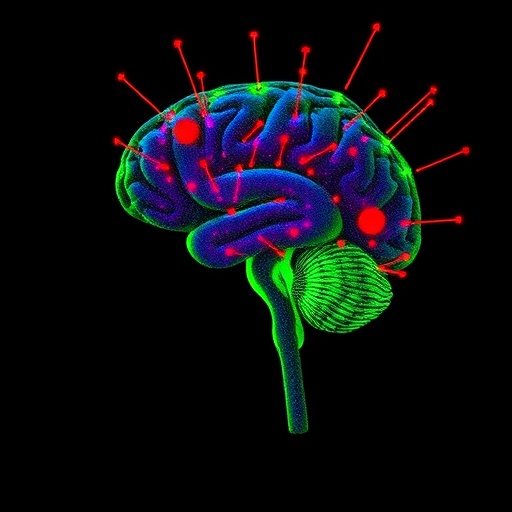
A groundbreaking study emerging from the forefront of neuroscience challenges the traditional neuron-centric paradigm by illuminating the pivotal role of astrocytes—star-shaped glial cells—as dynamic regulators of motor coordination during brain development. Conducted under the visionary leadership of Director C. Justin LEE and Senior Research Fellow HONG Sungho at the Institute for Basic Science’s Center for Memory and Glioscience, in collaboration with computational neuroscientist Professor Erik DE SCHUTTER from Japan’s Okinawa Institute of Science and Technology, this research uncovers how astrocyte-mediated modulation of inhibitory signaling in cerebellar circuitry refines motor precision across adolescence and into maturity.
Motor coordination epitomizes the brain’s extraordinary capability to integrate and fine-tune movements of various body parts, enabling flexible adaptive behavior in navigating complex and unpredictable environments. Although the cerebellum—critical for sensorimotor integration—is developmentally considered structurally mature relatively early, behavioral capabilities in coordination continue to enhance beyond this timeline, presenting a conundrum in understanding the cellular and molecular mechanisms driving this late-stage refinement. This research addresses the enigma by focusing on tonic inhibition within cerebellar granule cells, the most populous neurons in the brain, known for their critical role in information processing.
Tonic inhibition, distinguished from phasic synaptic inhibition, operates as a persistent ‘background’ inhibitory current mediated primarily by the neurotransmitter gamma-aminobutyric acid (GABA). This form of inhibition is vital for maintaining neuronal excitability homeostasis and ensuring stability in neural network function. Employing sophisticated electrophysiological techniques, the team meticulously quantified tonic inhibitory currents in granule cells derived from juvenile mice (3–4 weeks old) and adults (8–12 weeks old). Despite overall stability in the magnitude of tonic inhibition from adolescence to adulthood, the underlying sources and dynamics of this inhibition underwent a profound transition.
In younger animals, tonic inhibition predominantly arises from ‘spillover’ GABA released by Golgi cells—local inhibitory interneurons whose neurotransmitter diffuses beyond synaptic clefts into the extracellular milieu. However, as the brain matures, a compelling shift occurs: the primary origin of tonic GABA transitions to astrocytes. Remarkably, astrocytes release GABA through the Bestrophin-1 (Best1) anion channels, providing a steady and controlled source of inhibition that is uncoupled from traditional synaptic activity. This discovery highlights astrocytes as key players in modulating inhibitory tone and neuronal excitability in mature cerebellar circuits.
Concomitant with this switch in GABA source, the study revealed enhanced activity of GABA transporters (GATs) in adult mice, which efficiently clear extracellular GABA derived from neuronal spillover. Heightened transporter activity diminishes the impact of neuron-derived tonic inhibition, effectively tipping the balance toward astrocyte-mediated GABA release. This dynamic modulation ensures precise regulation of inhibitory signaling, promoting a refined excitatory-inhibitory equilibrium suited for advanced motor function.
To unravel the functional consequences of this astrocyte-neuron interplay at the network level, the researchers developed a comprehensive computational model simulating approximately one million cerebellar granule neurons, incorporating empirical electrophysiological parameters. The simulations revealed that increasing astrocyte-driven tonic inhibition reduces crosstalk between granule cell populations responding to distinct sensorimotor inputs. This segregation enhances signal independence across neuronal groups, facilitating more nuanced and flexible motor control strategies.
Senior Research Fellow HONG Sungho elucidates that this separation diminishes interference between neural representations of different limbs or movement components, thereby enabling the brain to fluidly transition among varied locomotor patterns such as walking, hopping, or turning. This neural mechanism underpins the observed behavioral flexibility that emerges during late development and adulthood, illustrating a novel role for non-neuronal cells in behaviorally relevant neural circuit remodeling.
To empirically validate their computational predictions, the team employed an advanced deep learning-based behavioral analysis system capable of 3D reconstruction of mouse posture during spontaneous movements. The analysis demonstrated that adult mice exhibited a wider repertoire of limb coordination patterns compared to younger cohorts, correlating with enhanced motor flexibility. Strikingly, adult mice deficient in the Best1 gene, and consequently impaired in astrocyte-mediated tonic inhibition, failed to manifest this increased diversity in movement. Their limb movements remained more tightly coupled, mirroring the patterns typical of younger animals.
These findings conclusively confirm that astrocyte-derived tonic inhibition is indispensable for the maturation of flexible motor coordination. Moreover, the study fundamentally shifts our understanding of brain development by positioning neuron-astrocyte interactions as central to neural circuit refinement and behavioral sophistication, extending beyond canonical neuron-centric views.
Director C. Justin LEE highlights the broader implications, emphasizing that insights into astrocyte functionality have the potential to transform approaches to developmental and degenerative motor disorders. Furthermore, the principles derived from this neuron-glia interplay could inform the design of bioinspired movement control algorithms for robotics and artificial intelligence systems, paving the way for next-generation devices that emulate biological adaptability and precision.
Published on February 18, 2026, in the journal Experimental & Molecular Medicine, this study establishes a new frontier in neuroscience, illustrating how the hidden contributions of astrocytes orchestrate the final phases of brain maturation, ensuring that our motor abilities evolve from rudimentary to exquisitely adaptable.
News Publication Date: 18-Feb-2026
Web References: http://dx.doi.org/10.1038/s12276-026-01657-8
Cite Scienmag News
Cassandra Pierce. (March 9, 2026). Astrocytes Influence the Development of Motor Coordination During Late Adolescence. Scienmag. https://scienmag.com/astrocytes-influence-the-development-of-motor-coordination-during-late-adolescence/
Cassandra Pierce. "Astrocytes Influence the Development of Motor Coordination During Late Adolescence." Scienmag, 9 March 2026, https://scienmag.com/astrocytes-influence-the-development-of-motor-coordination-during-late-adolescence/. Accessed 4 September 2026.
Cassandra Pierce. "Astrocytes Influence the Development of Motor Coordination During Late Adolescence." Scienmag. March 9, 2026. https://scienmag.com/astrocytes-influence-the-development-of-motor-coordination-during-late-adolescence/


