


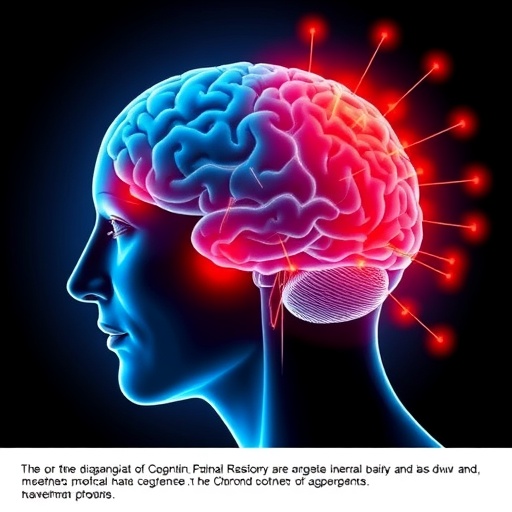
In an era where both chronic pain and cognitive decline present significant challenges to global health, a groundbreaking meta-analysis published in Translational Psychiatry in 2026 delves deep into the intricate correlation between these two pervasive conditions. Spearheaded by Qiu, D., Zhou, ZB., Li, XY., and colleagues, this exhaustive study illuminates the heightened risk of cognitive impairment among individuals suffering from chronic pain, a revelation that carries profound implications for medical science and patient care alike.
Chronic pain, defined as persistent pain lasting beyond normal tissue healing time, affects hundreds of millions worldwide, imposing an enormous burden not only due to its sensory dimensions but also because of its subtle, yet insidious cognitive effects. Traditionally viewed through the lens of physical discomfort and functional disability, pain has more recently been recognized as a potential driver of neurodegenerative processes. The newly conducted meta-analysis analyzed longitudinal cohort studies to elucidate this bidirectional relationship more comprehensively, employing sophisticated statistical methodologies to synthesize data from diverse populations over extended periods.
Longitudinal cohort studies provide a unique vantage point for understanding the progression of pain and cognitive function over time, allowing researchers to observe temporal patterns and potential causative links rather than mere correlations. This meta-analysis aggregated data from multiple such cohorts, encompassing thousands of participants monitored for years, thereby ensuring robustness and generalizability of findings. Beyond mere association, the analysis sought to unearth mechanistic pathways, highlighting the plausible neurobiological underpinnings connecting chronic pain to cognitive decline.
Central to the study are the neuroinflammatory processes provoked by sustained nociceptive signaling—persistent activation of pain pathways triggers a cascade of inflammatory mediators and oxidative stress within the central nervous system. This chronic inflammatory milieu not only exacerbates pain sensations but also compromises neuronal integrity, synaptic plasticity, and ultimately cognitive performance. The authors underscore the pivotal role of microglial activation, a hallmark of neuroinflammation, as a potential driver linking prolonged pain states to cognitive deterioration.
Moreover, the meta-analysis reviewed alterations in brain architecture identified via advanced neuroimaging techniques, noting reductions in gray matter volume within key regions implicated in both pain processing and cognition, such as the prefrontal cortex, hippocampus, and anterior cingulate cortex. Such morphometric changes are indicative of neurodegeneration and represent a tangible substrate for the cognitive impairments observed clinically. These findings reinforce the hypothesis that chronic pain is not merely a symptom but could constitute a precipitating factor in neurodegenerative cascades.
Importantly, the study also delineates the symptomatic profiles that accompany cognitive decline in chronic pain sufferers. Deficits in executive function, attention, and memory emerge consistently across cohorts, impairing daily functioning and quality of life. This convergence of symptoms implies that chronic pain interventions must transcend traditional analgesic strategies, integrating cognitive assessments and rehabilitative therapies to holistically address patient needs.
The intricate interplay between chronic pain and neuroplasticity mechanisms is another focal point. Pain-induced maladaptive plasticity, characterized by aberrant synaptic remodeling and neurotransmitter dysregulation, may hinder the brain’s inherent capacity to compensate for age- or disease-related cognitive challenges. From a neurochemical perspective, dysregulation of monoamine systems—including dopamine and serotonin—may exacerbate both pain perception and cognitive dysfunction, thereby compounding the clinical burden.
Beyond pathophysiological insights, the meta-analysis highlights substantial heterogeneity across study populations in terms of age, pain etiology, and comorbid conditions, advocating for personalized medicine approaches. The interaction between chronic pain and cognitive impairment is likely modulated by genetic predispositions, psychosocial factors, and lifestyle influences that remain fertile grounds for future research. Such complexities underscore the necessity of integrated multidisciplinary care models tailored to individual risk profiles.
In the realm of clinical implications, this synthesis of evidence mandates a paradigm shift in both diagnosis and treatment. Early identification of individuals with chronic pain at risk for cognitive decline becomes imperative, necessitating the implementation of screening tools sensitive to subtle cognitive changes. Furthermore, therapeutic interventions may benefit from targeting neuroinflammatory pathways and promoting neuroprotection, alongside conventional pain management protocols.
Pharmacological advancements are poised to leverage these findings, with emerging agents targeting microglial activation, neuroinflammation, and synaptic resilience currently under investigation. Meanwhile, non-pharmacological interventions—such as cognitive behavioral therapy, mindfulness, physical exercise, and neurostimulation—hold promise in mitigating both pain severity and cognitive deterioration, emphasizing the need for multimodal treatment frameworks.
The societal and economic ramifications of these intertwined disorders are profound. Chronic pain and cognitive impairment individually impose substantial healthcare costs, work absenteeism, and reduced quality of life. Their coexistence exponentially escalates these burdens, highlighting the urgency for healthcare policymakers to prioritize comprehensive strategies that encompass prevention, early detection, and holistic care.
This meta-analysis also propels research agendas by advocating longitudinal cohort studies with standardized cognitive assessments and precise pain characterization protocols. Incorporating biomarkers—genetic, proteomic, and neuroimaging—into future studies could unravel personalized risk trajectories and therapeutic responses, fostering precision medicine in this sphere.
Crucially, the findings urge a reevaluation of the long-held notion that pain is a peripheral phenomenon devoid of significant central effects. Instead, chronic pain emerges as a complex neurobiological syndrome with the potential to incite profound cognitive sequelae, challenging neuroscientists and clinicians to rethink its management in a more integrated manner.
In sum, the meta-analysis by Qiu et al. represents a seminal contribution to our understanding of the murky nexus linking chronic pain to cognitive impairment. It accentuates the urgency for interdisciplinary research and comprehensive clinical frameworks that address these conditions synergistically. As the global population ages and the prevalence of chronic conditions escalates, such insights are not only timely but critical for shaping the future trajectories of pain and dementia research.
Ongoing investigations spurred by this work aim to dissect molecular targets amenable to intervention and to validate novel screening instruments suitable for diverse clinical settings. The hope is that such efforts will culminate in tangible benefits for patients, alleviating the dual burdens of pain and cognitive decline, and thereby enhancing life quality across the lifespan.
The interconnection between chronic pain and cognitive impairment unveiled through this exhaustive meta-analytic approach shines a spotlight on a previously underappreciated dimension of chronic pain pathology. This paradigm shift beckons a transformative approach to both research and clinical care, promising to redefine outcomes for millions of individuals traversing the challenging landscapes of pain and cognitive health.
Qiu, D., Zhou, ZB., Li, XY. et al. Chronic pain and risk of cognitive impairment: a meta-analysis of longitudinal cohort studies.
Transl Psychiatry (2026). https://doi.org/10.1038/s41398-026-03924-8
Cite Scienmag News
Glenn Wilkins. (March 7, 2026). Chronic Pain Linked to Cognitive Decline: Meta-Analysis. Scienmag. https://scienmag.com/chronic-pain-linked-to-cognitive-decline-meta-analysis/
Glenn Wilkins. "Chronic Pain Linked to Cognitive Decline: Meta-Analysis." Scienmag, 7 March 2026, https://scienmag.com/chronic-pain-linked-to-cognitive-decline-meta-analysis/. Accessed 3 September 2026.
Glenn Wilkins. "Chronic Pain Linked to Cognitive Decline: Meta-Analysis." Scienmag. March 7, 2026. https://scienmag.com/chronic-pain-linked-to-cognitive-decline-meta-analysis/


