

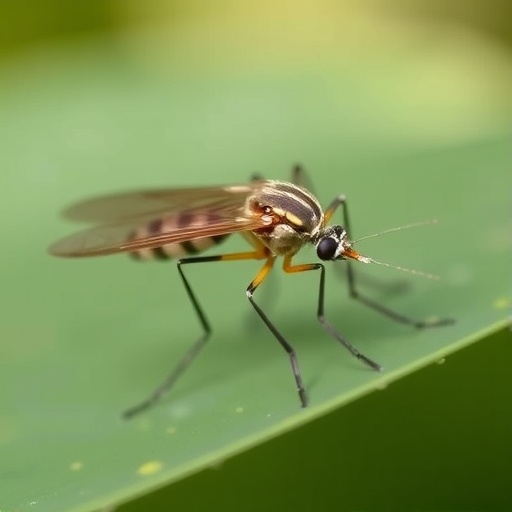
In a groundbreaking study published in npj Viruses, researchers have unveiled the competence of North American Culex pipiens mosquitoes in transmitting the Usutu virus (USUV), a mosquito-borne flavivirus that has recently emerged as a significant pathogen in both avian and mammalian hosts. This discovery heightens the urgency of monitoring and mitigating arboviral threats in North America and advances our understanding of vector competence in the context of emerging viral diseases.
Usutu virus, part of the Flaviviridae family, was first identified in Africa but has since spread throughout Europe and parts of Asia, causing sporadic outbreaks characterized primarily by neurological complications in birds and rare but severe cases in humans. The virus is primarily maintained in an enzootic cycle involving birds and mosquitoes, with Culex species serving as the primary vectors. Until now, the role of North American Culex pipiens, a widespread and ecologically important mosquito species, in USUV transmission was poorly understood.
The team, led by Persinger et al., employed a combination of virological assays, vector competence experiments, and ecological modeling to elucidate the capacity of North American Culex pipiens mosquitoes to support USUV infection, replication, and subsequent transmission. These experiments included oral feeding assays with viremic blood meals, quantitative polymerase chain reaction (qPCR) analyses of mosquito tissues, and subsequent transmission potential evaluation using sentinel avian hosts.
Key findings revealed that Culex pipiens from multiple North American populations were indeed susceptible to USUV infection, demonstrating viral dissemination from the midgut to the salivary glands, a critical factor for vector competence. The infection rates, while variable across geographic strains, were sufficient to sustain virus amplification under simulated environmental conditions. Importantly, infected mosquitoes were able to transmit the virus effectively to naive avian hosts, confirming their role as competent vectors.
The study meticulously dissected the viral dynamics within mosquitoes, highlighting the extrinsic incubation period (EIP) — the time between viral ingestion and the ability to transmit — which was found to be consistent with other flaviviruses like West Nile virus (WNV). Given that Culex pipiens is already a noted vector for WNV, this finding suggests overlapping ecological niches and transmission cycles that may complicate vector control efforts and viral surveillance.
Consequently, the public health implications of this research are profound. USUV could establish endemic transmission cycles in North America, with the potential for human spillover. While human cases remain sporadic and typically asymptomatic or mild, neuroinvasive infections akin to those caused by WNV cannot be ruled out. The recognition that a native mosquito species can act as an efficient vector urges enhanced surveillance integrating USUV screening protocols into existing arbovirus monitoring frameworks.
The researchers also called attention to ecological and climatic factors influencing vector competence, including temperature, humidity, and urbanization gradients. Laboratory conditions simulated variations in these environmental parameters, revealing that warmer temperatures, consistent with projected climate change scenarios, may shorten the EIP of USUV in Culex pipiens, thereby increasing transmission efficiency and outbreak potential.
This study also delved into the genetics of both the vector and the virus, spotlighting the molecular interactions that facilitate viral replication within the mosquito’s salivary glands. The researchers employed deep-sequencing techniques to identify mutations in viral envelope proteins that might enhance binding to mosquito receptors, as well as variations in mosquito innate immune gene expression influencing susceptibility.
Additionally, comparisons with European Culex pipiens populations exposed evolutionary and ecological divergences that may impact USUV transmission dynamics. Such comparative analyses underscore the need for region-specific vector control strategies and entomological risk assessment models that account for local mosquito population genetics and behaviors.
The investigation further emphasized the need for comprehensive One Health approaches, recognizing the interconnectedness of human, animal, and environmental health. Monitoring bird populations for USUV infections can offer early warning signals for vector-borne disease emergence, and wildlife health programs should integrate virological screening for flaviviruses.
In summary, Persinger and colleagues’ findings significantly advance the scientific community’s knowledge of Usutu virus ecology in North America. By establishing the competence of Culex pipiens mosquitoes for USUV transmission, they underscore an urgent need for adaptive vector management strategies, enhanced diagnostic capacity, and robust field surveillance to preempt emerging zoonotic threats.
Moving forward, future research directions should aim to refine risk models of USUV spread under various environmental scenarios, dissect the immunological responses of avian hosts to USUV infection, and evaluate potential intervention measures ranging from biological control agents to genetically modified mosquitoes.
The interplay between multiple arboviruses transmitted by Culex pipiens complicates epidemiological landscapes, potentially leading to co-infections, altered vector behaviors, and competitive viral interactions. This complexity necessitates integrative research combining molecular virology, entomology, ecology, and public health.
Ultimately, this comprehensive study pioneers our understanding of emerging flaviviral threats, equipping scientists and policymakers with crucial insights to safeguard both human and wildlife health against the evolving challenges posed by vector-borne diseases in the Anthropocene era.
Subject of Research: Mosquito vector competence for Usutu virus transmission in North America
Article Title: North American Culex pipiens mosquitoes are competent for Usutu virus transmission
Article References: Persinger, R.D., Kuchinsky, S.C., Cereghino, C. et al. North American Culex pipiens mosquitoes are competent for Usutu virus transmission. npj Viruses 4, 16 (2026). https://doi.org/10.1038/s44298-026-00182-9
Image Credits: AI Generated


