


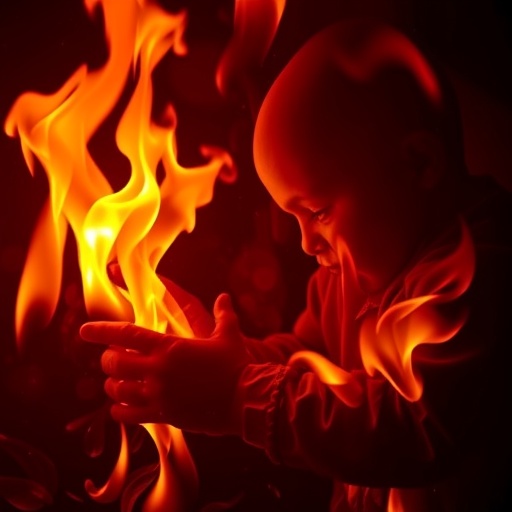
In the heart of Orange County, California, a critical reality is coming into sharp focus: the infrastructure for pediatric burn care across the United States is alarmingly fragmented and inadequate to meet both everyday demands and potential mass casualty events. The UCI Health Regional Burn Center, distinguished as one of the few facilities in the county capable of providing around-the-clock, specialized care for complex burn injuries in children, stands as a beacon in this uneasy landscape. Despite such centers, a comprehensive and reliable nationwide network for pediatric burn victims remains elusive, underscoring a pressing need to reevaluate and enhance the readiness of burn care systems.
Burn injuries in children present unique challenges profoundly different from those in adults. Children’s physiological and developmental differences demand tailored treatment protocols that address not only immediate survival but also long-term outcomes affecting growth and quality of life. Dr. Syed F. Saquib, Medical Director of the UCI Health Regional Burn Center, emphasizes the distinction: “Children are not small adults.” Pediatric burn care commands a multidisciplinary approach that encompasses acute medical treatment, rehabilitation, psychosocial support, and family involvement, which is often unavailable in many healthcare settings.
The current network of burn care in the U.S. reflects a dichotomous reality; it is a patchwork of verified burn centers and general acute care hospitals with varying levels of resources and expertise. Crucially, fewer than half of the American Burn Association (ABA)-verified centers are qualified to provide pediatric care, revealing a stark imbalance between capability and need. This glaring deficit is further exacerbated by a geographic spread that leaves many regions underserved or with no immediate access to specialist pediatric burn care facilities.
This fragmented network poses a significant risk, particularly in the context of mass casualty incidents caused by climate change-related disasters, industrial accidents, or acts of terrorism involving nuclear or biological agents. The complexity of burns caused in such scenarios demands robust infrastructure and coordination that currently does not exist at the scale required. The 2026 review paper, co-authored by Dr. James C. Jeng of UCI Health, highlights these vulnerabilities and calls for comprehensive strategies to bridge these gaps.
To tackle these issues, an in-person children’s burn initiative convened experts across disciplines to rigorously map the distribution of routine and specialist pediatric burn care services. Their goal was to illuminate critical gaps, especially in emergency response systems, and to strategize actionable plans that incorporate both immediate improvements and long-term resilience building. This initiative embodies a proactive effort towards systemic reform, with scheduled follow-ups to assess progress and adapt strategies.
Addressing pediatric burn care challenges requires innovation in clinical practice, infrastructure development, and policy. The burn center at UCI Health serves as a paradigm, providing specialized, family-centered care that integrates the latest research with compassionate clinical service. This fusion is critical for managing the varied causes of burns—predominantly scalds from hot liquids, followed by contact burns from heated surfaces, and flame burns from fires—which compose the majority of pediatric injuries treated at the center.
In 2025 alone, UCI Health documented 153 pediatric burn visits, highlighting a near-even split between patients discharged after outpatient treatment and those requiring intensive inpatient care. This data underscores not only the volume but also the severity diversity of pediatric burns, reinforcing the necessity of centers equipped to manage an entire spectrum of clinical scenarios. The center’s academic affiliation fosters an environment where cutting-edge research and clinical practice intersect, driving advances in burn treatment and recovery.
The technical complexity of pediatric burn care extends beyond the initial injury. Physiological considerations—such as fluid resuscitation requirements, skin graft compatibility, pain management, infection control, and rehabilitation—are all specialized domains within a dedicated burn treatment paradigm. Innovations in tissue engineering, critical care protocols, and psychological support mechanisms are areas of active research where centers like UCI Health lead the way in translating science into improved patient outcomes.
The national preparedness for a mass burn casualty event remains insufficient, as articulated in the recent publication in The Annals of Surgery Open. Structural shortfalls include limited capacity in pediatric burn facilities, inconsistent emergency medical services training on pediatric burns, and inadequate integration of burn-specific protocols in disaster response strategies. Climate change, with its increasing natural disaster frequency and intensity, compounds these challenges, making system-wide reform critical.
A salient feature of this ongoing discussion is recognizing the layered complexity of burn injuries, which affect not only physical status but neurodevelopmental trajectories in children. The interplay between acute injury severity, treatment timeliness, and subsequent rehabilitative support determines outcomes that may persist throughout a patient’s life span. Consequently, investing in specialized pediatric burn centers and developing a coordinated national framework is essential for safeguarding the health of future generations.
The integration of trauma, burn, and critical care services within an academic setting like UCI Health provides an invaluable platform for continuous quality improvement. It offers a model for other burn centers to aspire to, emphasizing comprehensive care delivery augmented by rigorous scientific inquiry and innovation. Meeting the challenges of pediatric burn care requires sustained commitment across clinical, research, and policy domains to overcome current limitations.
Ultimately, the current status of pediatric burn care in the United States reflects a system at a crossroads. Dedicated centers such as the UCI Health Regional Burn Center exemplify excellence yet also highlight the disparities existing in wider care networks. Addressing these with urgency and strategic vision will improve everyday burn care and fundamentally enhance readiness for large-scale emergencies, preserving the lives and futures of countless children.
News Publication Date: 1-Mar-2026
Web References:
- UCI Health Regional Burn Center: https://www.ucihealth.org/medical-services/programs/burn-center
- UCI Health Physician – Dr. James C. Jeng: https://www.ucihealth.org/find-a-doctor/j/james-c-jeng
- The Annals of Surgery Open: https://journals.lww.com/aosopen/fulltext/2026/03000/current_status_of_us_children_s_burn_care_and.13.aspx
Cite Scienmag News
Harold Sullivan. (April 21, 2026). Addressing Critical Gaps in Pediatric Burn Care. Scienmag. https://scienmag.com/addressing-critical-gaps-in-pediatric-burn-care/
Harold Sullivan. "Addressing Critical Gaps in Pediatric Burn Care." Scienmag, 21 April 2026, https://scienmag.com/addressing-critical-gaps-in-pediatric-burn-care/. Accessed 3 September 2026.
Harold Sullivan. "Addressing Critical Gaps in Pediatric Burn Care." Scienmag. April 21, 2026. https://scienmag.com/addressing-critical-gaps-in-pediatric-burn-care/


