


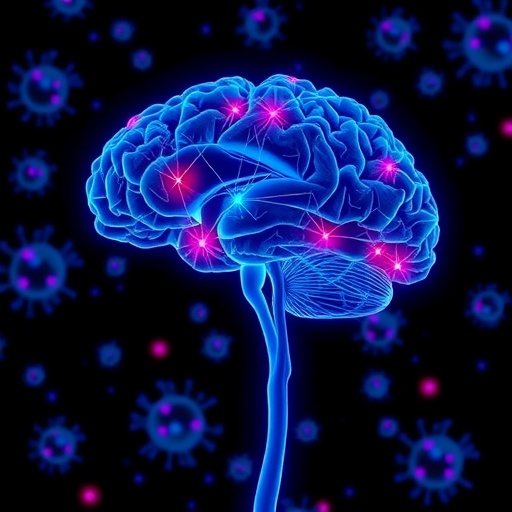
Groundbreaking research from the University of São Paulo (USP) in Brazil has unveiled a novel genetic network termed the “neuroimmunoma,” linking the nervous and immune systems in a crucial interplay that influences the progression of viral hepatitis. This discovery marks a significant advancement in understanding how viral hepatitis evolves within the human body, offering an innovative biomarker capable of predicting the severity of liver damage and the likelihood of developing liver cancer. The neuroimmunoma could revolutionize the clinical management of hepatitis, facilitating earlier interventions and personalized treatments based on genetic profiling.
The study, supported by São Paulo Research Foundation (FAPESP), and published in the Journal of Medical Virology, extensively analyzed data amassed from over 1,800 biological samples, originating from global public repositories in countries including the United States, Italy, China, Spain, France, Germany, the United Kingdom, and Taiwan. This comprehensive dataset encompassed liver tissue and peripheral blood cells infected with various hepatitis viruses, thereby ensuring a robust and diverse foundation for the study’s conclusions. Such an extensive international dataset empowers researchers to identify consistent molecular patterns linked to hepatitis progression across populations.
One of the most surprising revelations was the identification that leukocytes—the primary defense cells in the blood—express gene signatures traditionally associated with the nervous system during hepatitis infection. “This finding challenges the longstanding belief that the nervous and immune systems operate independently,” explains Otávio Cabral-Marques, a professor at USP Medical School and lead coordinator of the research. Instead, these systems communicate through a tightly integrated genomic network, orchestrating systemic responses, especially under chronic inflammatory conditions such as viral hepatitis. This cross-talk underscores the complexity of immune responses influenced by neurogenic elements.
Employing sophisticated machine learning algorithms, the research team was able to track how the expression of neuroimmunoma genes shifts dynamically as hepatitis progresses to hepatocellular carcinoma (HCC), the predominant form of liver cancer. The deregulation of these genes serves as an early warning system, flagging the transition from inflammation to malignancy. Adriel Leal Nóbile, a data scientist and FAPESP scholarship recipient involved in the study, notes that these gene expression patterns offer a molecular roadmap to monitor disease trajectory, potentially enabling clinicians to deploy targeted therapeutic strategies to impede tumor progression.
Viral hepatitis, as defined by the World Health Organization (WHO), is a systemic infectious disease with far-reaching impacts beyond the liver, ranking as the world’s second leading infectious cause of mortality at approximately 1.3 million deaths annually. Despite its prevalence and severity, hepatitis often remains neglected in public health discourse. The neuroimmunoma discovery offers a biological lens through which the multifaceted effects of hepatitis on the body can be better understood, highlighting the disease’s complexity beyond traditional hepatic pathology.
Expanding upon the significance of neuroimmunoma genes, researchers discovered that specific genes such as NRG1 and DBH exhibited progressive alteration correlating with HCC severity. The DBH gene encodes dopamine β-hydroxylase, an enzyme pivotal for norepinephrine synthesis, a neurotransmitter intimately involved in the body’s stress response. This indicates that stress-related signaling pathways are amplified in advanced tumor microenvironments, suggesting a bidirectional feedback loop where psychological stress may influence tumor biology and vice versa, potentially opening new avenues for psychoneuroimmunological interventions in cancer care.
Moreover, genes including NRG1, OLFM1, and WDR62 within the neuroimmunoma network also intersect with psychiatric conditions such as depression and anxiety. This convergence provides compelling genetic evidence supporting the biopsychosocial model of disease, illustrating that mental health disorders and chronic viral infections like hepatitis may share common underlying molecular mechanisms mediated by neuroimmune interactions. The study enriches the conceptual framework of psychosomatic medicine by providing tangible genomic data to bridge neurological, immunological, and psychological domains.
Reflecting on the historical context of mind-body interaction theories, Otávio Cabral-Marques emphasizes that the neuroimmunoma exemplifies a highly interconnected network rather than a unidirectional influence of the nervous system on immune function. This paradigm shift stresses the integrative nature of human physiology, particularly during chronic disease states, where immune responses are modulated by neurogenic signals that can affect systemic homeostasis and disease outcomes. This insight urges a reconsideration of therapeutic approaches that target isolated systems.
While the initial focus of the study remained on hepatitis patients, the researchers posit that the neuroimmunoma concept has broader applicability across other pathological conditions involving chronic inflammation and immune dysregulation. The interdisciplinary potential of this research could pave the way for identifying similar gene networks in autoimmune diseases, neurodegenerative disorders, and other infectious diseases, fostering a more unified understanding of the body’s integrated defense mechanisms and their role in health and disease.
Despite not directly investigating the correlation between neuroimmune gene expression and psychiatric symptom severity in hepatitis patients, the study indicates a strong association between neuroimmunoma activity and psychiatric manifestations frequently observed in such individuals. This observation suggests that future clinical assessments might incorporate neuroimmunoma profiling to predict not only hepatic disease progression but also the risk of developing neurological and psychiatric comorbidities, ultimately enabling a more holistic patient care model.
This pioneering research sets the stage for the neuroimmunoma to become a dual-purpose biomarker, guiding both hepatological prognosis and psychiatric evaluation. Such biomarkers could transform clinical frameworks by providing objective biological parameters that distinguish neuroimmune-driven symptoms from purely emotional or psychosocial origins, thereby optimizing treatment algorithms to address both physical and mental health components inherent to chronic hepatitis.
The implications of this study extend beyond diagnostics. Understanding the neuroimmunoma’s role invites exploration into novel therapeutic targets focusing on modulating neuroimmune interactions to attenuate liver inflammation and prevent tumorigenesis. Future research may involve pharmacological agents aimed at normalizing neuroimmunoma gene expression or interrupting maladaptive neuroimmune signaling pathways, potentially mitigating both hepatic and psychological sequelae of chronic viral infections.
As viral hepatitis remains a global health challenge, the discovery of the neuroimmunoma offers fresh hope. It prompts a reimagining of disease monitoring and treatment based on integrated genetic networks. By recognizing the intimate molecular dialogue between the nervous and immune systems, this research heralds a new era in precision medicine, where viral hepatitis management transcends conventional clinical parameters to embrace genomic and neuroimmune insights with profound implications for patient outcomes worldwide.
News Publication Date: 5-Dec-2025
Web References:
– https://bv.fapesp.br/en/auxilios/105692
– https://onlinelibrary.wiley.com/doi/full/10.1002/jmv.70742
– http://dx.doi.org/10.1002/jmv.70742
References: Journal of Medical Virology, DOI: 10.1002/jmv.70742
Cite Scienmag News
Kristina Jarvis. (March 5, 2026). Scientists Discover Neuroimmune Signature That Predicts Hepatitis Complications. Scienmag. https://scienmag.com/scientists-discover-neuroimmune-signature-that-predicts-hepatitis-complications/
Kristina Jarvis. "Scientists Discover Neuroimmune Signature That Predicts Hepatitis Complications." Scienmag, 5 March 2026, https://scienmag.com/scientists-discover-neuroimmune-signature-that-predicts-hepatitis-complications/. Accessed 4 September 2026.
Kristina Jarvis. "Scientists Discover Neuroimmune Signature That Predicts Hepatitis Complications." Scienmag. March 5, 2026. https://scienmag.com/scientists-discover-neuroimmune-signature-that-predicts-hepatitis-complications/


