


Recent research from the University of Tartu’s Institute of Physics and Institute of Molecular and Cell Biology has unveiled critical insights into the durability and long-term efficacy of antibacterial coatings that rely on photocatalytic materials. Their findings, published in the journal npj Materials Degradation, reveal that coatings containing titanium dioxide (TiO2) nanoparticles, despite their initial robust antibacterial properties, tend to deteriorate over time when exposed to UV-A radiation. This decay significantly undermines their ability to combat microbial contamination, raising important questions about the practical longevity of such coatings in real-world applications.
The significance of antibacterial surface coatings has grown substantially in recent years, driven by the urgent need to combat the spread of infectious diseases, especially in healthcare environments. Surfaces frequently touched by hands become hotspots for microbial transmission, with studies estimating that up to 40% of hospital-acquired infections can be linked to contaminated surfaces. In response, coatings activated by light—mainly UV-A, the prominent component of sunlight—have been developed to harness the generation of reactive oxygen species (ROS) that actively kill bacteria upon exposure.
The University of Tartu team set out to understand how prolonged exposure to UV-A radiation affects the structural integrity and antimicrobial effectiveness of two widely studied photocatalytic agents: TiO2 and zinc oxide (ZnO). By applying acrylic-based coatings embedded with nanoparticles of either TiO2 or ZnO onto steel substrates, the researchers subjected these samples to conditions designed to simulate intense everyday light exposure, with high humidity levels, over nine weeks. This accelerated aging allowed them to closely monitor chemical and physical changes rarely captured in short-term studies.
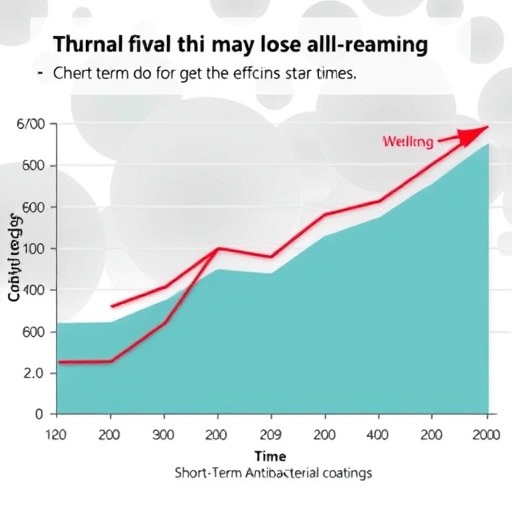
Initial results confirmed that TiO2 nanoparticles effectively produced antibacterial ROS under UV-A activation, consistent with prior literature citing their potent bactericidal activity. However, the investigators observed a deleterious feedback mechanism beginning as early as three weeks into exposure. The chemically aggressive ROS began degrading the very acrylic matrix that held the nanoparticles in place. This auto-degradative process not only compromised the protective lacquer but also led to the loss of TiO2 particles. Consequently, the surface’s overall antibacterial performance waned significantly, undermining the coating’s intended purpose to provide sustained microbial resistance.
In stark contrast, coatings incorporating ZnO nanoparticles demonstrated remarkable stability throughout the duration of the study. Despite possessing similar photocatalytic antibacterial properties, ZnO-based acrylic films resisted chemical degradation and maintained their structural integrity under the same intensive UV-A exposure conditions. Notably, their antimicrobial effectiveness persisted, signifying that ZnO may offer a superior alternative in applications demanding prolonged activity and durability.
These unexpected disparities highlight the complexity inherent in designing photocatalytic antibacterial surfaces. While TiO2 has traditionally been favored due to its well-documented photocatalytic efficiency and low cost, the findings underscore the need to evaluate the trade-offs between initial activity and longer-term stability. ZnO’s resilience suggests that alternate photocatalysts or composite materials could prove invaluable in overcoming the limitations of titanium dioxide-based coatings.
The study profoundly emphasizes the necessity of incorporating long-term aging and durability testing into the development pipeline for antimicrobial materials. Short-term tests, though informative, fail to capture critical degradation pathways and performance declines that emerge only over extended periods. This oversight can lead to premature adoption of coatings that underdeliver in practical settings, potentially fostering a false sense of security and contributing indirectly to microbial transmission.
The researchers advocate for a multidisciplinary approach that integrates photochemistry, materials science, and microbiology in the quest to engineer next-generation surfaces that offer both immediate efficacy and durability under realistic environmental stresses. Novel formulations might include better protective matrices, stabilized nanoparticle dispersions, or hybrid compounds designed to mitigate oxidative self-degradation while preserving antibacterial function.
Furthermore, the research provides valuable guidance for healthcare facilities, public infrastructure managers, and industries invested in infection control technologies. Understanding that not all antibacterial coatings are created equal, especially over time, will inform maintenance schedules, replacement strategies, and investment decisions for surface treatments intended to reduce pathogen spread on high-contact areas.
The study, titled “Artificial aging induced changes in ZnO- and TiO₂-based polyacrylic surface coatings,” published on January 17, 2026, contributes to a growing body of literature advocating for a paradigm shift in how surface antimicrobial technologies are evaluated. It challenges the prevailing focus solely on initial antimicrobial efficacy by foregrounding the pivotal role of physicochemical aging processes.
By supporting open access publication, the University of Tartu has ensured that these critical insights reach a broad audience, sparking potential collaborations and encouraging further innovation aimed at overcoming the identified challenges. The research team comprised Mati Kook, Celeste Peterson, Aadil Shafi Bhat, Alexandra Nefedova, Alexander Vanetsev, Angela Ivask, and Vambola Kisand, whose combined expertise spans the diverse scientific fields vital to this interdisciplinary investigation.
In conclusion, this landmark study reveals the intricate balance between achieving strong antibacterial action and maintaining material integrity under continuous environmental stressors. It serves as a cautionary tale against overreliance on short-term performance metrics and underscores the urgent need for comprehensive testing protocols that reflect real-world conditions. Moving forward, tailoring photocatalytic coatings’ composition with durability at the forefront promises to elevate infection control strategies worldwide.
Cite Scienmag News
Drew Townsend. (March 4, 2026). Antibacterial Coatings Effective Short-Term May Lose Efficacy Over Time. Scienmag. https://scienmag.com/antibacterial-coatings-effective-short-term-may-lose-efficacy-over-time/
Drew Townsend. "Antibacterial Coatings Effective Short-Term May Lose Efficacy Over Time." Scienmag, 4 March 2026, https://scienmag.com/antibacterial-coatings-effective-short-term-may-lose-efficacy-over-time/. Accessed 5 September 2026.
Drew Townsend. "Antibacterial Coatings Effective Short-Term May Lose Efficacy Over Time." Scienmag. March 4, 2026. https://scienmag.com/antibacterial-coatings-effective-short-term-may-lose-efficacy-over-time/


