


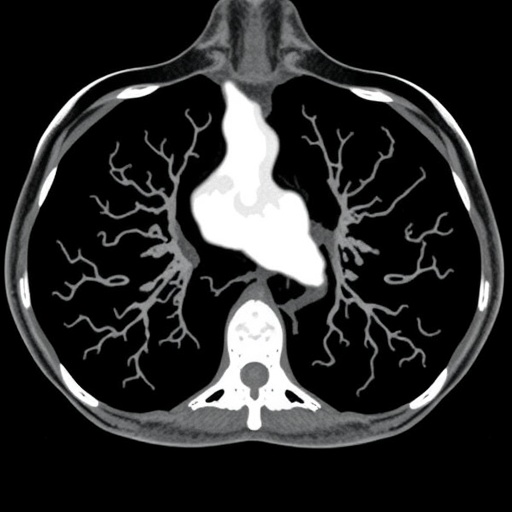
In the relentless pursuit of advancing cancer diagnostics, a new chapter unfolds with a focus on the complexities surrounding locally advanced breast cancer (LABC). Among the diverse histological subtypes, invasive lobular breast carcinoma (ILBC) stands out for its unique biological characteristics and diagnostic challenges. Recent research spearheaded by Metser and colleagues dives deep into the utility of the cutting-edge imaging technique 18F-FDG PET-CT in staging ILBC, a method previously under scrutiny due to the tumor’s distinct metabolic profile. This study, published in the British Journal of Cancer on March 2, 2026, promises to reshape staging protocols and influence therapeutic strategies, setting the stage for improved patient outcomes.
The significance of precise staging in locally advanced breast cancer cannot be overstated. Effective staging determines the extent of disease spread, guiding oncologists in tailoring treatment plans that maximize efficacy while minimizing unnecessary interventions. Traditionally, staging protocols rely on a combination of contrast-enhanced computed tomography (CT) scans of the chest and abdomen alongside bone scans. While these modalities provide vital anatomical detail, they sometimes fall short in detecting distant metastases, especially when subtle or biologically atypical lesions evade clear visualization.
Enter 18F-fluorodeoxyglucose (FDG) PET-CT, an imaging modality that marries metabolic and anatomic information by highlighting regions of increased glucose metabolism typical of malignant cells. This hybrid imaging offers heightened sensitivity in identifying metastatic deposits, potentially uncovering occult disease that could alter staging from non-metastatic to Stage 4, thereby shifting therapeutic intent from curative to palliative. The implications for patients hinge on achieving the most accurate staging upfront, ensuring that treatment modalities align with the disease’s true extent.
Past research in locally advanced breast cancer has demonstrated that 18F-FDG PET-CT can outperform traditional imaging in upstaging patients, thus supporting its integration into routine practice. However, the spectrum of breast cancer subtypes exhibits significant variation in FDG avidity. Invasive ductal carcinoma (IDC), the most prevalent subtype, generally exhibits higher glycolytic activity, rendering PET-CT a reliable tool. Contrastingly, invasive lobular breast carcinoma (ILBC), characterized by its indolent growth pattern and distinctive histopathology, often demonstrates lower FDG uptake, raising concerns about false negatives and underestimation of disease burden.
Acknowledging this conundrum, prior randomized controlled trials (RCTs) explicitly excluded ILBC patients, citing uncertainty about PET-CT’s diagnostic performance in this subset. This exclusion has left a critical knowledge gap, given that ILBC accounts for a substantial minority of breast cancers and often presents with locally advanced disease due to its tendency for diffuse infiltration and subtle radiologic appearance. Without robust data, clinicians face dilemmas in selecting optimal staging strategies for ILBC, potentially affecting treatment decisions and prognostic assessments.
Metser et al.’s prospective study directly addresses this unmet need by exclusively focusing on 18F-FDG PET-CT’s role in staging locally advanced ILBC. Employing rigorous patient selection and standardized imaging protocols, the research seeks to delineate the modality’s sensitivity, specificity, and overall clinical utility. Such focused investigation not only clarifies PET-CT’s strengths and limitations in ILBC but also informs guideline development, striving for equity in diagnostic sophistication across breast cancer subtypes.
Early indications from this study suggest that while ILBC’s lower FDG-avidity poses challenges, advanced PET-CT imaging techniques may still unveil critical metastatic sites previously undetected by conventional imaging. This nuance underscores the technological advances in PET-CT hardware and software, including time-of-flight detection, improved spatial resolution, and refined attenuation correction algorithms, which collectively enhance lesion conspicuity even in metabolically less active tumors. These innovations breathe new life into PET-CT’s diagnostic promise, extending its relevance beyond traditional cancer phenotypes.
The methodology employed by Metser and colleagues integrates state-of-the-art PET-CT scanners with comprehensive clinical staging, allowing for a precise comparison between 18F-FDG PET-CT findings and conventional tests. Each patient underwent PET-CT scanning followed by confirmatory biopsies where feasible, ensuring pathological correlation that strengthens the robustness of the conclusions. Such a prospective approach mitigates biases common in retrospective analyses and reinforces the evidence base for clinical practice change.
Importantly, the study does not merely quantify detection rates but explores how PET-CT findings influence clinical decision-making. By identifying patients with unsuspected stage IV disease, the modality prompts a shift from aggressive local therapies to systemic approaches focused on disease control and quality of life. This distinction is vital in avoiding futile surgical procedures or radiotherapy in the presence of widespread metastases, underscoring PET-CT’s role as a pivotal gatekeeper in personalized cancer care.
From a molecular perspective, the investigation stirs renewed interest in ILBC’s unique biology. Reduced glucose transporter expression and altered metabolic pathways partly explain its subtler FDG signal, yet this study’s insights into imaging performance may stimulate further research into alternative radiotracers or combined imaging strategies. The quest to visualize ILBC comprehensively could eventually integrate PET tracers targeting estrogen receptors or mechanisms of diffuse tumor spread, enriching the diagnostic armamentarium.
While the prospective findings are promising, the authors urge cautious optimism pending validation in larger, multicenter cohorts. Challenges remain in standardizing PET-CT interpretation criteria for low-avidity tumors, necessitating the development of specialized reading protocols and training. Furthermore, economic considerations arise as PET-CT is costlier and less accessible than conventional staging, demanding careful assessment of cost-benefit ratios and health system integration pathways.
This pioneering study paves the way for expanded clinical trials, potentially inclusive of diverse breast cancer phenotypes and stratified by molecular and imaging biomarkers. As the landscape of breast cancer management evolves with precision medicine, diagnostic imaging must keep pace, providing tailored, high-fidelity staging that spares patients unnecessary treatments while identifying those who will benefit most from intensive intervention.
In conclusion, Metser et al.’s prospective evaluation of 18F-FDG PET-CT in staging locally advanced invasive lobular breast carcinoma represents a watershed moment in breast cancer diagnostics. By confronting the challenges posed by ILBC’s lower metabolic activity head-on, this research redefines diagnostic boundaries and fosters hope for improved patient stratification and management. The integration of advanced PET-CT imaging heralds a new era in the multidisciplinary care of breast cancer, where technological innovation meets clinical nuance to elevate oncologic outcomes.
As this paradigm shifts, the oncology community eagerly anticipates further elucidation of PET-CT’s role across cancer subtypes, with the ultimate goal of transforming breast cancer staging from a one-size-fits-all approach to a finely tuned, personalized endeavor. For patients facing locally advanced breast cancer, this promises a future where diagnostic clarity and therapeutic precision converge, lighting the path toward better survival and quality of life.
Cite Scienmag News
Nathaniel Bowman. (March 3, 2026). 18F-FDG PET-CT Advances Staging of Lobular Breast Cancer. Scienmag. https://scienmag.com/18f-fdg-pet-ct-advances-staging-of-lobular-breast-cancer/
Nathaniel Bowman. "18F-FDG PET-CT Advances Staging of Lobular Breast Cancer." Scienmag, 3 March 2026, https://scienmag.com/18f-fdg-pet-ct-advances-staging-of-lobular-breast-cancer/. Accessed 3 September 2026.
Nathaniel Bowman. "18F-FDG PET-CT Advances Staging of Lobular Breast Cancer." Scienmag. March 3, 2026. https://scienmag.com/18f-fdg-pet-ct-advances-staging-of-lobular-breast-cancer/


