


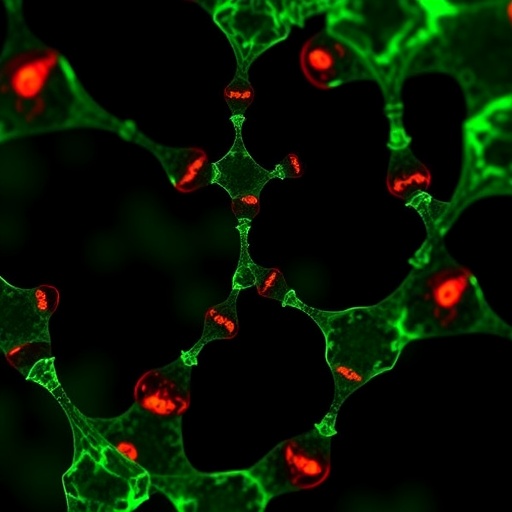
In a groundbreaking study poised to reshape our understanding of autoinflammatory disorders, researchers have unveiled a promising pharmacological strategy targeting the hypoxia-inducible factor 1-alpha (HIF-1α) pathway to mitigate the devastating impact of Aicardi-Goutières syndrome (AGS). This rare genetic disorder, characterized by severe neurological impairment and systemic inflammation driven by aberrant type I interferon responses, has long challenged clinicians and scientists alike. The new research, led by Batignes, Luka, Jagtap, and colleagues and published in Nature Communications, meticulously delineates how stabilization of HIF-1α can simultaneously suppress the harmful interferon-mediated immune response and redirect cellular metabolism toward glycolysis, opening doors to innovative therapeutic avenues.
At the heart of AGS pathophysiology lies a dysregulated innate immune response, specifically an overactive type I interferon system triggered by nucleic acid metabolism defects. This excessive signaling leads to widespread neuroinflammation and tissue damage, effectively placing patients in a chronic state of immune overdrive. While prior efforts aimed at reducing interferon signaling have achieved limited success, the biological intricacies and compensatory mechanisms of these pathways have impeded the development of effective interventions. It is against this backdrop that the role of HIF-1α, a master regulator of cellular responses to oxygen availability, emerges as an unexpected yet pivotal player.
HIF-1α is well-known as a transcription factor that orchestrates adaptive responses to hypoxia by regulating genes involved in angiogenesis, metabolism, and survival. Under normoxic conditions, HIF-1α undergoes rapid degradation via the prolyl-hydroxylase domain (PHD)-dependent ubiquitin-proteasome pathway. However, in hypoxic environments or upon pharmacological inhibition of PHD enzymes, HIF-1α stabilizes and accumulates in the nucleus, initiating a transcriptional program that facilitates cellular adaptation. The current study exploits this mechanism by using pharmacological agents that stabilize HIF-1α, effectively mimicking a hypoxic-like state to remodel immune and metabolic functions in AGS models.
The researchers employed a series of in vitro and in vivo experiments to elucidate the biological interplay between HIF-1α stabilization and interferon signaling cascades. Remarkably, they observed that pharmacological elevation of HIF-1α levels resulted in a marked attenuation of interferon-stimulated gene expression, suggesting a potent immunomodulatory effect. This suppression of the interferon response was correlated with decreased activation of key signaling intermediates, heralding a downstream reduction in pro-inflammatory cytokine production and neurotoxic sequelae. These findings provide compelling evidence that modulating HIF-1α activity can recalibrate immune responses in pathological contexts where interferon is maladaptive.
In parallel, the investigation uncovered that HIF-1α stabilization substantially promotes glycolytic metabolism in affected cells. This metabolic reprogramming aligns with the canonical function of HIF-1α to enhance anaerobic energy production pathways under low oxygen conditions. Of particular interest, increased glycolytic flux appeared to support a shift from oxidative phosphorylation-dependent inflammatory phenotypes toward a more controlled and energy-efficient state. Such alterations in cellular metabolism may confer resilience against inflammatory insults typical of AGS, highlighting a dual mechanism of therapeutic potential: immunomodulation complemented by metabolic adaptation.
Delving deeper into the molecular mechanisms, the study highlighted the cross-talk between HIF-1α signaling and innate immune sensors. The data suggest that stabilized HIF-1α inhibits pattern recognition receptor pathways upstream of interferon production, possibly by inducing negative feedback loops or altering transcriptional cofactor availability. This intricate regulation underscores the complexity of innate immunity and the capacity for transcription factors like HIF-1α to act as critical checkpoints in immune homeostasis. The nuanced understanding of these interactions is essential for designing targeted treatments that avoid broad immunosuppression.
Another dimension of the research focused on the therapeutic implications of pharmacological HIF-1α stabilization. The compounds tested, initially developed for other hypoxia-related disorders, demonstrated favorable safety profiles and efficacy in preclinical models of AGS. Treatment courses led to improved neurological outcomes, decreased biomarkers of inflammation, and normalization of metabolic parameters. These translational findings bolster the prospect of repurposing existing drugs or developing novel analogs tailored for immune modulation in AGS and potentially other interferonopathies.
The broader significance of this research lies in its conceptual innovation—recognizing that metabolic and immunological pathways are deeply intertwined and can be co-targeted to achieve therapeutic goals. By shifting focus from direct inhibition of interferon signaling to upstream regulators like HIF-1α, researchers have revealed a strategic approach that may circumvent the pitfalls of resistance and toxicity that have hampered previous interventions. This paradigm shift could revolutionize treatment frameworks for a variety of immune-mediated diseases beyond AGS, including systemic lupus erythematosus and certain viral infections.
Furthermore, the study provides vital insights into the metabolic underpinnings of inflammation, reinforcing the role of cellular energetics in shaping immune cell function. It emphasizes that metabolic reprogramming is not merely a consequence of inflammation but an active driver of immune phenotypes. Consequently, pharmacological strategies that restore or manipulate these metabolic states hold promise for modulating chronic inflammation and neurodegeneration in diverse pathological settings.
The findings also invoke a broader consideration of how hypoxia and oxygen sensing influence immune responses under physiological and pathological conditions. Given that hypoxic microenvironments are common in inflamed and damaged tissues, understanding the role of HIF-1α extends beyond rare genetic diseases to encompass more prevalent disorders such as stroke, cancer, and chronic infections. The integration of hypoxia signaling into immunological frameworks offers a rich avenue for future research and drug development.
Importantly, the study addresses potential concerns related to enhancing HIF-1α activity, particularly given its known roles in tumorigenesis and fibrosis under certain contexts. The authors carefully delineate dose-response relationships and treatment windows that maximize immunomodulatory benefits while minimizing adverse effects. This critical balance underscores the necessity for precision medicine approaches when leveraging such powerful biological regulators.
The research team advocates for continued clinical investigation to assess the efficacy and safety of HIF-1α stabilizing agents in human AGS patients. They stress the importance of rigorous biomarker development to monitor treatment responses, including interferon signature assays and metabolic profiling. These tools will be indispensable for tailoring therapies and optimizing outcomes in this vulnerable patient population.
In summary, the pioneering work by Batignes and colleagues illuminates a novel intersection of hypoxia signaling, immune regulation, and metabolism in the context of Aicardi-Goutières syndrome. By pharmacologically stabilizing HIF-1α, they demonstrate a dual-action approach that dampens deleterious interferon-driven inflammation while promoting glycolytic metabolism to sustain cellular health. This elegant strategy offers hope for a disease that has thus far evaded effective therapies and exemplifies the power of integrative biological insights to inspire transformative medical breakthroughs.
As research advances, the implications of these findings will undoubtedly ripple across the fields of immunology, neurology, and metabolic science, inspiring new lines of inquiry and therapeutic innovation. The convergence of these disciplines heralds an exciting era where targeted modulation of transcription factors like HIF-1α could rewrite the future of inflammatory and metabolic diseases alike.
Cite Scienmag News
Kristina Jarvis. (March 3, 2026). Hypoxia Factor Stabilization Alters Immunity, Boosts Glycolysis in Aicardi-Goutières. Scienmag. https://scienmag.com/hypoxia-factor-stabilization-alters-immunity-boosts-glycolysis-in-aicardi-goutieres/
Kristina Jarvis. "Hypoxia Factor Stabilization Alters Immunity, Boosts Glycolysis in Aicardi-Goutières." Scienmag, 3 March 2026, https://scienmag.com/hypoxia-factor-stabilization-alters-immunity-boosts-glycolysis-in-aicardi-goutieres/. Accessed 3 September 2026.
Kristina Jarvis. "Hypoxia Factor Stabilization Alters Immunity, Boosts Glycolysis in Aicardi-Goutières." Scienmag. March 3, 2026. https://scienmag.com/hypoxia-factor-stabilization-alters-immunity-boosts-glycolysis-in-aicardi-goutieres/


