


The landscape of drug discovery is being revolutionized by an unexpected frontier: targeting the intricate interfaces between proteins using nanoparticles. Historically deemed “undruggable,” these protein-protein interaction cavities present formidable challenges to conventional small-molecule therapeutics due to their often shallow and expansive geometries. However, groundbreaking research led by Professor LI Yang from the Shenzhen Institute of Advanced Technology (SIAT) at the Chinese Academy of Sciences provides new molecular insights that could redefine how we approach drug design and antiviral strategies.
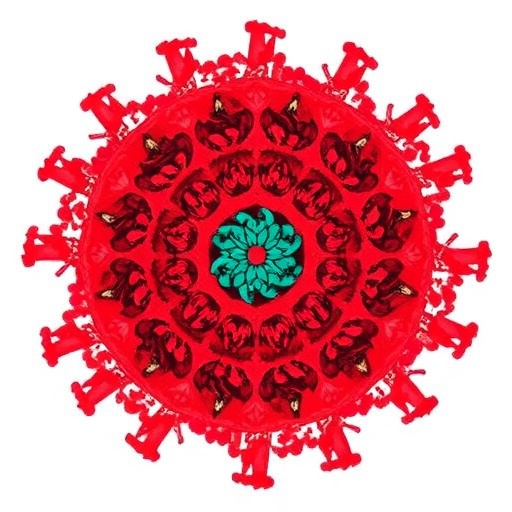
In an innovative study published in the Journal of the American Chemical Society, researchers used the SARS-CoV-2 spike (S) trimer—a critical component responsible for viral entry into host cells—as a model to decode the targeting potential of nanoparticles on protein surface cavities. The spike trimer features complex structural domains essential for virus-host interaction and activation by host proteases, making it a prime target for therapeutic intervention. The research focused on two distinct nanoparticle types: cerium oxide nanoparticles (CeO₂NPs) and gold nanoparticles (AuNPs). While similar in size, these nanoparticles differ fundamentally in their surface chemistry, allowing an incisive investigation into how surface interactions influence cavity recognition and binding specificity.
Cerium oxide nanoparticles exhibited a notable affinity for the central cavity of the SARS-CoV-2 spike trimer, which is enriched in aspartic acid residues. These Asp residues have negatively charged carboxyl groups that engage in coordination bonding with the CeO₂NPs, resulting in a robust and stable interaction. This precise binding obstructs the spike protein’s ability to recognize the ACE2 receptor on host cells, which is a critical step in viral infection. By effectively cloaking this site, CeO₂NPs impede the virus’s capacity to invade host tissue, highlighting a mechanistic basis for their antiviral activity.
Conversely, gold nanoparticles demonstrated a different targeting mechanism. They preferentially bind to arginine-rich lateral cavities located near the S1/S2 cleavage site, a region essential for activation of the spike trimer by host proteases like furin. The AuNPs interact with these cavities primarily through electrostatic attractions and hydrogen bonding with the positively charged Arg residues. This binding perturbs the proteolytic activation process, thus reducing the spike protein’s ability to mediate membrane fusion and viral entry. This distinct binding pattern underscores the critical role of nanoparticle surface chemistry in determining precise molecular interactions.
An unexpected and pivotal finding from this study is that the selectivity and affinity of nanoparticles for protein cavities cannot be ascribed solely to geometric accessibility. While the size and shape of the cavity provide a foundational scaffold for interaction, the chemical environment within the cavity—dictated by the amino acid composition and their side chains—plays an equally consequential role. The researchers demonstrated that only when the surface chemical properties of the nanoparticle match the local chemical signature of the cavity does effective targeting occur. This dual requirement for geometric compatibility and chemical complementarity defines a new paradigm for nanoparticle design in molecular therapeutics.
This insight holds profound implications beyond the SARS-CoV-2 spike protein. Protein-protein interfaces are ubiquitous in cellular processes and are implicated in numerous pathological states such as cancer, neurodegeneration, and infectious diseases. The ability to engineer nanoparticles that selectively recognize and bind to specific protein cavities based on surface chemistry opens novel avenues for modulating protein function with high precision. Such an approach could transcend the limitations faced by traditional small-molecule drugs, which often fail to engage these challenging surfaces effectively.
Moreover, the study’s use of nanoparticles as molecular probes reveals a sophisticated mechanism by which nanoscale surface chemistry can be fine-tuned to harness electrostatic, coordination, and hydrogen bonding interactions. This multidimensional interaction framework is especially important in biological systems where molecular recognition is governed by weak, reversible interactions forming dynamic complexes. Nanoparticles, therefore, offer a unique platform to exploit these subtle forces to disrupt or stabilize protein interfaces selectively.
The research also highlights the potential to design multifunctional nanoparticles capable of simultaneous binding to multiple target sites or interfaces on a single protein. This multivalent approach could dramatically enhance therapeutic potency and specificity, providing a robust blockade against viral escape mutations or compensatory mechanisms within protein networks. For viruses like SARS-CoV-2, which rapidly evolve their spike proteins to evade immune detection, such adaptable nanoparticle-based inhibitors could be game changers.
In addition to their antiviral implications, the findings bring forward new considerations for nanoparticle biocompatibility and functionalization. Tailoring nanoparticle surface chemistry for desired biological interactions requires a delicate balance between stability, solubility, and specific binding affinity. Future research will be essential to optimize these parameters to maximize therapeutic efficacy while minimizing off-target effects and toxicity.
The pioneering insights gained from this work also feed directly into the rational design pipeline for nanoparticle therapeutics. Using computational modeling and experimental validation, it is now conceivable to reverse-engineer protein cavities to specify nanoparticle characteristics such as size, charge distribution, and functional groups. Such an integrative strategy promises to accelerate the discovery of nanoparticle-based modulators for a wide spectrum of protein targets deemed previously unreachable by conventional pharmacology.
In a larger context, these advances underscore the important synergy between nanotechnology and structural biology. By marrying atomic-level structural knowledge with the unique physicochemical properties of nanoparticles, researchers can uncover interaction landscapes that conventional drug discovery methodologies overlook. This approach pushes the boundaries of what is chemically possible in modulating biological systems, heralding a new era of precision nanomedicine.
Ultimately, the Shenzhen Institute of Advanced Technology team’s work represents a transformative leap in understanding the molecular underpinnings of nanoparticle-protein interactions. It moves the field beyond heuristic trial-and-error and provides a robust framework for designing nanoparticles that exploit the nuanced chemistry of protein surfaces. As the global scientific community continues to grapple with evolving viral threats, these findings will undoubtedly inspire new antiviral solutions and inform strategies for future pandemic preparedness.
This research stands as a testament to how fundamental studies exploring nanoscale recognition phenomena can yield practical benefits for global health. The convergence of molecular science, nanotechnology, and biomedical innovation embodied by this study marks a critical step forward. The precise targeting of protein cavities with specifically engineered nanoparticles could soon redefine our arsenal in combating infectious diseases and expanding the reach of therapeutic intervention.
Web References: Journal of the American Chemical Society DOI: 10.1021/jacs.5c15860
References: Provided in the Journal of the American Chemical Society publication, DOI 10.1021/jacs.5c15860.
Keywords
Nanoparticles, Protein-Protein Interaction, SARS-CoV-2 Spike Protein, Cerium Oxide Nanoparticles, Gold Nanoparticles, Surface Chemistry, Molecular Recognition, Antiviral Mechanism, Protein Cavities, Structural Biology, Nanomedicine, Drug Design
Cite Scienmag News
Louis Brooks. (March 3, 2026). Amino Acid Residue-Guided Nanoparticle Targeting of Protein Cavities: Moving Beyond Size Complementarity. Scienmag. https://scienmag.com/amino-acid-residue-guided-nanoparticle-targeting-of-protein-cavities-moving-beyond-size-complementarity/
Louis Brooks. "Amino Acid Residue-Guided Nanoparticle Targeting of Protein Cavities: Moving Beyond Size Complementarity." Scienmag, 3 March 2026, https://scienmag.com/amino-acid-residue-guided-nanoparticle-targeting-of-protein-cavities-moving-beyond-size-complementarity/. Accessed 3 September 2026.
Louis Brooks. "Amino Acid Residue-Guided Nanoparticle Targeting of Protein Cavities: Moving Beyond Size Complementarity." Scienmag. March 3, 2026. https://scienmag.com/amino-acid-residue-guided-nanoparticle-targeting-of-protein-cavities-moving-beyond-size-complementarity/


