


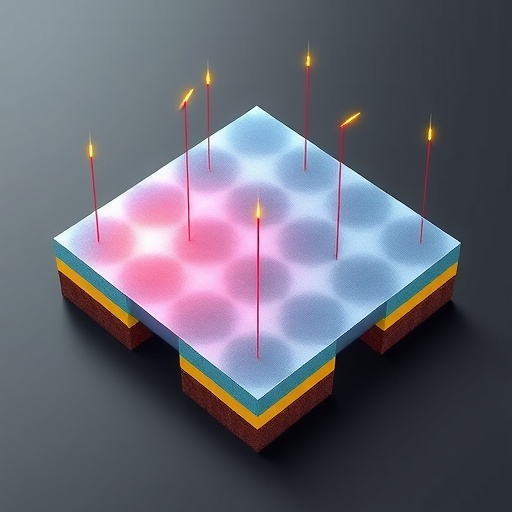
As electromagnetic technology continues to evolve at a rapid pace, its integration into everyday life is becoming both ubiquitous and indispensable. From telecommunications and medical diagnostics to defense systems and consumer electronics, the proliferation of devices relying on electromagnetic waves has transformed modern society. Yet, this omnipresence of electromagnetic products comes with a growing and less visible consequence: the generation of electromagnetic pollution. This unintended byproduct poses increasingly severe ecological and health challenges, pressing the scientific community to develop effective solutions for electromagnetic wave (EMW) absorption and mitigation.
Electromagnetic pollution pertains to the presence of unwanted electromagnetic waves in the environment, which can interfere with electronic devices, degrade communication signals, and even affect biological systems. As the density of EMW sources continues to climb, the need for materials that can absorb these waves rather than reflect or transmit them becomes critical. The design and synthesis of such EMW absorbers stand at the frontier of materials science and engineering, underpinning efforts to safeguard both technology and health.
At the heart of this research lies the exploration of composite materials engineered at the micro- and nano-scale to possess multiple phases and highly non-uniform interfaces. These multiphase composite materials exhibit electromagnetic properties that surpass those of homogeneous substances, offering tailored dielectric and magnetic responses across a wide frequency range. The complex architecture of these composites facilitates multiple energy dissipation mechanisms, enabling efficient absorption of incident electromagnetic waves.
The mechanisms by which EMW absorbers operate are rooted in electromagnetic theory and materials science. When electromagnetic waves strike an absorbing material, their energy can be converted into heat or other forms through various processes, including dielectric loss, magnetic loss, and interfacial polarization. Dielectric loss arises from the lagging response of electric dipoles within the material to the oscillating electromagnetic field, while magnetic loss originates from domain wall resonance, natural resonance, and eddy current effects in magnetic constituents.
Interfacial polarization, also known as Maxwell–Wagner–Sillars polarization, plays a pivotal role in composites comprising dissimilar phases. At the boundary between phases with contrasting electrical properties, charge accumulation and relaxation phenomena occur, further enhancing energy dissipation. This intricate interplay of mechanisms in multiphase composites contributes to their superior EMW absorption performance.
Recent advancements have seen the incorporation of carbon-based materials such as graphene and carbon nanotubes into polymeric or ceramic matrices, creating hybrid composites with synergistic electromagnetic properties. Graphene’s exceptional electrical conductivity and high specific surface area facilitate enhanced dielectric loss, while magnetic nanoparticles such as ferrites embedded within the matrix contribute magnetic loss components. The interface between carbon materials and magnetic particles forms a labyrinthine network of multiple scattering sites, effectively trapping electromagnetic waves within the composite.
Furthermore, tailoring the microstructure of composites through techniques like electrospinning, solvothermal synthesis, and 3D printing has enabled precise control over phase distribution and interface characteristics. Such control is vital for optimizing impedance matching, a critical prerequisite for minimizing reflection of electromagnetic waves at the material surface. Proper impedance matching ensures that incident waves enter the absorber rather than bouncing off, maximizing absorption efficiency.
Beyond laboratory synthesis, challenges remain in scaling these advanced materials for commercial applications. Stability under diverse environmental conditions, ease of fabrication, cost-effectiveness, and recyclability are key factors guiding ongoing research. Addressing these challenges will pave the way for widespread deployment in areas such as stealth technology, EMI shielding in electronics, and even in architectural materials to safeguard public health.
The environmental impact of electromagnetic pollution extends beyond interference and potential health risks; biological organisms can experience stress due to chronic exposure to EMW, making absorption materials a potential ally in mitigating these effects. Public awareness and regulatory policies are increasingly recognizing the importance of managing electromagnetic environments, further incentivizing research and development in this domain.
Cutting-edge investigations also explore the integration of multifunctional properties into EMW absorbers, such as mechanical robustness, thermal management, and even catalytic activity. This multifunctionality broadens their potential applications, aligning with current trends towards sustainable and smart material solutions.
In summary, the quest for high-performance electromagnetic wave absorption materials embodies a vibrant interdisciplinary effort. It harnesses advances in nanotechnology, materials chemistry, physics, and engineering to address one of the subtle but consequential challenges of the electromagnetic age. With their tailored microstructures, multiphase composition, and complex interfacial architectures, these composites represent a promising avenue to curb electromagnetic pollution and protect technological infrastructures and living organisms alike.
Ongoing research continues to propel this field, unveiling novel composite systems with enhanced absorption bandwidths, reduced material thickness, and improved environmental resilience. As the electromagnetic spectrum becomes ever more congested, the strategic development of such materials will be indispensable in harmonizing technological progress with ecological and societal well-being.
The future of electromagnetic wave absorption lies in the refinement of composite architectures and the discovery of new material combinations capable of tackling the multifaceted nature of EMW pollution. The convergence of experimental insights and computational modeling accelerates this discovery process, illuminating pathways towards smart absorbers capable of adapting to dynamic electromagnetic environments.
It is evident that the imperative to design and implement advanced EMW absorbers is not only a technological challenge but also an ecological and ethical one. These materials hold the promise to mitigate invisible electromagnetic hazards, safeguard the integrity of essential communication systems, and ultimately contribute to a healthier and more sustainable interaction with the electromagnetic dimensions of our world.
News Publication Date: Not specified
Web References: Not provided
References: Not provided
Cite Scienmag News
Bethany Barker. (March 2, 2026). Multiphase Structures Create Heterogeneous Interfaces to Enhance Electromagnetic Wave Attenuation through Interface Polarization. Scienmag. https://scienmag.com/multiphase-structures-create-heterogeneous-interfaces-to-enhance-electromagnetic-wave-attenuation-through-interface-polarization/
Bethany Barker. "Multiphase Structures Create Heterogeneous Interfaces to Enhance Electromagnetic Wave Attenuation through Interface Polarization." Scienmag, 2 March 2026, https://scienmag.com/multiphase-structures-create-heterogeneous-interfaces-to-enhance-electromagnetic-wave-attenuation-through-interface-polarization/. Accessed 9 September 2026.
Bethany Barker. "Multiphase Structures Create Heterogeneous Interfaces to Enhance Electromagnetic Wave Attenuation through Interface Polarization." Scienmag. March 2, 2026. https://scienmag.com/multiphase-structures-create-heterogeneous-interfaces-to-enhance-electromagnetic-wave-attenuation-through-interface-polarization/


