


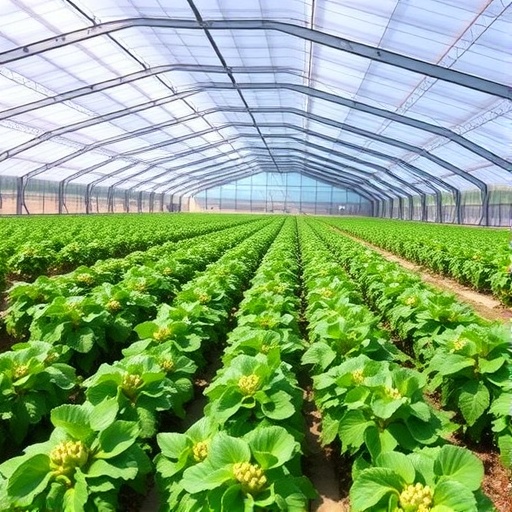
In the relentless quest to feed a burgeoning global population while safeguarding the Earth’s fragile ecosystems, the study of intercropping systems has emerged as a beacon of sustainable agricultural innovation. Recent research by Ruillé, Beillouin, and Prudhomme, published in npj Sustainable Agriculture, has provided critical corrections and updated insights into the ecological drivers underpinning intercropping performance. Their findings offer a renewed understanding that could profoundly influence how global crop production is enhanced in harmony with environmental stewardship.
Intercropping, the practice of growing two or more crop species simultaneously on the same plot of land, is gaining unprecedented attention for its potential to elevate yield stability and ecosystem resilience. This agroecological strategy harnesses complementary interactions among plants, such as nutrient sharing, pest suppression, and microclimate modulation, often resulting in productivity gains that surpass monoculture benchmarks. The authors’ correction emphasizes the intricate ecological mechanisms enabling these synergistic outcomes and their dependence on environmental context.
Central to this corrected analysis is the recognition that intercropping performance is governed by a complex interplay of biotic and abiotic factors. Plant root architecture and canopy structure, soil microbial communities, resource availability, and climatic variables all converge to influence how intercropped species share resources and mitigate competition. The researchers underscore that understanding these drivers at a nuanced ecological level is imperative for designing cropping systems optimized for diverse climates and soil types.
A pivotal revelation in the authors’ updated work is the role of belowground interactions, particularly those involving rhizosphere dynamics and mycorrhizal networks. These subterranean connections facilitate nutrient exchange and enhance phosphorus and nitrogen uptake efficiency when species with complementary nutrient acquisition strategies are intercropped. This nuanced comprehension challenges traditional agronomic models that often underestimate the rhizosphere’s contribution to crop productivity and resilience.
Moreover, the study elaborates on the importance of species selection based on functional traits rather than solely crop yield potential. Intercropping combinations composed of species with differing phenologies, rooting depths, and nutrient requirements foster resource partitioning, reducing interspecific competition while maximizing complementary resource use. This trait-based approach advocates for a paradigm shift in crop breeding and selection processes geared towards intercropping compatibility.
The ecological drivers also extend to the modulation of pest and disease dynamics under intercropping regimes. Polycultural systems can disrupt pest lifecycle continuity and improve biological control through increased habitat heterogeneity. The correction sheds light on how spatial arrangement and plant diversity can modify pest populations and pathogen spread, highlighting the need for integrated pest management strategies aligned with intercropping practices.
Water use efficiency emerges as another critical factor influenced by intercropping, particularly in regions vulnerable to drought and water scarcity. By combining species with different transpiration rates and rooting patterns, intercropping can optimize water uptake and reduce evaporation losses. The corrected findings point towards potential climate-resilient agricultural designs that mitigate water stress impacts while sustaining high productivity.
The authors’ contribution is not merely theoretical but has practical implications for global food security policies and sustainable agricultural practices. Their work calls for intensified empirical research under field conditions reflecting diverse agroecological zones, pointing towards scalable solutions adaptable to smallholder farmers and large-scale commercial operations alike. The corrected insights lay the groundwork for evidence-based recommendations that enhance both yield and environmental outcomes.
The refinement presented in this study also addresses key knowledge gaps concerning intercropping’s carbon sequestration potential and soil health benefits. By promoting diverse root exudates and microbial activity, intercropping systems foster soil organic matter accumulation, improving soil structure and fertility over time. This aspect aligns intercropping with broader climate change mitigation strategies, positioning it as a vital component in sustainable land management frameworks.
Significantly, the authors highlight the importance of interdisciplinary collaboration among ecologists, soil scientists, agronomists, and socioeconomists to translate ecological understanding into actionable farming practices. The correction advocates for integrating ecological theories with agricultural engineering and economic viability analyses to optimize intercropping systems for various socio-economic contexts.
Furthermore, the study emphasizes that successful intercropping implementation requires nuanced knowledge of local environmental conditions and traditional farming knowledge systems. Tailoring intercropping designs to regional crop species, soil types, and climate profiles, while involving farmers in participatory research, ensures that ecological drivers translate into practical, context-specific benefits.
This author correction also addresses misconceptions about intercropping scalability and mechanization challenges. By recognizing the complexity of species interactions and the need for precision in spatial arrangements, the study encourages the development of innovative machinery and digital agriculture tools that support efficient intercropping practices without compromising ecological benefits.
In essence, the updated framework provided by Ruillé, Beillouin, and Prudhomme reaffirms intercropping as a pillar of sustainable intensification strategies — a solution that transcends simplistic yield metrics and embraces a holistic approach integrating productivity, resilience, and ecological integrity. Their meticulous correction strengthens the foundational science necessary for the agricultural transformation required in the face of climate change and food insecurity.
As the global community grapples with the dual challenges of environmental degradation and population growth, this research acts as an informed clarion call. It highlights that embracing the complexity of ecological drivers and fostering innovation in crop diversification holds the key to unlocking agricultural systems capable of sustaining humanity without exhausting planetary resources.
In conclusion, the corrected insights in this seminal study propel the field forward by clarifying intricate ecological relationships and redefining best practices in intercropping. This renewed knowledge not only deepens scientific comprehension but also galvanizes policymakers, researchers, and farmers toward realizing the full potential of intercropping as an essential component of sustainable agriculture’s future.
Cite Scienmag News
Alan Morgan. (March 2, 2026). Author Corrects Study on Ecological Intercropping Benefits. Scienmag. https://scienmag.com/author-corrects-study-on-ecological-intercropping-benefits/
Alan Morgan. "Author Corrects Study on Ecological Intercropping Benefits." Scienmag, 2 March 2026, https://scienmag.com/author-corrects-study-on-ecological-intercropping-benefits/. Accessed 3 September 2026.
Alan Morgan. "Author Corrects Study on Ecological Intercropping Benefits." Scienmag. March 2, 2026. https://scienmag.com/author-corrects-study-on-ecological-intercropping-benefits/


