


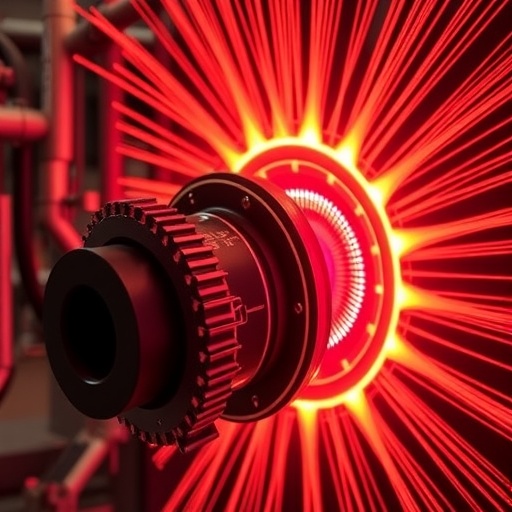
Harnessing the power of fusion—the same process that fuels the sun—has long been a scientific aspiration, promising a nearly limitless, clean energy source. Central to this pursuit is the ability to monitor and understand the turbulent plasma fuels inside fusion reactors, where hydrogen isotopes are heated to extreme temperatures and pressures. Precision in measuring plasma parameters such as temperature, density, and ion composition is not merely a technical challenge; it is vital for maintaining the stability, safety, and efficiency of fusion reactions. This necessity has led to the evolution of highly specialized diagnostic tools that can withstand the extreme environments within fusion reactors, capturing the data essential for advancing fusion technology.
A recent comprehensive report, sponsored by the U.S. Department of Energy (DOE), underscores the critical need to expand and innovate America’s fusion diagnostic capabilities. This endeavor is framed as both a scientific mission and a national strategic priority, aiming to accelerate the deployment of practical, commercial fusion power plants. The report emerges from the 2024 Basic Research Needs Workshop on Measurement Innovation, a key initiative under the DOE’s Fusion Energy Sciences (FES) program, which convened leading scientists and engineers from national laboratories, academia, and industry to address the technological gaps in plasma diagnostics.
The leadership of this workshop, including Luis Delgado-Aparicio of the Princeton Plasma Physics Laboratory (PPPL) and Sean Regan of the University of Rochester’s Laboratory for Laser Energetics, brought together expertise spanning magnetic confinement fusion (MCF), inertial confinement fusion (ICF), and low-to-high energy-density plasmas. These experts scrutinized current measurement technologies and explored future innovations necessary to sustain U.S. leadership in the rapidly evolving fusion sector. Their insights align with the ambitious long-term vision outlined in the DOE’s Fusion Science & Technology Roadmap, which charts a pathway toward a competitive domestic fusion energy industry by the mid-2030s.
Fusion diagnostics face unique challenges posed by the extreme conditions inside reactors. Diagnostic sensors must endure intense neutron fluxes, high-energy radiation, and rapid changes in plasma state—especially in the context of burning plasmas generated by MCF and ICF approaches. For instance, inertial confinement fusion experiments involve processes unfolding within nanoseconds, necessitating ultrafast measurement capabilities that push the limits of current technology. Simultaneously, instruments designed for magnetic confinement devices like tokamaks must reliably function over extended operational periods while surviving material degradation. Meeting these formidable demands calls for breakthroughs not only in sensor materials and designs but also in complementary technologies such as artificial intelligence (AI), machine learning (ML), and digital twin simulations.
The workshop’s collective findings highlight a pressing opportunity to turbocharge innovation by integrating AI-driven design processes and computational validation. Digital twins—high-fidelity virtual replicas of experimental devices—offer a transformative approach to diagnostics development, enabling real-time data interpretation and predictive maintenance strategies that can significantly shorten innovation cycles. By harnessing AI and ML, researchers envision accelerated optimization of diagnostic systems, efficient data analysis amidst complex plasma behavior, and adaptive sensing capabilities critical for dynamic plasma environments encountered in future pilot power plants.
Beyond technological advances, the report advocates for a robust infrastructure supporting fusion diagnostics. It recommends establishing a national network akin to LaserNetUS—a collaborative framework that currently connects laser research institutions—but dedicated to calibration standardization and measurement innovations in fusion science. Such a network, potentially named CalibrationNetUS, would unify diagnostic efforts across institutions, facilitate sharing of best practices, and ensure consistent data quality fundamental to scientific reproducibility and industrial application. Moreover, deliberate formation of interdisciplinary national teams is proposed to professionally shepherd diagnostic concepts from experimental prototypes to deployable solutions, optimizing cost-effectiveness and efficiency.
A critical dimension of this initiative centers on workforce development. The complexity and novelty of fusion diagnostics necessitate a dedicated pipeline of skilled scientists and engineers trained at the intersection of plasma physics, advanced instrumentation, computational science, and AI. The report stresses the urgency of cultivating this talent pool to meet the demands of upcoming fusion pilot plants, which will operate at unprecedented scales and intricacy. Investing in education and professional pathways will not only sustain fusion innovation but also bolster broader plasma technology sectors that underpin economic competitiveness.
The transition of diagnostic technologies from government-funded national laboratories to private-sector fusion enterprises also emerged as a key theme. Effective technology transfer mechanisms can accelerate commercialization, facilitating private companies’ access to cutting-edge measurement tools and operational expertise. This synergy is anticipated to catalyze innovation cycles, dismantle barriers to market entry, and promote collaborative ecosystems in which public research and industrial application coalesce seamlessly, propelling the fusion energy industry forward.
A forward-looking perspective is needed for the operational realities of future fusion power plants, which are likely to incorporate remote diagnostics and autonomous maintenance to ensure safety and efficiency. Planning for measurement innovations that enable remote operation was identified as a priority, with suggestions to convene dedicated workshops aimed at addressing the challenges of managing complex diagnostics systems in remote or hazardous environments. This strategic foresight will prove indispensable as fusion moves beyond experimental stages toward sustained energy production.
Together, these findings reflect a comprehensive strategy to expedite the fusion revolution through diagnostic excellence. From bolstering experimental precision and data integrity to fostering collaborative frameworks and workforce readiness, the report paints an integrated picture of the future-facing research ecosystem needed to transform fusion energy from promise to practical reality. As Delgado-Aparicio aptly notes, “Measurement innovations will continue to lead scientific and engineering breakthroughs—serving as the linchpin of progress in fusion science.”
The contributions of the 70 researchers involved in this initiative exemplify the collaborative spirit driving fusion advancements. Their multidisciplinary insights not only delineate technological necessities but also frame the innovation pipeline critical for scientific discovery and commercial application alike. Sean Regan emphasizes the report’s testament to diagnostics’ pivotal role: by investing in transformative measurement technologies, the U.S. can hasten the realization of commercial fusion energy, reinforcing its global leadership in plasma science and associated high-impact technologies.
In the broader context, fusion diagnostics encapsulate the intricate marriage of physics, engineering, and computation, reflecting the sophisticated orchestration required to unlock the power of the stars here on Earth. The DOE’s concerted investment in these diagnostics promises to shepherd fusion technology through its most delicate and decisive phases—turning the once-distant dream of fusion power into an achievable and sustainable energy source that addresses climate change, energy security, and economic growth.
The full, detailed report is publicly available online along with an executive summary, inviting researchers, policymakers, and industry stakeholders to engage with the findings and contribute to this transformative journey. As the fusion community embraces these challenges and opportunities, the promise of a clean and abundant energy future grows ever closer to reality.
Cite Scienmag News
Katie Riggs. (March 2, 2026). National Report Highlights Advances in Measurement Techniques to Accelerate Commercial Fusion Energy and Unlock New Plasma Technologies. Scienmag. https://scienmag.com/national-report-highlights-advances-in-measurement-techniques-to-accelerate-commercial-fusion-energy-and-unlock-new-plasma-technologies/
Katie Riggs. "National Report Highlights Advances in Measurement Techniques to Accelerate Commercial Fusion Energy and Unlock New Plasma Technologies." Scienmag, 2 March 2026, https://scienmag.com/national-report-highlights-advances-in-measurement-techniques-to-accelerate-commercial-fusion-energy-and-unlock-new-plasma-technologies/. Accessed 5 September 2026.
Katie Riggs. "National Report Highlights Advances in Measurement Techniques to Accelerate Commercial Fusion Energy and Unlock New Plasma Technologies." Scienmag. March 2, 2026. https://scienmag.com/national-report-highlights-advances-in-measurement-techniques-to-accelerate-commercial-fusion-energy-and-unlock-new-plasma-technologies/


