


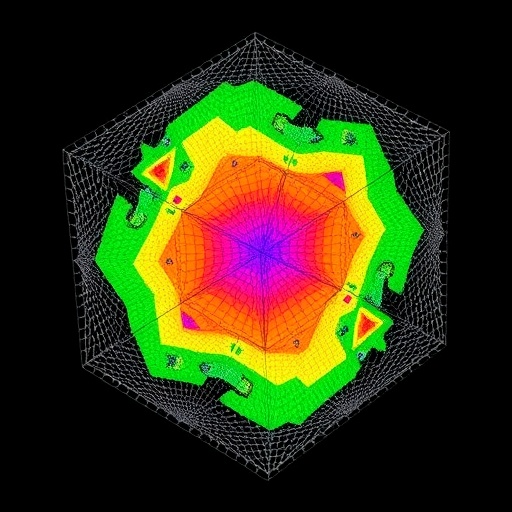
In recent years, the landscape of biomedical research has been dramatically transformed by the advent of foundation models tailored for pathology. These models, pre-trained on extensive datasets of histopathology images, have ushered in unprecedented capabilities for disease characterization and diagnosis. Simultaneously, advances in spatial multi-omic technologies have empowered researchers with the ability to quantify gene and protein expression at an exquisitely refined spatial resolution. This convergence of powerful imaging and molecular profiling platforms holds immense promise for deciphering the complexity of tissue microenvironments. Yet a significant challenge remains: existing analytical models largely operate within silos, rarely integrating these complementary data modalities in a cohesive, interpretable manner.
A groundbreaking study now introduces spEMO, a sophisticated computational framework designed to seamlessly unify embeddings derived from pathology foundation models together with those from large language models. This innovation represents a fundamental leap forward by harnessing multi-modal representations to empower a host of downstream biomedical tasks that have long defied single-modality approaches. The spEMO framework does not merely analyze histopathological images or spatial omics data separately. Instead, it creates an integrated embedding space that captures the intricate interplay between morphological features and spatial molecular profiles, thereby revealing deeper insights into tissue biology and disease mechanisms.
One of the hallmark achievements of spEMO lies in its superior performance across multiple critical applications. Spatial domain identification, which requires accurately delineating tissue regions with distinct molecular signatures, benefits tremendously from the hybrid embeddings. Unlike prior methods prone to oversimplification or noise, spEMO’s approach precisely maps spatial heterogeneity. Additionally, the model excels at spot-type classification, accurately labeling discrete spatial transcriptomic spots with their biological identities. This capability represents a vital step for contextualizing molecular data in situ, enabling researchers to localize pathological changes at micrometer resolution within tissue architecture.
Beyond spatial profiling, spEMO demonstrates remarkable prowess in disease prediction tasks based on whole-slide histopathology images. Traditional models often struggle to translate high-dimensional image data into reliable diagnostic predictions, particularly when molecular context is missing. By integrating transcriptomic and proteomic embeddings learned through large language models, spEMO enriches the feature landscape significantly. This, in turn, allows the framework not only to predict disease states with greater accuracy but also enhances interpretability—key for clinical adoption and validation. Interpretability modules embedded within spEMO provide mechanistic clues grounded in both morphology and molecular signals, offering a powerful tool for precision medicine.
Multicellular interaction inference is another domain where spEMO’s multi-modal embeddings shine. Understanding cellular crosstalk within tissue ecosystems is crucial for unraveling pathophysiological processes, including tumor microenvironment dynamics and immune cell infiltration. By jointly analyzing spatial omics data alongside histological imagery, spEMO reveals complex patterns of cellular neighborhoods and interactions that are invisible to single-modality analyses. This ability to infer cellular communication pathways with spatial precision opens new avenues for targeted therapeutics and biomarker discovery.
Perhaps one of the most transformative aspects of spEMO is its facility for automated medical reporting. Bridging the gap between raw data and actionable clinical insights often entails labor-intensive annotation and interpretation by pathologists. The framework’s capacity to generate coherent, clinically relevant narratives based on integrated multi-omic and imaging data offers the tantalizing prospect of accelerating diagnostic workflows. These AI-generated reports distill complex multimodal findings into understandable summaries, potentially reducing turnaround times and increasing diagnostic consistency in clinical practice.
To objectively evaluate the performance gains delivered by their model, the researchers introduced a novel benchmark task termed “multi-modal alignment.” This benchmark assesses how effectively pathology foundation models can retrieve complementary information across modalities, serving as a valuable metric for integration success. spEMO outperformed existing models on this rigorous benchmark, confirming its capability to bridge imaging and molecular data in a robust and generalizable manner. This milestone represents a crucial step towards holistic tissue analysis that transcends traditional modality boundaries.
The implications of spEMO extend far beyond research laboratories. In clinical contexts, the integration of spatial multi-omic data with histopathology through a unified embedding space facilitates personalized medicine approaches. By revealing spatially resolved molecular heterogeneity within tumors or inflamed tissues, clinicians can better stratify patients for targeted treatments or prognosis. Additionally, the enhanced interpretability features ensure these AI-driven insights do not remain black-box outputs but are instead explainable and actionable.
From a technological perspective, spEMO exemplifies the power of foundation models not only in processing massive datasets but also in cross-modal representation learning. The innovative coupling of pathology models with large language models leverages strengths from computer vision and natural language understanding, respectively. This interdisciplinary synergy harnesses vast prior knowledge encoded in language models, including biological ontologies and biomolecular relationships, enriching the embeddings beyond pixel or molecular count data alone.
The development of spEMO also underscores an emerging paradigm shift in spatial biology towards integrative frameworks that accommodate the complexity of multi-omic datasets in real tissue contexts. By marrying cutting-edge AI architectures with advanced spatial molecular technologies, it lays the groundwork for future applications involving even richer modalities, such as spatial metabolomics or live tissue imaging. The modular design ensures extendibility as new data types emerge, fostering adaptability in this rapidly evolving field.
In terms of scalability, spEMO demonstrates remarkable potential for deployment in large-scale clinical cohorts and research consortia. Performance gains realized through joint modeling enable meaningful analyses on thousands of whole-slide images aligned with spatial transcriptomic data, a scale previously unmanageable. This scalability, coupled with interpretability and automation, positions spEMO as a pivotal tool for accelerating the translation of spatial multi-omics into tangible healthcare improvements.
Furthermore, the success of spEMO motivates a reevaluation of how computational pathology and spatial biology are conducted, advocating for a convergence that maximizes the complementary nature of diverse molecular and morphological measurements. It calls upon researchers to adopt more sophisticated multi-modal strategies to fully capture the complexity of biological tissues and disease states—ushering in an era of truly integrative systems pathology.
In sum, spEMO represents a formidable advance at the intersection of AI, spatial multi-omics, and pathology. By unifying multi-modal foundation models into a coherent analysis pipeline, it tackles longstanding challenges in spatial domain mapping, cellular classification, disease prediction, cellular interaction inference, and automated reporting with remarkable success. These breakthroughs not only propel biological discovery but also chart a course towards practical clinical applications that promise enhanced diagnostics, personalized medicine, and improved patient outcomes.
As spatial omic technologies and foundation models continue to evolve, frameworks like spEMO will likely become indispensable components of the biological research and medical diagnostic toolkit. The study’s insights highlight the value of integrating models across data modalities to exploit the full breadth of information encoded in tissues, potentially transforming the future of spatial biology and precision pathology.
By setting a new benchmark for multi-modal integration and interpretability, the spEMO framework paves the way for a new generation of AI-driven tools that transcend limitations of existing single-modality approaches. This transformative capability not only deepens our understanding of tissue biology in health and disease but also offers a promising path toward democratizing access to high-quality diagnostic and prognostic insights across diverse clinical settings worldwide.
Cite Scienmag News
Ophelia Keating. (March 1, 2026). Multi-Modal Models Transform Spatial Multi-Omic Analysis. Scienmag. https://scienmag.com/multi-modal-models-transform-spatial-multi-omic-analysis/
Ophelia Keating. "Multi-Modal Models Transform Spatial Multi-Omic Analysis." Scienmag, 1 March 2026, https://scienmag.com/multi-modal-models-transform-spatial-multi-omic-analysis/. Accessed 5 September 2026.
Ophelia Keating. "Multi-Modal Models Transform Spatial Multi-Omic Analysis." Scienmag. March 1, 2026. https://scienmag.com/multi-modal-models-transform-spatial-multi-omic-analysis/


