


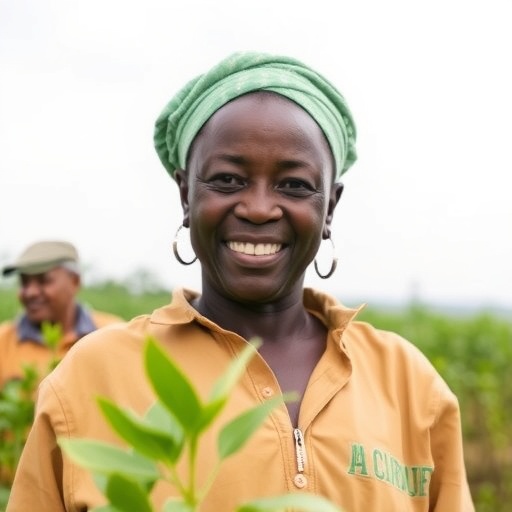
A groundbreaking study led by Daniel Tobin of the University of Vermont challenges the prevailing assumptions underpinning large-scale agricultural development programs like the Alliance for a Green Revolution in Africa (AGRA). Utilizing comprehensive panel data from Tanzania’s National Panel Survey spanning 2014 to 2022, this research interrogates the simplified logic behind modernization efforts, revealing a complex interplay of household demographics, gender relations, and labor constraints that shape small-scale farming decisions in profound ways.
Central to this study is the critique of development initiatives that presume farmers’ readiness to embrace new technologies and intensify production upon access to markets and improved inputs. This “one-size-fits-all” approach disregards the nuanced realities faced by rural households, whose agricultural practices are deeply influenced by internal household composition and gendered labor distributions. Such oversight results in interventions misaligned with actual farmer priorities, leading to limited efficacy and unintended consequences.
The investigation brings to light persistent gender disparities within agrarian labor dynamics. Women, frequently serving as plot managers, engage in more labor-intensive work on smaller plots than their male counterparts. Particularly vulnerable are women-led households, which encounter heightened constraints in reallocating labor and land resources amidst fluctuating household sizes and resource availability. These inequalities underscore the necessity for gender-sensitive frameworks that acknowledge the differentiated access to land, inputs, and off-farm employment opportunities.
Importantly, the study identifies labor availability as a critical yet often neglected determinant in farming decisions, contrasting sharply with the dominant focus on land and technological inputs. Contrary to AGRA’s theory, evidence shows that as households gain access to off-farm wage labor, cultivated land tends to decrease—a trend especially marked in male-headed households. This phenomenon highlights the competing demands on household labor, suggesting that intensification is often hindered not by technological gaps but by scarcity of labor.
Furthermore, expanded land holdings correlate with increased total labor input but reduced labor intensity per unit area. This suggests that many small-scale farmers hit a ceiling in labor capacity that limits their ability to intensify production, challenging the assumption that merely providing technological opportunities will yield higher outputs. Such insights call for a recalibration of agricultural support policies towards recognizing labor constraints as foundational.
The historical context of agricultural modernization efforts is a critical dimension of the study. It situates AGRA within a century-long continuum of top-down initiatives—ranging from Soviet collectivization and American industrial agriculture to Tanzania’s own villagization program—all unified by an unwavering belief in transformative power of technology and centralized planning. However, these programs recurrently exhibit a conceptual disconnect by envisioning an idealized future farmer rather than engaging with the lived realities of existing rural communities.
Daniel Tobin points out the repetitive nature of such development logic, emphasizing that these well-intended but misguided intervention models fail by not tailoring solutions to the diverse and context-specific conditions of farmers. This pattern perpetuates cycles of unmet promises and stalled rural development, underscoring a critical need to rethink modernization frameworks with greater humility and farmer-centered perspectives.
From this vantage, the authors advocate for a pragmatic and nuanced approach to agricultural development—one that prioritizes farmer experiences, risk management, and household wellbeing over abstract ideals of economic growth or technological adoption. By foregrounding farmers’ priorities and constraints, development programs could foster more resilient and equitable rural systems.
The historical example of early 20th-century Germany’s regionally adaptive breeding and extension programs serves as a compelling model. These programs were successful precisely because they accounted for localized conditions, involved farmers in decision-making processes, and emphasized ecological as well as social sustainability. Such precedents provide a counterpoint to the prevailing narrative of modernization as uniform and technology-driven.
This research arrives at a critical juncture as policymakers and funders reassess the trajectory of efforts like AGRA amidst mixed outcomes and rising critiques. The study’s findings provide evidence-based guidance emphasizing the centrality of gender-sensitive strategies, recognition of labor and demographic constraints, and the rejection of homogenized assumptions about farmer motivations.
Most significantly, the research highlights the necessity for direct engagement with farmers themselves, approaching them not as future entrepreneurs molded by development visions but as nuanced agents embedded within complex social and economic contexts. This shift in perspective is foundational for designing interventions that are not only effective but also equitable and ecologically sound.
Daniel Tobin underscores the imperative that future agricultural development initiatives must realign with the realities on the ground, starting with farming communities’ viewpoints, needs, and constraints. Such alignment promises to break the cycle of repeated failures seen in past interventions and foster genuinely sustainable transformation in rural livelihoods.
In sum, this study serves as a call to reimagine agricultural modernization beyond simplistic, technology-centric paradigms. It invites development practitioners, researchers, and funders alike to embrace complexity, center equity, and cultivate resilience by listening closely to the voices and lived experiences of small-scale farmers.
News Publication Date: 24-Feb-2026
Web References: http://dx.doi.org/10.1111/ruso.70033
Cite Scienmag News
Alan Morgan. (February 26, 2026). New Research Questions Foundations of Africa’s Green Revolution and Advocates for Farmer-Centered Development Models. Scienmag. https://scienmag.com/new-research-questions-foundations-of-africas-green-revolution-and-advocates-for-farmer-centered-development-models/
Alan Morgan. "New Research Questions Foundations of Africa’s Green Revolution and Advocates for Farmer-Centered Development Models." Scienmag, 26 February 2026, https://scienmag.com/new-research-questions-foundations-of-africas-green-revolution-and-advocates-for-farmer-centered-development-models/. Accessed 1 September 2026.
Alan Morgan. "New Research Questions Foundations of Africa’s Green Revolution and Advocates for Farmer-Centered Development Models." Scienmag. February 26, 2026. https://scienmag.com/new-research-questions-foundations-of-africas-green-revolution-and-advocates-for-farmer-centered-development-models/


