


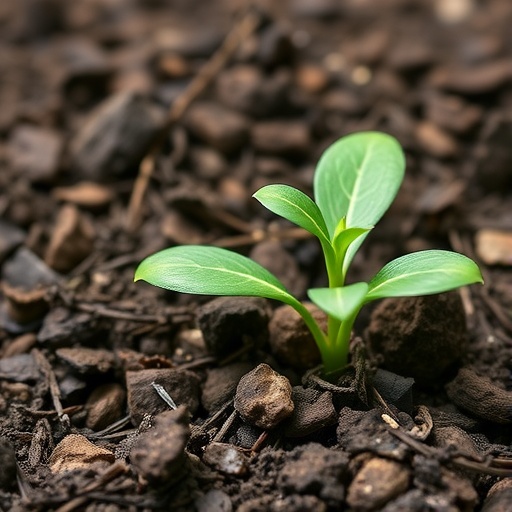
A groundbreaking investigation has unveiled the profound potential of engineered biochar to revolutionize phytoremediation strategies targeting cadmium-contaminated soils. This study highlights a sophisticated interplay between specially modified biochar, fast-growing willow species of the genus Salix, and soil microbial dynamics, synergistically enhancing the uptake and sequestration of cadmium in plant tissues. The research offers compelling evidence that integrating biochar modification with plant biology and microbiology can significantly advance the remediation of toxic heavy metals from agricultural lands and ecosystems under threat.
Cadmium contamination persists as a critical environmental hazard due to its high toxicity, persistence in soil matrices, and detrimental impact on food safety and ecological balance. Traditional phytoremediation techniques, while eco-friendly, often encounter limitations in soils heavily burdened by contaminants, where plant growth and metal absorption capacity are drastically reduced. The challenge is therefore twofold: improving plant biomass production in hostile conditions and increasing bioavailability and translocation of cadmium within plant systems.
In addressing this multifaceted problem, the researchers engineered biochar derived from bamboo biomass and chemically modified it using phosphorus-rich compounds sourced from plants. These modifications aimed not only to improve the physicochemical properties of biochar but also to leverage nutrient cycling to enhance soil fertility. By conducting controlled greenhouse experiments, the team explored how the modified biochar impacts Salix growth parameters, photosynthetic activity, and cadmium uptake in comparison with unmodified biochar and untreated control soils.
The experimental results were striking. Plants cultivated in phosphorus-modified biochar-amended soils exhibited substantially increased biomass and photosynthetic efficiency. These physiological enhancements were tightly coupled with a marked increase in cadmium translocation from root tissues to aboveground stems and leaves, a critical step for effective phytoremediation harvest. Quantitatively, one particular treatment nearly doubled the total cadmium concentration accumulated by Salix compared to plants grown in soils lacking biochar amendments, underscoring the transformative capabilities of the engineered substrate.
Delving deeper, the study uncovered that biochar’s role extends beyond simply adsorbing heavy metals or improving soil texture. The modified biochar fundamentally transformed the soil-plant-microbe nexus. It stimulated root elongation and proliferation, which in turn facilitated greater exploration of soil volumes and enhanced uptake of soluble cadmium ions. Simultaneously, the biochar amendment selectively modulated soil microbial communities, particularly favoring bacterial populations closely associated with the rhizosphere that assist in nutrient mobilization and stress alleviation.
Next-generation sequencing and microbial community profiling revealed distinctive responses among soil bacteria and fungi inhabiting the rhizosphere. While biochar amendments predominantly reshaped bacterial assemblages, fungal distribution was more strongly dictated by root exudates and rhizosphere activity. A key bacterial consortium enriched in carbon- and phosphorus-cycling genes was identified, closely linked to improved root development and increased cadmium bioavailability. This microbial facilitation mechanism appears essential for unlocking metal pools otherwise sequestered in less accessible mineral matrices.
Employing rigorous statistical modeling, the researchers elucidated that plant root biomass, soil cadmium speciation and availability, alongside microbial community composition, collectively accounted for over 90% of the variation in remediation performance metrics. These findings emphasize the paramount importance of understanding and manipulating biological and chemical variables in tandem to optimize phytoremediation outcomes. The complex feedback loops generated among biochar, microbes, and plants create a dynamic system that promotes sustained contaminant uptake while potentially restoring soil health.
Importantly, the engineered biochar functioned as a gradual-release nutrient source, ensuring a steady supply of phosphorus and carbon compounds that support microbial activity and plant nutritional demands over prolonged periods. This slow nutrient liberation counters the common challenge in remediation systems of nutrient depletion or imbalanced soil chemistry, suggesting a dual benefit of contaminant removal and long-term soil fertility enhancement.
Despite promising experimental results, the authors prudently acknowledge the necessity for extensive field trials across diverse agricultural landscapes with variable soil textures, climates, and contamination histories. The dynamic nature of real-world environments could impact the stability and efficacy of phosphorus-modified biochar. Continuous monitoring will be critical to assess environmental safety, potential secondary effects, and the sustainability of remediation gains over multiple growing seasons.
Should field-scale validations confirm the laboratory findings, this innovation holds promise as an economically viable, environmentally benign technology. Land managers and agricultural producers could harness this approach to mitigate heavy metal pollution, thereby securing food safety, conserving biodiversity, and promoting ecosystem resilience. Beyond cadmium, the principles established here may be applicable to other recalcitrant metals, expanding the scope of sustainable phytoremediation methodologies.
This study exemplifies the convergence of material science, plant physiology, and microbial ecology in addressing global soil pollution challenges. By intricately engineering biochar to modulate below-ground biogeochemical processes and leveraging plant-microbe partnerships, scientists are advancing towards scalable, integrative solutions for ecological restoration. The results propel the biochar field forward, underscoring its multifaceted utility in environmental management and sustainable agriculture.
In conclusion, the modified biochar not only improves soil chemical conditions but also orchestrates beneficial microbial networks and root development patterns that enhance metal uptake efficacy. This synergistic mechanism redefines traditional remediation paradigms, suggesting a future in which multifunctional soil amendments can sustainably detoxify polluted lands while enhancing productivity and ecosystem services. The interdisciplinary approach showcased here is a pivotal step towards translating bench-scale innovations into impactful environmental technologies.
News Publication Date: 2-Feb-2026
Web References:
DOI Link
References:
Di, D., Wang, S., Gai, X. et al. Biochar enhanced phytoremediation efficiency of Salix for soil cadmium: the differentiated responses of bacteria and fungi to biochar and rhizosphere effects. Biochar 8, 21 (2026).
Keywords
Bioremediation, Environmental remediation, Environmental engineering
Cite Scienmag News
Florence R. (February 26, 2026). Researchers Reveal How Engineered Biochar and Microbes Collaborate to Enhance Phytoremediation of Cadmium-Contaminated Soils. Scienmag. https://scienmag.com/researchers-reveal-how-engineered-biochar-and-microbes-collaborate-to-enhance-phytoremediation-of-cadmium-contaminated-soils/
Florence R. "Researchers Reveal How Engineered Biochar and Microbes Collaborate to Enhance Phytoremediation of Cadmium-Contaminated Soils." Scienmag, 26 February 2026, https://scienmag.com/researchers-reveal-how-engineered-biochar-and-microbes-collaborate-to-enhance-phytoremediation-of-cadmium-contaminated-soils/. Accessed 28 August 2026.
Florence R. "Researchers Reveal How Engineered Biochar and Microbes Collaborate to Enhance Phytoremediation of Cadmium-Contaminated Soils." Scienmag. February 26, 2026. https://scienmag.com/researchers-reveal-how-engineered-biochar-and-microbes-collaborate-to-enhance-phytoremediation-of-cadmium-contaminated-soils/


