


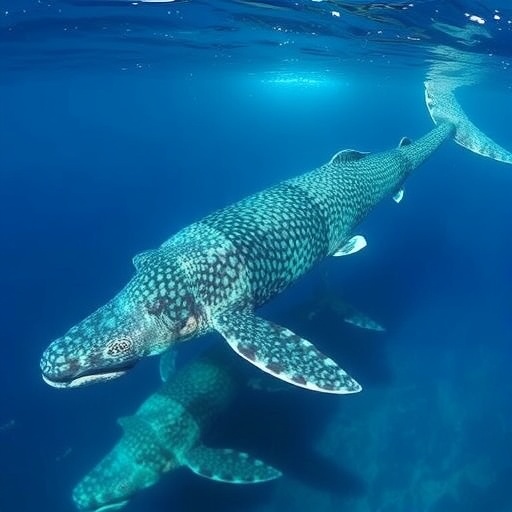
For more than forty years, scientific studies have documented the increasing intersection between marine megafauna and vessel traffic in coastal and surface waters worldwide. A groundbreaking meta-analysis recently published in npj Ocean Sustainability offers the first global synthesis of how this pervasive human activity impacts large marine animals, including whales, dolphins, seals, manatees, sea turtles, sharks, and rays. This expansive review integrates nearly 1,900 data comparisons from over 200 peer-reviewed publications, providing an unprecedentedly detailed understanding of behavioral, physiological, and population-level consequences engendered by vessels.
The researchers compiled data spanning four decades to rigorously evaluate differences in marine megafauna responses with and without vessel presence, encompassing a broad spectrum of species and geographic contexts. Their comprehensive approach reveals that vessel traffic consistently disrupts essential life functions in marine wildlife. These disruptions range from alterations in movement patterns and feeding behaviors to interference with vital communication signals necessary for social coordination and reproduction. Moreover, the chronic stress induced by repeated disturbances poses potential risks to individual health and long-term population viability.
Marine species are inherently vulnerable to anthropogenic disturbances due to their life history traits. Many have long lifespans, slow reproductive rates, and dependence on nearshore habitats where vessel density is highest, compounding the pressure on these animals. The meta-analysis highlights that vessel traffic leads to subtle but cumulative stressors, resulting in significant cumulative biological impacts that are often underestimated. This nuanced understanding challenges the assumption that occasional vessel encounters are harmless, emphasizing instead the need for comprehensive management strategies informed by empirical evidence.
One of the study’s most revealing insights is the variability in species sensitivity to vessel disturbance. Sea turtles emerged as particularly susceptible, with documented strong behavioral and physiological reactions to boat presence. Contrastingly, large fishes, sharks, and rays, despite their frequent spatial overlap with vessel routes, appear understudied relative to other taxa. This research gap suggests urgent priorities for future study and highlights the importance of inclusive conservation strategies that incorporate less-studied yet ecologically critical marine groups.
The meta-analysis also uncovers an alarming interaction between vessel disturbance and conservation status. Species already designated as threatened or endangered tend to exhibit more pronounced or detrimental responses to vessel presence. In these vulnerable populations, anthropogenic disturbance could exacerbate existing threats such as habitat degradation and climate change, accelerating declines and complicating recovery efforts. Such findings underscore the necessity to integrate vessel management into broader conservation frameworks to safeguard imperiled marine megafauna effectively.
Technological advancements in field research and data analytics have enabled this extensive synthesis, allowing researchers to detect consistent patterns across studies conducted under diverse ecological conditions. These methodologies include behavioral observation, stress hormone assays, acoustic monitoring, and population modeling. The convergence of multiple lines of evidence reinforces the robustness of the conclusions while paving the way for innovative approaches targeting the mitigation of vessel impacts.
The influence of vessel traffic extends beyond immediate behavioral changes, penetrating physiological processes that govern health and fitness. Stress responses triggered by repeated exposure to vessels can provoke elevated cortisol levels and immune suppression, reducing resilience to disease and environmental perturbations. The cumulative physiological toll is particularly critical in species with slow reproductive cycles, where survival and reproductive success hinge on maintaining optimal health over extended lifespans.
Recognizing the dynamic nature of marine ecosystems and vessel distributions, the study advocates for adaptive management protocols tailored to spatiotemporal variability. Static regulations often fail to account for seasonal migrations, breeding periods, and localized habitat use, limiting their efficacy. Instead, the adoption of flexible measures such as seasonal speed restrictions, adaptive buffer zones, and temporal closures of sensitive habitats offers promising solutions to reconcile human maritime activity with the conservation needs of marine megafauna.
Interdisciplinary collaboration is paramount to addressing these complex challenges, melding ecological science, oceanography, policy-making, and maritime operations. The study’s authors emphasize the importance of translating scientific insights into actionable guidelines that inform regulatory frameworks and stakeholder practices. By integrating ecological evidence with socio-economic considerations, policies can optimize protection while enabling sustainable use of ocean resources.
Education and public awareness campaigns play a crucial role in complementing regulatory efforts. Highlighting the often-invisible impacts of vessel traffic on marine wildlife can inspire community engagement and foster stewardship. Recreational boaters, commercial shipping industries, and tourism operators, equipped with knowledge of best practices, can significantly reduce disturbances through collective responsibility and adherence to conservation protocols.
The collaborative nature of this research, spanning institutions such as the University of Miami and Florida State University, reflects a global commitment to advancing marine conservation science. The synthesis not only charts a course for future research priorities but also provides an empirical foundation to guide international marine management policies. This contribution marks a pivotal advancement in understanding and mitigating the anthropogenic threats confronting some of the ocean’s most iconic species.
Ultimately, the study illuminates the intricate and far-reaching consequences of vessel traffic on marine megafauna and advocates for a paradigm shift in how such interactions are managed. By embracing dynamic, evidence-based interventions and bolstering interdisciplinary cooperation, the scientific and conservation communities can better protect these vital marine populations while balancing human uses of the ocean. The continued health of marine ecosystems—and the diverse life forms they support—hinges on such informed and adaptive stewardship.
News Publication Date: 25-Feb-2026
Web References:
http://dx.doi.org/10.1038/s44183-026-00182-5
Cite Scienmag News
Margaret Porter. (February 25, 2026). Marine Megafauna Behavior, Stress, and Population Trends Impacted by Vessel Traffic. Scienmag. https://scienmag.com/marine-megafauna-behavior-stress-and-population-trends-impacted-by-vessel-traffic/
Margaret Porter. "Marine Megafauna Behavior, Stress, and Population Trends Impacted by Vessel Traffic." Scienmag, 25 February 2026, https://scienmag.com/marine-megafauna-behavior-stress-and-population-trends-impacted-by-vessel-traffic/. Accessed 3 September 2026.
Margaret Porter. "Marine Megafauna Behavior, Stress, and Population Trends Impacted by Vessel Traffic." Scienmag. February 25, 2026. https://scienmag.com/marine-megafauna-behavior-stress-and-population-trends-impacted-by-vessel-traffic/


