


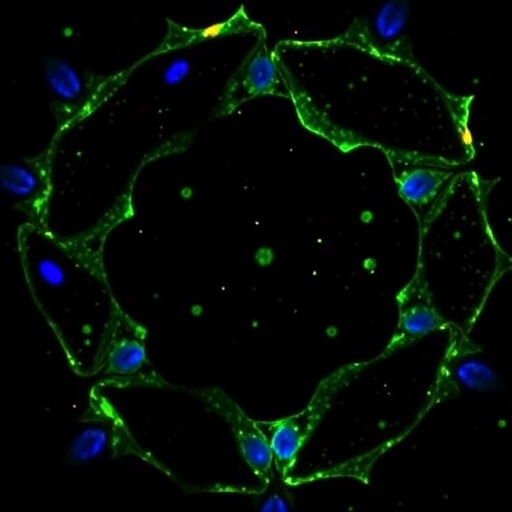
In a groundbreaking study poised to reshape our understanding of intervertebral disc degeneration (IDD), a team of researchers led by Cai, H., Zheng, Hl., and Chen, Qz. has unveiled a novel molecular mechanism that holds promise for innovative therapeutic strategies. Published in the journal Cell Death Discovery in 2026, their research elucidates the protective role of metallothionein-2A (MT2A) in preventing the death of nucleus pulposus cells—a critical cellular component of spinal discs—by inhibiting ferroptosis, a unique form of programmed cell death characterized by iron-dependent lipid peroxidation. This protective effect is mediated through the activation of the crucial PI3K/AKT/mTOR signaling pathway, a discovery that opens new horizons in combating chronic back pain and disability associated with IDD.
Intervertebral disc degeneration is a prevalent condition that underpins much of the chronic lower back pain affecting millions worldwide. The nucleus pulposus cells within the discs maintain the gel-like core responsible for cushioning spinal vertebrae. Degeneration of these cells leads to diminished disc functionality and structural failure. While multiple pathological processes contribute to IDD, recent studies have spotlighted ferroptosis as a pivotal driver of cellular demise in degenerating discs. Ferroptosis, distinct from apoptosis and necrosis, involves the accumulation of lethal lipid reactive oxygen species catalyzed by iron overload, yet therapeutic interventions targeting this pathway have remained elusive until now.
The research team embarked on an exhaustive molecular exploration to identify potential endogenous defenders against ferroptosis in nucleus pulposus cells. Their findings revealed that upregulation of MT2A—a low-molecular-weight, cysteine-rich metal-binding protein known for its antioxidative and heavy metal ion-chelating properties—plays a vital role in mitigating ferroptotic damage. MT2A’s elevation was found to suppress iron-dependent lipid peroxidation, preserving cellular integrity and function within degenerating discs. This observation is particularly significant given MT2A’s relative obscurity in previous IDD research contexts.
Building on molecular assays and in vitro experiments, the researchers demonstrated that the cytoprotective effect of MT2A hinges on its ability to activate the PI3K/AKT/mTOR signaling cascade. This pathway is a well-documented regulator of cell survival, metabolism, and growth, and its modulation profoundly impacts cellular fate decisions. Activation of PI3K/AKT/mTOR by MT2A was shown to enhance antioxidant defenses and promote metabolic balance, effectively counteracting the ferroptotic cascade that otherwise precipitates nucleus pulposus cell death. This mechanistic insight pinpoints a crucial regulatory axis that could be exploited for therapeutic intervention.
Moreover, the study utilized advanced molecular biology techniques and pharmacological interventions to verify the causality of the MT2A-PI3K/AKT/mTOR axis in ferroptosis inhibition. In models of IDD, overexpression of MT2A led to marked reductions in markers of lipid peroxidation and iron accumulation. Conversely, knocking down MT2A expression or pharmacologically blocking the PI3K/AKT/mTOR pathway abrogated these protective effects, underscoring the indispensable role of this signaling route. Such robust mechanistic evidence affirms MT2A as a key molecular guardian against disc degeneration at the cellular level.
These insights offer a paradigm shift for future therapeutic development. Targeting ferroptosis through upregulation of MT2A or pharmacological activation of the PI3K/AKT/mTOR pathway could arrest or even reverse the progression of IDD, preserving spinal structure and function. Current treatments for disc degeneration largely focus on symptomatic relief or invasive surgical interventions, which often come with significant morbidity and variable success rates. Thus, the identification of MT2A as a molecular shield introduces novel, non-invasive avenues for disease-modifying therapies.
Additionally, the elucidation of ferroptosis as a critical pathological mechanism in disc degeneration bridges a knowledge gap in the broader landscape of degenerative diseases where iron-dependent cell death is implicated, including neurodegenerative disorders and certain cancers. The potential cross-talk between MT2A-driven pathways and systemic iron metabolism pathways may unveil interconnected therapeutic targets beyond the spine, suggesting wide-reaching biomedical implications.
Intriguingly, the study also highlights the complexity of intracellular signaling networks in preserving cellular homeostasis under stress conditions. The PI3K/AKT/mTOR pathway’s dual role in promoting survival while regulating metabolic processes aligns with emerging concepts of metabolic reprogramming in degenerative diseases. By finely tuning this pathway, MT2A serves as a molecular rheostat balancing cell survival against ferroptotic death, positioning it as a linchpin of cellular resilience.
The team’s rigorous methodology—combining gene expression analyses, ferroptosis-specific biochemical assays, and pathway inhibition studies—affords a comprehensive perspective that strengthens the validity of their conclusions. Their work delineates not only the protective effects of MT2A but also precise intracellular events leading to ferroptosis, effectively charting a detailed map of molecular interactions underpinning nucleus pulposus cell viability.
Looking forward, these findings demand further exploration in in vivo models and clinical specimens to validate the translatability of MT2A-based interventions. Questions remain regarding the regulation of MT2A expression in aging and diseased discs, the potential influence of systemic iron homeostasis, and the long-term consequences of manipulating the PI3K/AKT/mTOR pathway. Addressing these issues will be essential to transition from bench to bedside.
Furthermore, the study’s implications extend to the development of biomarkers for IDD progression. Given MT2A’s correlation with ferroptotic inhibition, its levels could serve as a diagnostic indicator or prognostic marker, enabling earlier detection and personalized treatment strategies. This biomarker potential adds another dimension to MT2A’s biomedical significance.
In sum, Cai et al.’s work represents a seminal advance in spinal biology, unmasking the protective up-regulation of MT2A as a master regulator safeguarding nucleus pulposus cells from ferroptotic death through critical signaling pathways. This fusion of metallothionein biology with ferroptosis research offers fresh molecular targets for combating degenerative spinal diseases, fostering hope for millions afflicted by chronic back pain.
As the global burden of spinal disorders rises in aging populations, studies such as this reinforce the urgency and promise of molecularly informed therapies. The intersection of metallothionein physiology, iron-mediated oxidative stress, and cell survival signaling embodies a vibrant research frontier. Ultimately, harnessing these molecular defenses could revolutionize how we preserve spinal health and combat degenerative diseases at large.
This exciting advancement beckons a new era of interdisciplinary research—where biochemistry, molecular biology, and clinical science converge to decode the intricate choreography of cellular life and death in human tissues. The protective role of MT2A in ferroptosis adds a compelling chapter to this narrative, signaling a future where tailored interventions may unlock regenerative pathways and restore vital function within our spinal architecture.
Cite Scienmag News
Lydia K. (February 25, 2026). Metallothionein-2A Halts Disc Cell Death via PI3K Pathway. Scienmag. https://scienmag.com/metallothionein-2a-halts-disc-cell-death-via-pi3k-pathway/
Lydia K. "Metallothionein-2A Halts Disc Cell Death via PI3K Pathway." Scienmag, 25 February 2026, https://scienmag.com/metallothionein-2a-halts-disc-cell-death-via-pi3k-pathway/. Accessed 28 August 2026.
Lydia K. "Metallothionein-2A Halts Disc Cell Death via PI3K Pathway." Scienmag. February 25, 2026. https://scienmag.com/metallothionein-2a-halts-disc-cell-death-via-pi3k-pathway/


