


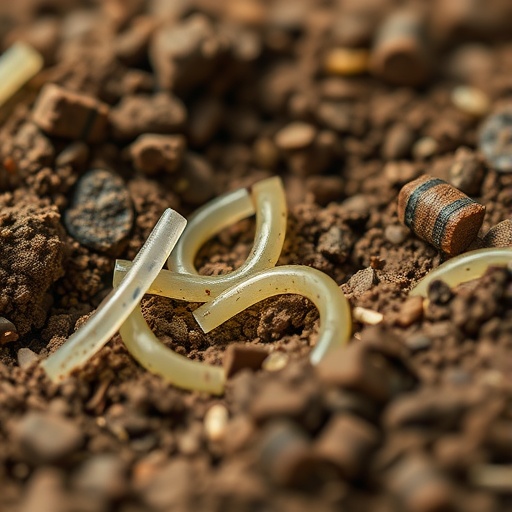
Microplastics are no longer a concern confined to our oceans and waterways. An escalating volume of evidence paints a stark and complex picture of how these minute plastic fragments permeate terrestrial environments, particularly soils, triggering profound disruptions at the microbial and genetic levels. Recent comprehensive analysis reveals that microplastics in soil ecosystems act as active agents influencing the functional genes of microbial communities, fundamentally altering biogeochemical cycles that underpin soil health, crop productivity, and global climate dynamics.
Soils serve as extensive repositories for microplastic particles, accumulating from a variety of anthropogenic sources including degraded agricultural plastics, compost amendments, biosolids from wastewater treatment, and even atmospheric deposition. Unlike their perceived inert nature, these persistent plastics engage dynamically with soil microbiota. They influence gene expression related to essential soil processes like carbon sequestration and nitrogen fixation. This crosstalk between plastics and microbial genetic machinery challenges traditional views of soil ecosystems as stable and self-regulating environments.
The impact of microplastics on microbial gene diversity and activity is especially critical when considering carbon and nitrogen cycling, the foundational processes that maintain soil fertility and regulate greenhouse gas fluxes. Modified gene pathways linked to organic matter decomposition can alter the rate and efficiency by which soils absorb and release carbon dioxide, while disruptions to nitrogen-transforming genes may lead to increased emissions of nitrous oxide, a potent climate forcing gas. These perturbations indicate that microplastics can indirectly exacerbate climate change through microbial-mediated feedback loops.
A particularly urgent concern involves the promotion of antibiotic resistance gene (ARG) proliferation within soils contaminated by microplastics. The surfaces of plastic particles foster biofilm communities dubbed ‘plastispheres,’ which serve as hotspots for horizontal gene transfer among bacteria. This facilitates the rapid exchange and amplification of ARGs, raising the specter of environmental reservoirs acting as conduits for resistance traits to enter food chains through crops and animal hosts, potentially reaching human populations and complicating disease management.
Soil fauna such as earthworms and nematodes are not exempt from these influences. Ingesting microplastic particles alters the gut microbiomes of these organisms, disrupting endosymbiotic relationships critical for nutrient cycling and soil structure maintenance. Given the key ecological roles these species play in soil trophic networks, genetic changes in their microbiota may propagate through food webs, inducing cascading ecological effects that compromise ecosystem resilience and productivity.
Interactions between microplastic pollution and climate stressors—such as warming temperatures, drought conditions, and increased atmospheric CO2—further complicate the picture. These environmental factors might synergistically magnify microbial gene disturbances, accelerating the emission of greenhouse gases and dampening soil’s capacity to support plant growth. This interplay underscores a need to investigate microplastic effects within the broader context of global change biology, integrating multi-stressor frameworks to predict ecosystem responses.
Current knowledge on microplastic impacts in soil largely derives from controlled, short-term laboratory experiments. These studies, while foundational, fall short of capturing the complexity and temporal scale of real-world environments. The urgent call from researchers advocates for long-term, in situ field investigations combined with cutting-edge approaches such as metagenomic sequencing, isotope labeling, and advanced imaging to decode the nuanced interactions between plastics and microbial gene dynamics under natural conditions.
Understanding the differential effects of conventional plastics versus biodegradable alternatives is also paramount. Though biodegradable polymers are often heralded as environmentally safer, emerging data indicates they too can influence microbial gene expression, albeit through distinct biochemical pathways and degradation intermediates. Determining these mechanistic discrepancies holds the key to developing sustainable plastic materials and informing regulatory policies tailored to minimize unintended ecological consequences.
As plastic production relentlessly climbs toward projected future peaks, it becomes imperative to expand the environmental narrative beyond aquatic realms to include soils and their microbial inhabitants. Soil ecosystems buffer terrestrial life, regulate atmospheric gases, and sustain global food systems. Protecting the integrity of microbial gene functions within these soils entails redefining pollution management strategies that integrate genomic and ecosystem-level metrics, thereby fostering resilience against both chemical contaminants and climate perturbations.
In synthesis, microplastics in soils emerge not as passive pollutants but dynamic modulators of microbial functional genetics, reshaping vital ecological processes. The multifaceted impacts span altered nutrient cycling, enhanced antibiotic resistance gene dissemination, and disrupted soil food webs—effects that ripple outward with significant agronomic, environmental, and public health ramifications. Continued interdisciplinary research is indispensable to unraveling these complexities and guiding actionable solutions.
This paradigm shift in evaluating microplastic pollution mandates leveraging systems biology, environmental genomics, and ecology to forge sustainable practices. Strategies prioritizing reduction of plastic inputs, development of truly eco-friendly materials, and monitoring of microbial gene function stand as pivotal interventions to safeguard soil ecosystems. Only through holistic scientific inquiry and proactive policy engagement can the silent genetic upheaval wrought by microplastics be effectively addressed, securing soil health for generations to come.
Cite Scienmag News
Morgan Morrow. (February 24, 2026). Microplastics in Soil Alter Microbial Genes, Jeopardizing Ecosystem Stability. Scienmag. https://scienmag.com/microplastics-in-soil-alter-microbial-genes-jeopardizing-ecosystem-stability/
Morgan Morrow. "Microplastics in Soil Alter Microbial Genes, Jeopardizing Ecosystem Stability." Scienmag, 24 February 2026, https://scienmag.com/microplastics-in-soil-alter-microbial-genes-jeopardizing-ecosystem-stability/. Accessed 2 September 2026.
Morgan Morrow. "Microplastics in Soil Alter Microbial Genes, Jeopardizing Ecosystem Stability." Scienmag. February 24, 2026. https://scienmag.com/microplastics-in-soil-alter-microbial-genes-jeopardizing-ecosystem-stability/


