


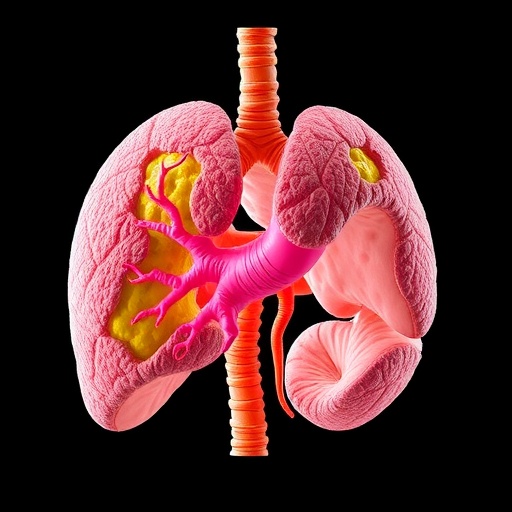
Scientists at the University of Washington have achieved a groundbreaking milestone in the understanding of human liver architecture by creating unprecedented three-dimensional cellular-level reconstructions of human liver tissue. This innovative effort, led by an interdisciplinary team of biomedical engineers, physicians, and computational scientists, captures the intricate spatial microstructure of multiple liver lobes with remarkable precision. The advanced imaging technology and computational pipeline employed have allowed the researchers to delve into the organ’s complexity, revealing new insights into its organization and function.
The human liver is a vital multitasking organ responsible for over 500 biochemical and physiological functions essential to maintaining homeostasis. Among its many roles, the liver detoxifies harmful substances, regulates metabolism, supports digestion, stores nutrients, synthesizes proteins for blood clotting, and orchestrates immune defense mechanisms. Understanding the organ’s detailed cellular topology has been a long-standing challenge due to the liver’s dense and heterogeneous tissue composition, which has limited traditional histological and imaging methods to mostly two-dimensional analyses.
Utilizing an innovative approach coined the “Liver Map pipeline,” the research team combined cutting-edge optical imaging, computational analysis, and chemical staining techniques to transcend conventional 2D microscopy limitations. This methodology enabled three-dimensional visualization of key liver structures, with an emphasis on vascular and biliary network mapping, at a resolution sufficient to distinguish individual cell populations and their microenvironments. The resulting 3D liver reconstructions provide a comprehensive blueprint that sheds light on the organization of hepatocytes, endothelial cells, bile ducts, and other specialized liver cells in situ.
Importantly, the Liver Map pipeline also allowed the team to investigate pathological alterations in liver cirrhosis, a debilitating condition characterized by extensive scarring and architectural remodeling. Cirrhosis commonly arises from chronic viral infections, metabolic dysfunctions, medication toxicity, or alcohol abuse and can lead to liver failure, profoundly impacting patient morbidity and mortality. Through their detailed reconstructions of cirrhotic liver tissue, the researchers identified significant disruptions in the organ’s microvascular and metabolic zonation, including a pronounced regression and fragmentation of central vein and arterial networks.
Their findings also highlighted dysregulation in metabolite transport within the sinusoidal zones of the liver lobules and a marked reduction in populations of glutamine synthetase (GLUL)-expressing hepatocytes. These specialized cells play a crucial role in detoxifying ammonia by converting it into glutamine, underscoring the metabolic consequences of cirrhotic remodeling. Additionally, the biliary network responsible for transporting bile, the fat-digesting fluid produced by the liver, was found to be fragmented and disorganized, which may contribute to the impaired digestive and excretory functions observed in cirrhosis.
The significance of these discoveries transcends basic liver biology. As articulated by Kelly Stevens, a professor of bioengineering and senior author on the study, the absence of detailed “blueprints” of human organs at the cellular level has constrained progress in regenerative medicine and organ bioengineering. The field of organ bioprinting, which aims to fabricate functional tissues or whole organs using living cells and biomaterials, relies fundamentally on accurate structural knowledge to guide the assembly of complex vascular networks and cellular architecture. Without a precise map of the organ’s cellular topology, bioengineered organs risk being structurally and functionally deficient.
This study represents a critical leap forward by addressing this knowledge gap, employing a synergistic combination of advanced microscopy, image processing, and quantitative spatial analysis. The researchers used patient-derived liver tissue samples obtained from surgical resections and transplants, including samples from both healthy and cirrhotic livers, ensuring clinically relevant insights. The multi-scale 3D reconstructions uncovered previously unrecognized spatial patterns in both normal and diseased livers, thus opening new avenues for understanding organ physiology and pathology.
While the current imaging tools provide unprecedented depth and resolution, the team acknowledges a technical limitation: the inability to capture the full depth of an entire human liver lobule—the functional hexagonal unit forming the liver’s microarchitecture. This constraint is primarily due to current optical penetration limits and tissue opacity. Ongoing advances in imaging modalities, clearing techniques, and computational reconstruction algorithms promise to overcome these barriers, potentially enabling whole-organ 3D cellular mapping in the near future.
Beyond technical achievements, this research carries profound translational and clinical implications. By detailing how cirrhosis alters the fundamental cellular and vascular scaffolding of the liver, it suggests novel targets for therapeutic intervention and biomarkers for disease progression. More precise knowledge about vascular and transport network disruptions can inform the design of strategies to protect or restore liver function in patients, advancing personalized medicine approaches.
This landmark work, published in Science Advances and supported by multiple prestigious funding agencies including the NIH and NSF, exemplifies the power of interdisciplinary collaboration across bioengineering, medicine, and computational science. It sets a new paradigm for organ mapping studies and underscores the importance of comprehensive spatial reconstruction in both health and disease. Looking forward, the insights gained from the Liver Map pipeline can catalyze progress in regenerative therapies, drug development, and the engineering of replacement organs that closely mimic native structure-function relationships.
As the field moves toward real-world applications of organ bioprinting, having accurate and high-resolution three-dimensional anatomical and cellular blueprints is indispensable. This breakthrough also challenges the scientific community to rethink traditional two-dimensional histological approaches and embrace the emerging era of spatially resolved systems biology. Ultimately, these efforts illuminate the path toward a future where laboratory-grown functional human organs may alleviate transplant shortages and revolutionize patient care.
The authors emphasize that continued refinement of imaging technologies, integration with molecular and functional data, and expansion to other organs will further deepen biological understanding and medical innovation. Their research collectively unveils never-before-seen 3D human liver structures across various size scales, illuminating the spatial biology of hepatic health and disease with transformative implications for science and medicine.
News Publication Date: 18-Feb-2026
Web References:
10.1126/sciadv.adz2299
Cite Scienmag News
Lydia K. (February 24, 2026). 3D Reconstruction Reveals Human Liver Tissue Architecture at the Cellular Level. Scienmag. https://scienmag.com/3d-reconstruction-reveals-human-liver-tissue-architecture-at-the-cellular-level/
Lydia K. "3D Reconstruction Reveals Human Liver Tissue Architecture at the Cellular Level." Scienmag, 24 February 2026, https://scienmag.com/3d-reconstruction-reveals-human-liver-tissue-architecture-at-the-cellular-level/. Accessed 29 August 2026.
Lydia K. "3D Reconstruction Reveals Human Liver Tissue Architecture at the Cellular Level." Scienmag. February 24, 2026. https://scienmag.com/3d-reconstruction-reveals-human-liver-tissue-architecture-at-the-cellular-level/


