


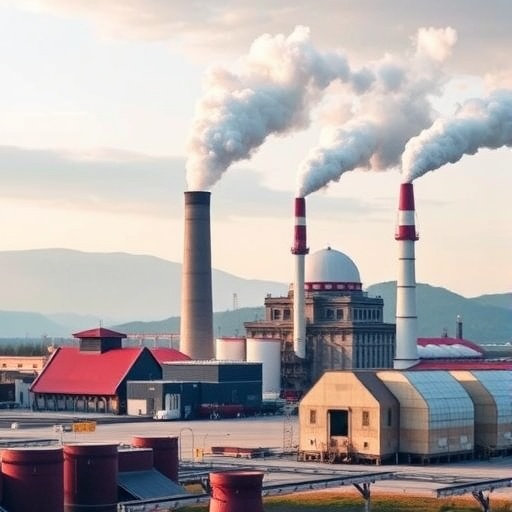
In the rapidly evolving landscape of sustainable energy and waste management, researchers have made significant strides in enhancing the efficiency of waste incineration processes. A pioneering study led by Cui, J., Cui, Y., Li, J., and their team, recently published in Nature Communications, delves into the intricate dynamics of waste incineration in China, emphasizing a balanced approach that synergizes waste disposal and energy supply. This groundbreaking research sheds light on the optimization of waste-to-energy systems through a methodical efficiency hierarchy, a concept that redefines how we perceive and manage waste as a resource.
China, as one of the world’s largest producers of municipal solid waste, faces a monumental challenge in managing its refuse while meeting the soaring demand for energy. Traditional waste incineration has long been a favored solution due to its dual ability to reduce landfill pressures and generate power. However, the inherent challenge lies in maximizing the energy output without compromising environmental safety or incineration efficacy. This study elucidates how a tiered efficiency framework can systematically address this challenge, fostering an optimized system that markedly improves performance metrics compared to conventional methods.
At the heart of the research is an innovative efficiency hierarchy model that stratifies waste incineration processes based on multiple criteria, including energy recovery rates, pollutant emissions, and operational stability. By categorizing incineration technologies and practices into distinct efficiency levels, the researchers present a roadmap for decision-makers and facility operators to prioritize upgrades and policy interventions. This hierarchy not only facilitates a pragmatic assessment of current infrastructures but also highlights pathways for scalable technological improvements that can be tailored to diverse regional conditions across China.
A critical element discussed in the article involves the integration of advanced thermodynamic principles with real-world waste composition data. The authors meticulously analyze the calorific value and heterogeneity of Chinese municipal solid waste streams, which are markedly different from other international contexts due to the country’s unique consumption patterns and societal behaviors. These findings underscore the necessity of localized optimization techniques that consider variable waste characteristics to enhance incinerator performance and energy yield.
The study extensively evaluates several state-of-the-art incineration technologies, including moving grate systems, fluidized bed combustors, and pyrolysis-gasification hybrids. Each technology is scrutinized for its operational efficiencies, maintenance demands, and emission profiles. This comparative analysis draws attention to the fluidized bed technology’s superior adaptability with waste heterogeneity, while recognizing the economic and infrastructural constraints that may limit its immediate scalability in less developed regions.
Pollutant control mechanisms form a cornerstone of the research, acknowledging that energy efficiency alone cannot validate an incineration approach if it results in harmful environmental impacts. The team explores the efficacy of integrated flue gas treatment technologies, such as selective catalytic reduction and advanced bag filters, in mitigating nitrogen oxides, dioxins, and particulate matter. The complex interplay between optimizing combustion parameters and ensuring robust pollution controls emerges as a delicate balance crucial for sustainable waste-to-energy deployment.
In addressing operational stability, the research highlights the significance of real-time monitoring systems equipped with AI-driven predictive analytics. These technologies enable dynamic management of combustion conditions, facilitating rapid adjustments to fluctuations in waste composition or feed rates. The authors advocate for the widespread adoption of such intelligent control systems to enhance both energy efficiency and emission compliance, thereby transforming incineration plants into smarter, more resilient infrastructures.
Economic considerations are intricately woven into the study’s framework, recognizing that technological advances must be financially viable to achieve widespread adoption. The researchers conduct a detailed cost-benefit analysis, incorporating capital expenditure, maintenance, and potential revenues from electricity sales and waste processing fees. Their findings suggest that prioritizing efficiency upgrades in large-scale facilities yields the most impactful returns, while smaller plants might benefit from modular retrofits paired with optimized operational protocols.
From a policy perspective, the paper proposes an evidence-based, tiered regulatory structure aligned with the efficiency hierarchy. This system incentivizes operators to pursue progressive enhancements through subsidies, tax credits, or market-based mechanisms such as tradable permits for emissions. The authors emphasize the role of coordinated policymaking in harmonizing waste management goals with broader environmental and energy objectives, advocating for strategies that foster innovation without imposing prohibitive barriers on industry stakeholders.
Environmental sustainability is a pervasive theme throughout the publication, with detailed life cycle assessments demonstrating the net positive impacts of optimized waste incineration compared to conventional landfill disposal or untreated burning. The research articulates how an efficient, controlled incineration framework significantly reduces greenhouse gas emissions and conserves natural resources by recovering energy that would otherwise be lost. This alignment with national carbon reduction targets positions improved incineration processes as pivotal components of China’s green transition.
The human dimension of waste management is also examined, particularly how community acceptance and public perception influence the viability of incineration projects. The study recommends transparent communication channels that convey the tangible benefits of optimized incineration, alongside rigorous safety assurances. Building public trust is framed as an essential complement to technical and policy advancements, necessary to facilitate the expansion of waste-to-energy infrastructure across diverse urban and rural settings.
Technological innovation is not presented as a static endpoint but rather as an evolving frontier. The authors express optimism about emerging developments such as plasma gasification and hybrid photon-thermal systems, which hold the promise of further elevating efficiency thresholds and reducing environmental footprints. This forward-looking perspective encourages continuous research and cross-sector collaboration to unlock the full potential of waste as an energy resource.
The authors also stress the importance of multidisciplinary approaches, integrating engineering, environmental science, economics, and social sciences to holistically tackle the multifaceted complexities inherent in waste incineration. Such comprehensive strategies are portrayed as indispensable for crafting solutions that are technically robust, economically sound, socially acceptable, and environmentally sustainable.
Throughout the article, meticulous data analyses, mathematical modeling, and empirical validation underpin the conclusions, lending a high degree of scientific rigor. This positions the study not only as a significant academic contribution but also as a practical guide readily translatable into industrial and governmental applications. The blend of theory and applied research exemplifies best practices in addressing modern sustainability challenges.
In conclusion, this seminal work by Cui and colleagues provides a visionary yet pragmatic blueprint for optimizing waste incineration systems in China. By foregrounding an efficiency hierarchy that balances disposal demands with energy generation imperatives, the study charts a course toward cleaner, smarter, and more sustainable waste management paradigms. Its insights resonate far beyond China, offering valuable lessons for global efforts to transform waste into a cornerstone of renewable energy economies.
Cite Scienmag News
Violet Maxwell. (February 23, 2026). Optimizing China’s Waste Incineration for Energy Balance. Scienmag. https://scienmag.com/optimizing-chinas-waste-incineration-for-energy-balance/
Violet Maxwell. "Optimizing China’s Waste Incineration for Energy Balance." Scienmag, 23 February 2026, https://scienmag.com/optimizing-chinas-waste-incineration-for-energy-balance/. Accessed 4 September 2026.
Violet Maxwell. "Optimizing China’s Waste Incineration for Energy Balance." Scienmag. February 23, 2026. https://scienmag.com/optimizing-chinas-waste-incineration-for-energy-balance/


