


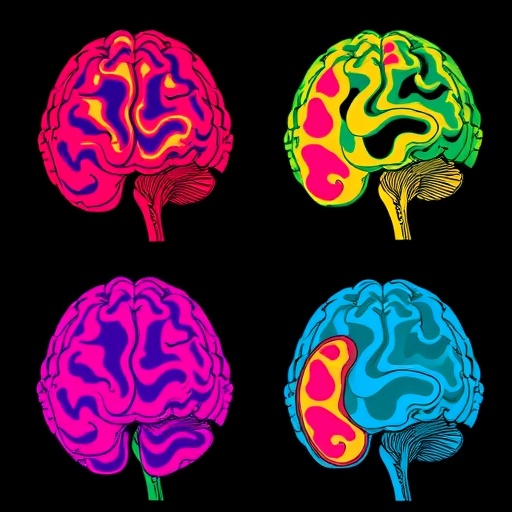
In a groundbreaking new study poised to transform our understanding of adolescent major depressive disorder (MDD), Liu, Wan, Wu, and colleagues have uncovered compelling evidence for distinct subtypes of this pervasive condition based on the divergent information dynamics within sensory-association cortices. Published recently in Nature Communications, this research leverages cutting-edge neuroimaging and sophisticated computational models to dissect the complex neural underpinnings that differentiate depressive subtypes during the critical developmental window of adolescence. Their findings challenge prevailing mono-dimensional views of depression and open novel avenues for personalized diagnostics and targeted interventions.
Major depressive disorder in adolescents represents a formidable public health challenge due to its high prevalence, heterogeneity, and often precarious prognosis. Despite its clinical significance, the neurobiological mechanisms that underpin the diverse symptomatology and treatment responses remain largely elusive. Traditional diagnostic models, which rely heavily on symptom checklists, frequently obscure underlying biological divergences. Confronting this challenge, the research team adopted an innovative approach that examines how information is processed and propagated within brain regions responsible for integrating sensory input and higher-order cognitive functions.
Central to their investigation was the sensory-association cortex, a pivotal neural hub involved in melding sensory stimuli with cognitive and emotional interpretations. By employing advanced imaging techniques, including high-resolution functional MRI, coupled with state-of-the-art analytical frameworks grounded in information theory, the researchers quantified the flow and complexity of neural signals. They hypothesized that divergent patterns in these information dynamics could delineate subtypes of adolescent depression characterized by distinct neurofunctional signatures.
The study cohort comprised a large, demographically diverse sample of adolescents diagnosed with MDD alongside matched healthy controls, meticulously screened to exclude confounding psychiatric or neurological conditions. Employing rigorous preprocessing pipelines to minimize noise and artifact in functional connectivity data, the authors analyzed temporal dynamics of neuronal information transmission across multiple sensory-association cortical regions. These analyses illuminated two principal patterns of information flow that stratified depressed individuals into discrete subgroups.
One subtype exhibited heightened feedforward information dynamics, suggesting an amplified propagation of sensory information toward association areas. This phenotype correlated with clinical features reflecting heightened sensory sensitivity and cognitive hypervigilance, symptom profiles often linked to anxiety comorbidity and somatic complaints. Intriguingly, this subgroup showed distinct alterations in connectivity with limbic structures, implicating a neural circuitry imbalance that may drive affective dysregulation through sensory overload mechanisms.
Conversely, the second subtype revealed diminished information complexity and reduced feedback signals from association cortices back to sensory areas, indicating disrupted integrative processing. Clinically, these individuals demonstrated pronounced cognitive blunting, anhedonia, and deficits in executive function—symptoms aligning with neural disengagement and impaired top-down modulation. These findings provide compelling insights into how the disruption of corticocortical communication channels might manifest as specific depressive phenotypes.
Importantly, both subtypes showed distinct molecular correlates identified through complementary transcriptomic analyses performed on peripheral biomarkers, suggesting differential underlying pathophysiological mechanisms. These molecular signatures further substantiate the neurofunctional divergences observed and hint at personalized pharmacological targets. The study thus exemplifies a multi-modal investigative framework that bridges neural dynamics, clinical symptomatology, and molecular biology.
Beyond diagnostic refinement, the implications of this work extend into treatment paradigms. The recognition of discrete depression subtypes based on neuroinformation dynamics invites more precise therapeutic interventions that address specific circuit dysfunctions. For instance, neuromodulatory techniques such as transcranial magnetic stimulation could be tailored to recalibrate aberrant feedforward or feedback pathways. Similarly, cognitive-behavioral strategies might be customized to target sensory processing biases or cognitive integration deficits inherent to each subtype.
The research also contributes to developmental neuroscience by highlighting adolescence as a uniquely sensitive period wherein sensory-association cortices undergo critical maturation. Disruptions in information processing during this window may confer susceptibility to depressive phenotypes linked to altered neurocircuit trajectories. This developmental perspective underscores the urgency of early identification and intervention to mitigate long-term functional impairments.
Methodologically, the study represents a tour de force in the application of information theory to human neuroimaging data. By quantifying measures such as entropy, mutual information, and transfer entropy across neural networks, the authors provide a granular depiction of how information is encoded, transmitted, and integrated at the systems level. This approach surpasses traditional connectivity analyses by capturing the dynamics and directionality of neural communication, thereby enriching our understanding of brain function in health and disease.
Moreover, the research addresses longstanding debates regarding the heterogeneity of depression by furnishing objective neurobiological criteria that may supersede symptomatic heterogeneity alone. The ensuing reclassification framework advocates for a paradigm shift from symptom-based taxonomies toward biologically grounded, mechanistic categorization of psychiatric disorders—harmonizing with the principles of precision psychiatry.
Future directions emerging from this study are manifold. Longitudinal tracking of these subtypes could elucidate prognostic trajectories and treatment responsiveness, thereby optimizing clinical decision-making. Expanding analyses to encompass other brain regions and integrating multimodal data streams such as electrophysiology and metabolomics will enrich phenotype characterization. Furthermore, translating these findings into scalable clinical tools remains a pressing challenge but holds immense potential to revolutionize personalized mental healthcare.
In sum, this seminal research by Liu and colleagues charts a visionary course for psychiatric neuroscience by unveiling how the dance of information within sensory-association cortices scripts the heterogeneity of adolescent major depressive disorder. By dissecting neural information dynamics at unprecedented resolution, it not only advances fundamental science but also lays the groundwork for innovative, targeted treatments poised to improve outcomes for millions of affected youths worldwide.
Cite Scienmag News
Cassandra Pierce. (February 22, 2026). Adolescent Depression Subtypes Show Distinct Brain Dynamics. Scienmag. https://scienmag.com/adolescent-depression-subtypes-show-distinct-brain-dynamics/
Cassandra Pierce. "Adolescent Depression Subtypes Show Distinct Brain Dynamics." Scienmag, 22 February 2026, https://scienmag.com/adolescent-depression-subtypes-show-distinct-brain-dynamics/. Accessed 3 September 2026.
Cassandra Pierce. "Adolescent Depression Subtypes Show Distinct Brain Dynamics." Scienmag. February 22, 2026. https://scienmag.com/adolescent-depression-subtypes-show-distinct-brain-dynamics/


