


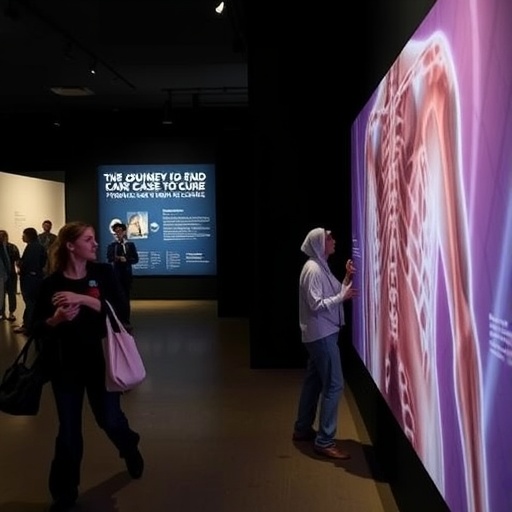
The University of Texas MD Anderson Cancer Center is unveiling an extraordinary new traveling exhibition entitled “The Journey to End Cancer: From Cause to Cure,” which embarks on a nationwide tour to illuminate the remarkable progress in cancer research, detection, and treatment. This pioneering exhibit, which launches at The Health Museum in Houston on March 7, 2026, harnesses cutting-edge multimedia technology, interactive experiences, and first-person narratives to portray the dynamic, intricate field of oncology in an accessible and engaging manner. Presented by MD Anderson and produced in collaboration with the National Cancer Institute (NCI), the exhibition represents a landmark effort to translate complex scientific breakthroughs into tangible stories of hope and innovation.
Occupying 5,000 square feet, the exhibit fuses immersive animations and vivid data visualizations with interactive games, inviting participants from all backgrounds to engage deeply with cancer science. Crafted meticulously over two and a half years by a team of clinicians, genomic specialists, and cancer researchers, “The Journey to End Cancer” transcends conventional science communication by demystifying the underlying biology of cancer, the environment that fosters its development, and the unprecedented therapeutic advancements reshaping patient care globally. Evergreen Exhibitions, renowned for creating traveling exhibits for premier science institutions worldwide, spearheaded the design and production, ensuring a blend of scientific rigor and visitor-centric engagement.
At its core, the exhibition introduces visitors to the fundamental processes instigating oncogenesis — the transformation of normal cells into malignant ones. Cutting-edge tools enable attendees to assume the role of biological detectives, tracing how genetic mutations, cellular microenvironments, and lifestyle factors collectively prompt cancer initiation. These investigative displays elucidate the genomic instability that fosters tumor evolution, highlighting how DNA damage, epigenetic alterations, and immune evasion coordinate the disease’s progression. By emphasizing early detection techniques, including liquid biopsies that analyze circulating tumor DNA and pioneering canine methods for sniffing specific cancer markers, the exhibit underscores vital innovations in diagnostic science.
Integral to the exhibition is an interactive game designed to explore cancer prevention through lifestyle modulation and the gut microbiome’s emerging role in oncogenesis. Narrated by Jennifer Wargo, M.D., a distinguished professor of Surgical Oncology and Genomic Medicine at MD Anderson, the game educates players about how dietary fiber intake, physical activity, and microbiota diversity can substantially influence cancer risk. This personalized approach to understanding cancer biology represents a transformative shift toward precision medicine and prevention strategies, reinforcing that lifestyle choices possess tangible molecular impacts.
Visitors are also immersed in an auditorium-like digital environment replicating a microscopic journey inside the human body, where cellular interactions, mutations, and immune responses are dynamically visualized. This segment elucidates the groundbreaking mechanisms behind immunotherapy, a domain that leverages checkpoint inhibitors, CAR-T cell therapies, and cancer vaccines to empower the immune system to recognize and eradicate malignant cells. By showcasing the interplay between tumor antigens and immune effector cells, the exhibit communicates how harnessing immunological precision is revolutionizing oncology treatment paradigms.
The emotional and human dimension permeates throughout the experience, as firsthand accounts from cancer survivors and MD Anderson clinicians provide poignant narratives of resilience and medical innovation. These testimonies spotlight not only the physical toll of cancer but also the psychosocial and integrative care approaches that complement traditional therapies. The exhibit’s contemplative space for reflection features ambient light and soundscapes inspired by meditation and yoga, illustrating the therapeutic potential of mind-body interventions in enhancing patient quality of life and recovery trajectories.
Despite the continual decline in overall cancer mortality—markedly a 34% reduction since 1991—the prevalence of certain malignancies, including breast, prostate, liver, melanoma, endometrial, and pancreatic cancers, is alarmingly rising. The exhibition’s comprehensive presentation of prevention, diagnostics, and treatments serves as a timely educational tool amidst shifting epidemiological landscapes. It encourages public empowerment through scientific literacy, highlighting how early research investments lead to incremental yet significant improvements in survival and survivorship.
As the exhibition tours multiple cities over the next five years, it aims to foster national awareness and engagement, inviting diverse audiences to actively participate in the journey toward conquering cancer. The collaborative curation by MD Anderson and the NCI reflects a strategic alliance between premier research entities dedicated to accelerating the translation of science into clinical practice and community impact. The initiative’s educational commitment is underscored by the availability of co-branded merchandise, with proceeds supporting ongoing research and treatment innovation at MD Anderson.
Peter W.T. Pisters, M.D., president of MD Anderson, emphasized the exhibition’s role in bridging scientific discovery and public understanding, stating that making oncology accessible and inspiring hope through direct interactions with experts and survivors is central to the institution’s mission. The exhibit represents an indispensable conduit for fostering hope and solidifying communal resolve to overcome cancer’s global burden through knowledge, collaboration, and innovation.
In conclusion, “The Journey to End Cancer: From Cause to Cure” exemplifies a landmark synthesis of science education, interactive technology, and personal storytelling. It not only chronicles the extraordinary advancements unraveling cancer’s mysteries but also empowers visitors with knowledge and optimism that fuel the collective fight against this multifaceted disease. By combining molecular insights with human experiences, this exhibition stands as a beacon of progress and a catalyst for ongoing research and prevention efforts nationwide.
News Publication Date: February 04, 2026
Web References:
- https://thejourneytoendcancer.com/
- https://acsjournals.onlinelibrary.wiley.com/doi/10.3322/caac.70043 (American Cancer Society)
- https://faculty.mdanderson.org/profiles/jennifer_wargo.html
- https://www.mdanderson.org/about-md-anderson/facts-history/president-peter-pisters.html
- https://store.mdanderson.org/pages/journey-to-end-cancer
Cite Scienmag News
Nathaniel Bowman. (February 4, 2026). MD Anderson Presents National Tour of “The Journey to End Cancer: From Cause to Cure” Exhibition. Scienmag. https://scienmag.com/md-anderson-presents-national-tour-of-the-journey-to-end-cancer-from-cause-to-cure-exhibition/
Nathaniel Bowman. "MD Anderson Presents National Tour of “The Journey to End Cancer: From Cause to Cure” Exhibition." Scienmag, 4 February 2026, https://scienmag.com/md-anderson-presents-national-tour-of-the-journey-to-end-cancer-from-cause-to-cure-exhibition/. Accessed 4 September 2026.
Nathaniel Bowman. "MD Anderson Presents National Tour of “The Journey to End Cancer: From Cause to Cure” Exhibition." Scienmag. February 4, 2026. https://scienmag.com/md-anderson-presents-national-tour-of-the-journey-to-end-cancer-from-cause-to-cure-exhibition/


