


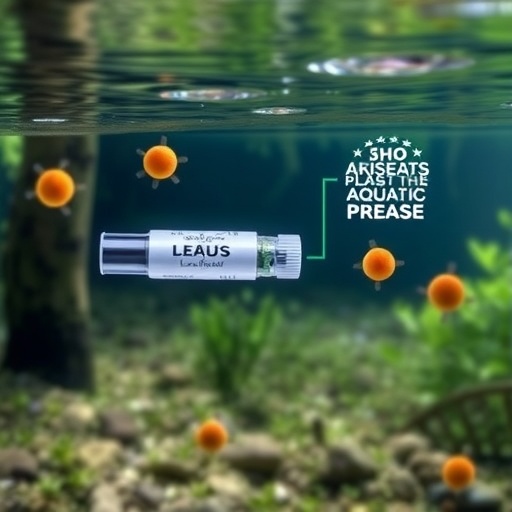
In recent years, the field of virology has witnessed groundbreaking advancements, particularly regarding the detection of viruses in aquatic environments. Researchers have been keenly aware of the continuous threat posed by viral pathogens present in water bodies, affecting both human health and ecological balances. This pressing issue has led to the development of innovative approaches, one of which is the use of passive samplers. These devices can efficiently capture viral particles from water, facilitating enhanced monitoring and analysis of viral loads in various aquatic settings.
The introduction of passive sampling techniques marks a significant leap forward in environmental virology. Traditionally, detecting viruses in aquatic environments relied heavily on active sampling methods which often resulted in increased stress-induced changes in viral behavior. In contrast, passive samplers operate differently. They are strategically placed within water bodies, allowing them to integrate over time, thus providing a more accurate representation of the viral community present. This integration over extended periods helps to mitigate sampling biases and captures temporal variations, leading to a richer understanding of viral dynamics.
Furthermore, the design of passive samplers is both practical and efficient. They can be fabricated from a variety of materials, each tailored to capture specific types of viral particles or a broader spectrum of microbial life. By using materials engineered at the nanoscale, researchers can enhance the efficiency of these samplers, enabling the concentration of viral particles from large volumes of water. The implications of this are significant, as more concentrated samples yield clearer insights during laboratory analysis.
With the global rise in waterborne illnesses, effective surveillance of viral pathogens is more important than ever. The ability to monitor water bodies, from urban reservoirs to remote lakes, can help public health officials pre-emptively address outbreaks. Passive samplers can be deployed in strategic locations to monitor for viruses such as Norovirus, Enterovirus, and others that may pose health risks to communities. This kind of vigilant environmental monitoring is essential as it provides early warnings of potential public health crises emerging from contaminated water sources.
Additionally, the application of these technologies extends beyond just public health. Ecologists and environmental scientists are interested in understanding the role viruses play within aquatic ecosystems. Viruses naturally occur in water bodies and can influence microbial populations, nutrient cycling, and overall ecosystem health. By employing passive samplers, researchers can investigate viral diversity and abundance, and how these interact with other microbial entities. Understanding these dynamics can lead to innovative strategies for managing aquatic resources.
The research conducted by Gao, Xu, and other collaborators delves deep into these passive sampling techniques, analyzing their effectiveness and potential advancements. Their findings underscore a paradigm shift in how scientists perceive and study viral presence in aquatic settings. The journey of passive samplers is only beginning, and it is anticipated that their evolution will continue to contribute significantly to our understanding of aquatic virology.
One of the current challenges faced in the field is the standardization of passive sampling techniques. While there are promising results, varying methodologies across studies can complicate comparisons of results. To address this, ongoing efforts aim to establish precise protocols that ensure the reliability and reproducibility of findings. Collaboration among researchers from different disciplines will be pivotal in creating unified standards, making passive samplers more widely adopted in both environmental monitoring and research settings.
The future for passive samplers looks bright, and so does the technology fueling it. Innovations in materials science and nanotechnology will likely pave the way for even more sophisticated sampling devices. These advancements could lead to the development of smart sensors capable of not only detecting viral particles but also identifying their types and even assessing viral loads in real-time. Such technologies could transform our approach to environmental monitoring and virology comprehensively.
In conclusion, passive samplers have ushered in a new era for the detection of viruses in aquatic environments. Their success relies heavily on interdisciplinary collaboration and ongoing research. The convergence of virology, materials science, and environmental research will pave the way for pioneering methods that can better inform public health strategies and ecological studies. As researchers such as Gao and Xu continue their work, the anticipation for practical applications and innovations only grows stronger. The knowledge garnered through these methodologies will not only assist with current public health concerns but will also contribute to our comprehensive understanding of aquatic ecosystems and their intricate biology.
To summarize, passive samplers represent a revolutionary approach to monitoring viruses in waterways, showcasing the potential for significant contributions to both public health and environmental management. As the urgency for better detection methods in aquatic environments prevails, the evolution of passive samplers will undoubtedly play a crucial role in mitigating the risks associated with viral pathogens. The horizon is ripe with possibilities, painting a hopeful picture for future research and public health strategies leveraging these innovative sampling techniques.
Gao, C., Xu, W., Xu, Z. et al. Passive samplers for detecting viruses in aquatic environments: progress and future perspectives.
ENG. Environ. 20, 45 (2026). https://doi.org/10.1007/s11783-026-2145-5
Cite Scienmag News
Kristina Jarvis. (February 1, 2026). Advancements in Aquatic Virus Detection with Passive Samplers. Scienmag. https://scienmag.com/advancements-in-aquatic-virus-detection-with-passive-samplers/
Kristina Jarvis. "Advancements in Aquatic Virus Detection with Passive Samplers." Scienmag, 1 February 2026, https://scienmag.com/advancements-in-aquatic-virus-detection-with-passive-samplers/. Accessed 3 September 2026.
Kristina Jarvis. "Advancements in Aquatic Virus Detection with Passive Samplers." Scienmag. February 1, 2026. https://scienmag.com/advancements-in-aquatic-virus-detection-with-passive-samplers/


