


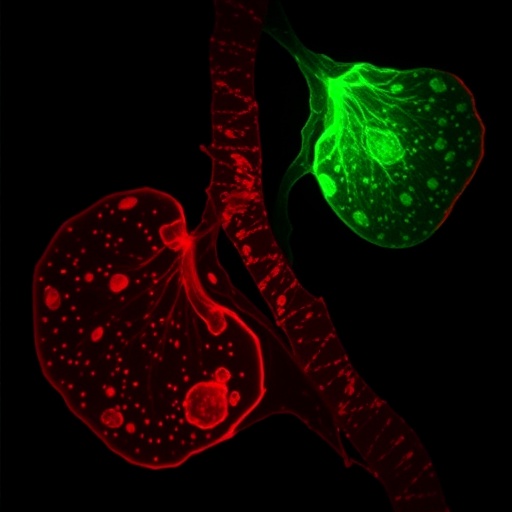
In the rapidly advancing world of cancer research, novel insights are crucial for developing effective therapeutic strategies. A significant study led by Du et al. has shed light on the role of DCLK1 in bladder cancer dynamics. Their research, published in Molecular Cancer, reveals how DCLK1 influences malignant progression and chemoresistance by impacting the cellular degradation pathways through the deubiquitination of HDAC6. This groundbreaking analysis not only enhances our understanding of bladder cancer biology but also opens new avenues for therapeutic targeting.
Bladder cancer is notorious for its high recurrence rate and resistance to chemotherapy, presenting a significant challenge in the clinical setting. Current treatment modalities often lead to limited success, necessitating a deeper understanding of the underlying molecular mechanisms driving this malignancy. The researchers behind this pivotal study have focused their efforts on DCLK1, a member of the doublecortin-like kinase family known to play a role in cellular signaling and proliferation, particularly within cancerous tissues.
DCLK1’s role in oncogenesis has garnered increasing attention, yet its specific contributions to bladder cancer have remained largely unexplored. The study convincingly demonstrates that DCLK1 expression is significantly elevated in bladder cancer samples compared to adjacent normal tissues. This overexpression correlates with poor patient prognosis, establishing DCLK1 as a potential biomarker for disease severity and therapeutic resistance.
One of the critical mechanisms by which DCLK1 promotes malignancy is through its influence on the deubiquitinating enzyme, HDAC6. Ubiquitination is a vital post-translational modification that regulates protein stability and function, with deubiquitination reversing this process. HDAC6 is particularly important in cancer because it plays a role in cellular stress responses, apoptosis, and the regulation of key oncogenic pathways. DCLK1’s ability to deubiquitinate HDAC6 creates a stable environment for survival and proliferation of cancer cells in the face of chemotherapeutic agents.
The findings indicate that targeting the DCLK1-HDAC6 axis could offer a novel therapeutic strategy. By inhibiting DCLK1, researchers were able to enhance the efficacy of standard chemotherapy agents. This revelation is monumental as it implies that combinatorial treatment approaches could substantially improve patient outcomes in bladder cancer. The study underscores the importance of addressing both the molecular mechanisms of tumor growth and the resistance pathways that characterize this formidable disease.
In the realm of translational research, the DCLK1-driven pathways present an exciting target. The development of small molecule inhibitors or monoclonal antibodies aimed at DCLK1 holds promise for augmenting existing treatment regimens. Furthermore, the study invites further inquiry into the potential of DCLK1 as a therapeutic target in other malignancies where its expression and function may similarly influence disease progression and treatment resistance.
As researchers continue to delineate the oncogenic roles of various proteins, understanding DCLK1’s contributions will likely spur additional investigations into its upstream and downstream effects within cellular networks. For instance, identifying the signaling pathways that lead to DCLK1 activation in bladder cancer cells could uncover critical cancer-driving events, paving the way for more personalized therapeutic approaches based on individual genomic and proteomic profiles.
Moreover, complementing these findings with patient-derived xenografts could offer deeper insights into the in vivo relevance of DCLK1 as a therapeutic target. By modeling the disease more accurately, researchers can assess the therapeutic efficacy of DCLK1 inhibition in a preclinical setting, which is crucial for translating these findings into clinical practice.
The implications of these findings extend beyond bladder cancer, as DCLK1 may have a broader role across various tumor types. The potential for cross-cancer applications highlights the need for continued exploration into the biology of DCLK1 and its interactions with other oncogenic factors. As researchers unearth the complexities of cancer biology, targets like DCLK1 could become foundational components of multi-faceted treatment strategies aimed at overcoming the challenges posed by chemoresistance.
In conclusion, the work by Du et al. not only identifies DCLK1 as a pivotal player in the malignancy of bladder cancer but also suggests a promising path forward in terms of therapeutic development. Their findings contribute significantly to the growing body of evidence that underscores the necessity of targeted molecular interventions in the fight against cancer. As the scientific community continues to unravel the intricate interplay of cells within the tumor microenvironment, the role of DCLK1 remains central to developing a comprehensive understanding of bladder cancer biology.
With these insights, researchers are positioned to push the boundaries of cancer treatment paradigms, offering hope for improved outcomes in patients afflicted by this aggressive disease. The implications derived from this study resonate throughout the field, promoting an urgent need for advanced research and clinical trials aimed at integrating these molecular targets into effective therapeutic strategies against bladder cancer.
Advancements in understanding DCLK1 and its mechanisms will undoubtedly lead to innovative treatment modalities, fostering a new era in cancer therapy. As we forge ahead, the collaborative efforts of researchers, clinicians, and pharmaceutical companies are essential for translating these findings into tangible benefits for patients battling bladder cancer and beyond.
This research represents a significant milestone in oncology, reaffirming the critical importance of ongoing exploration into the molecular underpinnings of malignancies. With DCLK1 at the forefront, the future of bladder cancer treatment looks promising as we continue to innovate and adapt to the challenges posed by this complex disease.
Du, A., Zhou, Y., Deng, X. et al. DCLK1 drives malignant progression and chemoresistance of bladder cancer by deubiquitinating HDAC6.
Mol Cancer (2026). https://doi.org/10.1186/s12943-025-02560-y
Cite Scienmag News
Nathaniel Bowman. (January 30, 2026). DCLK1 Promotes Bladder Cancer Progression and Chemoresistance. Scienmag. https://scienmag.com/dclk1-promotes-bladder-cancer-progression-and-chemoresistance/
Nathaniel Bowman. "DCLK1 Promotes Bladder Cancer Progression and Chemoresistance." Scienmag, 30 January 2026, https://scienmag.com/dclk1-promotes-bladder-cancer-progression-and-chemoresistance/. Accessed 3 September 2026.
Nathaniel Bowman. "DCLK1 Promotes Bladder Cancer Progression and Chemoresistance." Scienmag. January 30, 2026. https://scienmag.com/dclk1-promotes-bladder-cancer-progression-and-chemoresistance/


