


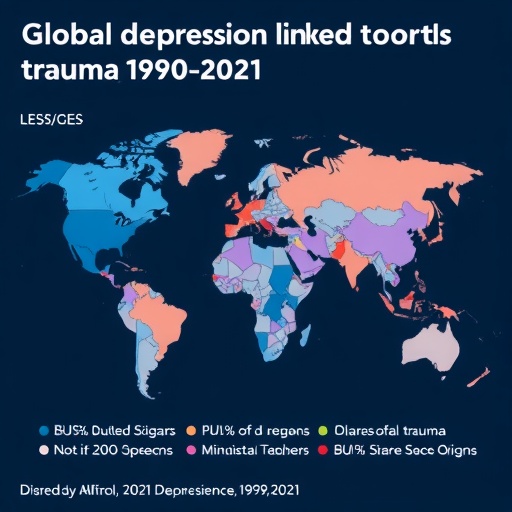
In recent years, mental health has emerged as a prominent topic of global health discourse, particularly concerning the interrelations between traumatic experiences in childhood and the onset of mental health disorders later in life. A pivotal study sheds light on this connection, examining the global burden of depression attributable to three major forms of childhood trauma: childhood sexual abuse, intimate partner violence, and bullying victimization. This comprehensive analysis, anchored in data extracted from the Global Burden of Disease Study, spans over three decades, from 1990 to 2021.
The research, conducted by Liu and Mao, offers a sobering reflection on the significant toll these traumatic experiences take on mental health. It reveals that individuals who experience such traumas during formative years often carry the psychological scars into adulthood, where they may develop chronic mental health conditions, including depression. This phenomenon underscores the urgent need for effective intervention and prevention strategies targeting childhood trauma, which has ramifications not just for the individuals but also for broader societal health outcomes.
Liu and Mao’s analysis employs robust epidemiological methods, allowing them to estimate the proportion of global depression cases that can be linked directly to these three forms of trauma. One of the most chilling findings of their study is the stark increase in diagnosed depression attributable to these childhood experiences, highlighting a critical public health issue that demands attention. Their comprehensive data analysis incorporates variables such as age, sex, and geographical location, thus providing a nuanced view of how these factors interplay with mental health outcomes.
Furthermore, the study brings forth vital implications for policy-makers and mental health practitioners, advocating for an integrated approach that considers the long-term psychological impact of childhood trauma. The research posits that understanding the pathways leading from childhood victimization to adult mental health issues can inform the design of targeted therapeutic interventions. These interventions would not only alleviate existing mental health burdens but also contribute to preventing the cycle of trauma-related depression from perpetuating across generations.
The authors highlight the complex dynamics that often accompany intimate partner violence and bullying, emphasizing the need for nuanced public health campaigns aimed at reducing stigma and fostering supportive environments for those affected. It is essential to recognize that not all victims of abuse or bullying will develop depression; however, the risk is significantly heightened in such populations. Liu and Mao’s findings encourage mental health professionals to adopt a trauma-informed approach when assessing and treating individuals with mental health issues.
Moreover, the global scope of this study allows for a broader examination of cultural and socio-economic factors that may influence how childhood trauma is perceived and addressed. By highlighting disparities in prevalence rates across different regions, the study prompts a reconsideration of how mental health resources are allocated. Regions with higher rates of childhood trauma-related depression may require more robust mental health infrastructures to support affected individuals and families.
The findings of this study also bring to light the need for interdisciplinary collaborations in addressing childhood trauma. Psychologists, educators, social workers, and community organizations can play pivotal roles in creating comprehensive intervention strategies, integrating mental health support with educational and community resources. Such collaborative efforts are essential to ensure that victims of childhood trauma receive holistic support tailored to their unique experiences.
As public awareness of mental health continues to grow, so too should the commitment to establish prevention frameworks aimed at minimizing the occurrence of childhood victimization. Education plays a crucial role in this context; teaching young people about healthy relationships and resilience can empower them to navigate their social environments with greater awareness. Liu and Mao’s research highlights the importance of early intervention programs that focus not only on treatment but also on prevention.
In conclusion, Liu and Mao’s study presents a clarion call to action for stakeholders at all levels to address the intersecting crises of childhood trauma and mental health. By acknowledging the far-reaching consequences of childhood experiences on adult mental health, society can begin to formulate effective strategies that not only enhance individual well-being but also promote collective societal health. This research is a vital piece of the puzzle in understanding and mitigating the pervasive mental health challenges exacerbated by early trauma. It invites a deeper reflection on how we can collectively foster healthier environments for our children, ensuring that they do not bear the weight of unaddressed trauma into adulthood.
Recognizing the burden of depression linked to childhood experiences is just the first step. As Liu and Mao’s research elucidates, acknowledging this psychological burden must translate into actionable policies and community-level support systems that prioritize mental health care, prevention efforts, and educational initiatives. Only through concerted efforts can we hope to alleviate the tyranny of if we turn our attention to these critical issues, we may very well break the cycle of trauma and build a healthier future for generations to come.
As the conversation about mental health evolves, the necessity for comprehensive approaches that encompass prevention, treatment, and education becomes increasingly clear. This study not only contributes critical insights to the ongoing dialogue surrounding mental health but also inspires a renewed commitment to tackling the root causes of trauma. The implications of the findings resonate deeply, emphasizing the societal responsibility to prioritize mental health, especially for our most vulnerable populations.
In summary, Liu and Mao set a precedent for future research, advocating for continuous exploration into the multifaceted impacts of childhood trauma on mental health. As the field of mental health continues to grow and evolve, it becomes imperative for researchers, clinicians, and policymakers to work in tandem, ensuring that the lessons gleaned from such studies translate into real-world changes that prioritize the psychological well-being of individuals across the globe. With collective action and commitment, there lies potential for transformative change in how we approach mental health challenges rooted in early life experiences.
Cite Scienmag News
Glenn Wilkins. (January 27, 2026). Global Depression Linked to Early Trauma: 1990-2021. Scienmag. https://scienmag.com/global-depression-linked-to-early-trauma-1990-2021/
Glenn Wilkins. "Global Depression Linked to Early Trauma: 1990-2021." Scienmag, 27 January 2026, https://scienmag.com/global-depression-linked-to-early-trauma-1990-2021/. Accessed 3 September 2026.
Glenn Wilkins. "Global Depression Linked to Early Trauma: 1990-2021." Scienmag. January 27, 2026. https://scienmag.com/global-depression-linked-to-early-trauma-1990-2021/


