


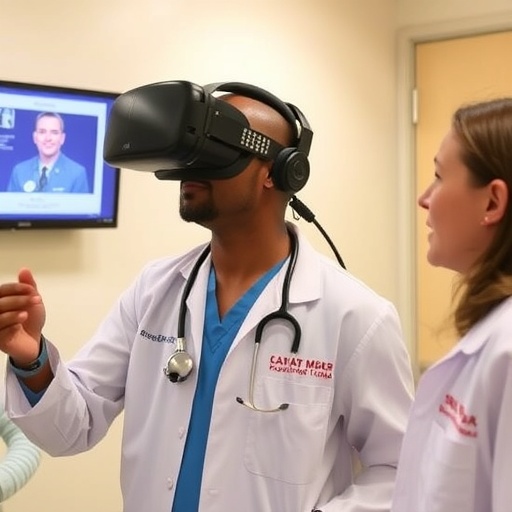
Virtual reality (VR) is revolutionizing numerous fields, and education is no exception. Among the most promising applications of this immersive technology is its capacity to enhance medical training. A recent observational cohort study has uncovered significant evidence supporting the effectiveness of virtual reality simulations in improving medical students’ confidence and engagement, particularly in the realm of clinical communication. This groundbreaking study conducted by Waldock and colleagues not only showcases the potential educational benefits of immersive environments but also sets a precedent for their future use in medical curricula.
As healthcare becomes increasingly complex, the need for effective communication in clinical settings has never been more critical. Medical professionals are often required to interact with patients, families, and other healthcare team members in high-pressure environments. Effective communication not only improves patient outcomes but also enhances the overall quality of care. This has led educators to seek innovative strategies to prepare medical students for the myriad of interpersonal dynamics they will encounter in their careers.
The study observed a cohort of medical students who engaged in VR simulations designed to mimic real-life clinical scenarios. Participants were placed in various patient-provider interactions that demanded clear communication, empathy, and the ability to navigate difficult conversations. The VR platform provided an immersive experience that allowed students to practice and refine their skills in a risk-free environment. As they interacted with virtual patients, students could focus on honing their clinical communication without the anxiety that can accompany real-life situations.
Waldock and colleagues utilized a robust methodological framework to assess the outcomes of their intervention. They employed a combination of qualitative and quantitative measures to evaluate the effectiveness of the VR simulations. This multifaceted approach allowed the researchers to capture a comprehensive picture of how the experience affected students’ confidence and engagement. The results revealed a marked increase in both metrics, suggesting that VR not only enhances students’ willingness to engage with difficult communication scenarios but also instills them with a sense of self-efficacy.
One of the standout findings from the study was the significant increase in students’ confidence levels after participating in the simulations. Confidence is a crucial component of effective clinical communication, and the immersive nature of VR appears to foster this essential quality. Students reported feeling more prepared to face real-world interactions with patients following their experience in the VR environment. This newfound confidence is likely to translate into improved patient care and better overall health outcomes.
Moreover, the engagement levels exhibited by students during the simulations were consistently high. The interactive nature of VR draws users in, captivating their attention in a way that traditional training methods may fall short. By simulating real-life pressure and dynamics in a controlled environment, VR can create an exciting and stimulating learning atmosphere. This heightened engagement may enhance retention of communication skills over time, ultimately benefiting students as they progress through their medical education.
The results of this study have far-reaching implications for medical education. As technology continues to evolve, integrating innovative tools like VR into the training of future healthcare professionals represents a crucial step toward preparing students for the realities of their profession. Traditional methods of teaching communication skills often rely on role-playing or observing experienced practitioners, which can lack the immersive quality that VR provides. The ability to practice in a realistic yet safe setting can help students develop their communication skills more effectively.
In addition to its immediate educational benefits, this research also opens the door for future investigations into the potential of VR in other aspects of medical training. Beyond clinical communication, there are myriad scenarios in which VR could serve as a powerful teaching tool—from surgical training to crisis management. The flexibility of VR platforms allows for the creation of various simulations that can adapt to different training needs and skill levels.
Nonetheless, it is vital to acknowledge potential limitations and challenges associated with the implementation of VR technology in medical education. Financial cost is a significant factor, as the initial investment in VR technology and development can be substantial. Moreover, educators must ensure that the quality of the simulations is both high and relevant to real-world clinical scenarios. The effectiveness of VR as a training tool is contingent upon the accuracy of its representations and the realism of interactions within the simulations.
Furthermore, as the study highlights, the successful integration of VR into medical curricula will require a concerted effort on the part of institutions, educators, and technology developers. Collaboration across these sectors will be essential to maximize the potential of VR in training future healthcare providers. This partnership could facilitate the sharing of best practices and innovative ideas that foster the growth of VR applications in medical education.
As the findings from Waldock and colleagues continue to circulate within the medical community, there is hope that their work will inspire further research and experimentation with VR technology. The study serves as a testament to the potential of immersive learning experiences to revolutionize how healthcare professionals are trained. By leveraging the power of virtual reality, medical education can evolve to meet the challenges of modern healthcare and equip future practitioners with the skills they need to succeed.
In conclusion, the groundbreaking study on the effectiveness of virtual reality in enhancing medical students’ confidence and engagement in clinical communication marks a significant advancement in the field of medical education. The findings underscore the vast potential of VR technology to cultivate essential skills in a captivating and realistic context. As the healthcare landscape continues to change, innovative training methods such as these will be paramount to preparing the next generation of medical professionals.
The integration of virtual reality into medical curricula is not merely an enhancement but a necessary evolution in training approaches. As we move forward, the blending of technology and education presents exciting prospects for nurturing proficient, confident, and compassionate healthcare providers ready to meet the needs of patients and communities worldwide.
Cite Scienmag News
Courtney Benton. (January 18, 2026). Boosting Medical Students’ Communication with VR Simulations. Scienmag. https://scienmag.com/boosting-medical-students-communication-with-vr-simulations/
Courtney Benton. "Boosting Medical Students’ Communication with VR Simulations." Scienmag, 18 January 2026, https://scienmag.com/boosting-medical-students-communication-with-vr-simulations/. Accessed 3 September 2026.
Courtney Benton. "Boosting Medical Students’ Communication with VR Simulations." Scienmag. January 18, 2026. https://scienmag.com/boosting-medical-students-communication-with-vr-simulations/


