


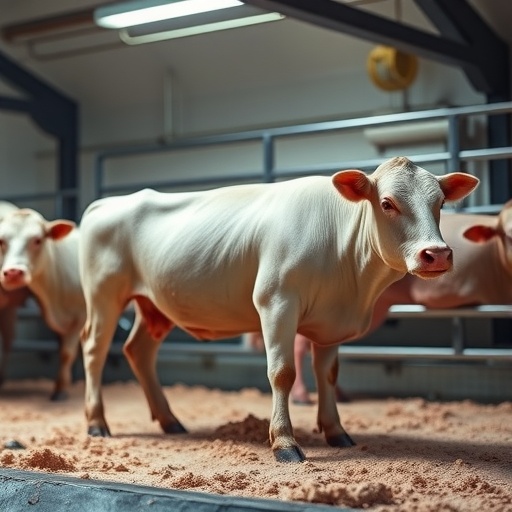
In the realm of livestock production, the postmortem inspection of animals remains a pivotal aspect of ensuring both food safety and public health. As an important step in the food chain, postmortem evaluations serve to detect abnormalities that may compromise the quality of meat products. However, a recent study led by researchers Chivheya, Chirigo, and Zhandire delves into an often-overlooked consequence of these inspections – the economic losses incurred from postmortem rejections in cattle and pigs slaughtered at abattoirs in Matabeleland, Zimbabwe. This investigation unveils a myriad of insights into the implications these rejections have on both farmers and the overall economy.
The study, published in the journal Discover Animals, sheds light on the intricate relationship between meat quality assessments and the financial viability of the livestock industry. Preliminary findings highlight that postmortem inspections, while essential for ensuring safety, can inadvertently lead to significant losses. The researchers focused on understanding the reasons behind rejections, classifying them into pathological, non-pathological, and those requiring further examination. Each category has its own set of determinants, establishing a framework for understanding the broader implications of these findings.
Pathological reasons for postmortem rejection chiefly pertain to diseases identified in livestock. These diseases can significantly impact marketability and ultimately result in carcass condemnation. Non-pathological rejections often stem from issues such as poor handling, transportation stress, and improper slaughtering techniques. The study outlines specific cases where inadequate husbandry practices lead to poor meat quality, reinforcing the necessity of addressing animal welfare from the farm to the slaughterhouse.
Economic analysis presented in the study underscores the weight of these rejections. The authors estimate that the financial losses to farmers due to carcass condemnations can be staggering, running into thousands of dollars annually when aggregated across the region. Losses are not confined to individual farmers; they ripple through the supply chain, affecting abattoirs, processors, and ultimately consumers. The financial strain on farmers often leads to reduced investment in livestock health and welfare, perpetuating a cycle of declining meat quality.
Furthermore, the study emphasizes the importance of implementing better farming practices to mitigate these losses. Enhanced training for farmers on animal husbandry, transport conditions, and slaughter techniques has emerged as a vital recommendation. By improving these areas, the likelihood of postmortem rejections could be significantly decreased, leading to more sustainable livestock production practices.
The implications of such improvements extend beyond mere economics; they touch upon food security and public health. Ensuring that meat products are not only safe but also of high quality is crucial for consumer confidence. Farmers who adopt good practices will likely see an increase in both the volume and the price of their products in the market, which could dent the pervasive issue of poverty among livestock producers in Zimbabwe.
Another striking aspect discussed in the study concerns the need for collaboration between various stakeholders in the livestock industry. The partnership between governmental bodies, veterinary services, and farmers can pave the way for more comprehensive quality control systems. By promoting a shared responsibility for animal health, the entire community can benefit, leading to improved meat production norms that enhance public health standards.
In addition, the researchers note the role of technological advancements in improving postmortem inspections. Innovations such as enhanced imaging techniques, digital tracking, and data analysis can help inspectors better assess carcasses, streamlining the process and reducing time wasted on false rejections. This incorporation of technology can lead to more precise evaluations, ultimately ensuring that safe, high-quality products reach consumers without excessive waste.
Moreover, the potential impact of policy interventions cannot be overstated. Strong regulatory frameworks that address animal welfare, hygiene standards, and postmortem inspection processes hold the promise of substantially reducing economic losses. The study advocates for policymakers to adopt evidence-based strategies that take into account the factors leading to rejections, fostering a more robust agricultural sector.
In conclusion, the findings of this research underscore a pressing need for a multifaceted approach to reduce the economic losses associated with postmortem rejections. By enhancing farming practices, encouraging stakeholder collaboration, embracing technological advances, and advocating for sound policies, the livestock industry in Matabeleland can work towards achieving greater economic resilience and food safety. It is imperative that these aspects be prioritized to safeguard not only the livelihood of farmers but also the health of consumers relying on safe and quality meat products.
This study not only highlights the challenges faced within the industry but also offers a blueprint for future improvements. The path forward is clear: through proactive measures and collective action, the livestock sector can evolve into a more sustainable and profitable enterprise.
Cite Scienmag News
William Thompson. (January 12, 2026). Impact of Postmortem Rejections on Abattoir Economics. Scienmag. https://scienmag.com/impact-of-postmortem-rejections-on-abattoir-economics/
William Thompson. "Impact of Postmortem Rejections on Abattoir Economics." Scienmag, 12 January 2026, https://scienmag.com/impact-of-postmortem-rejections-on-abattoir-economics/. Accessed 3 September 2026.
William Thompson. "Impact of Postmortem Rejections on Abattoir Economics." Scienmag. January 12, 2026. https://scienmag.com/impact-of-postmortem-rejections-on-abattoir-economics/


