


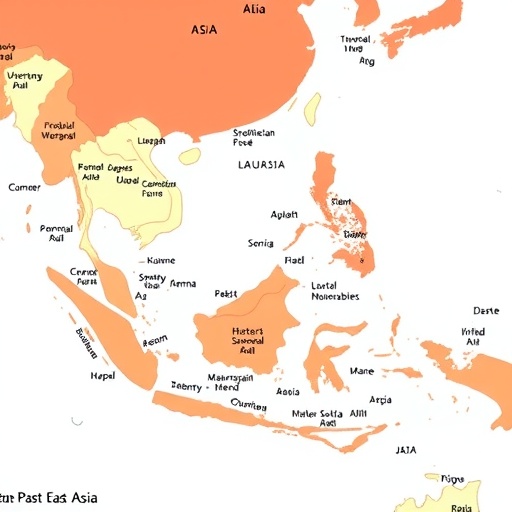
In a groundbreaking study, researchers have undertaken an extensive exploration of the genetic diversity inherent in underrepresented populations situated at the intersection of Southeast and East Asia. The findings, authored by Li et al., illustrate not only the complex tapestry of genetic variation among these populations but also the differentiated adaptive strategies that have evolved over time. This research highlights the importance of recognizing and understanding genetic diversity as a critical component of public health, conservation efforts, and anthropological studies.
The study delves into the unique allelic variations present within these populations, which are often obscured by the larger genomic datasets dominated by more extensively studied groups. By employing cutting-edge genomic sequencing technologies, the researchers mapped out the genetic landscapes of several identified populations, revealing a plethora of diversity that could hold the keys to understanding human adaptation to various environmental pressures. This robust analysis underscores the relevance of studying genetic variation not only as a curiosity but as a vital tool for enhancing our understanding of human history and evolution.
A significant emphasis of the study revolves around the adaptive strategies that these populations have developed in response to their specific environments. The research illustrates how geographical and climatic factors have influenced survival mechanisms, disease resistance, and even dietary adaptations. For instance, variations in genes associated with metabolism and immune response were prevalent in these underrepresented populations, illuminating the intricate relationship between genetics and the environment. These findings are particularly relevant in an era where understanding human genetics is paramount for both medical advancements and the shaping of public health policies.
Furthermore, the study highlights the evolutionary concepts of genetic drift and natural selection at play within these populations. By examining historical migrations and environmental shifts, the researchers established a correlation between genetic adaptation and the socio-historical context of these groups. This aspect of the research not only contributes to the academic discourse on human evolution but also challenges prevailing notions regarding genetic homogeneity across larger populations.
In addition to providing insights into genetic diversity and adaptive strategies, the study importantly addresses the socio-political implications surrounding the underrepresentation of these populations in genomic studies. The authors advocate for greater inclusion of diverse genetic backgrounds in genetic research initiatives, which has been historically overlooked. This call to action aims to enhance the accuracy of genetic research findings, which ultimately will lead to more effective medical treatments and public health strategies tailored to diverse populations.
Moreover, the implications of this research extend beyond academic circles, as understanding the genetic foundations of underrepresented populations can inform conservation genetics, cultural heritage preservation, and much more. The findings present a compelling case for local governments and organizations to incorporate genetic studies into their developmental agendas, particularly in areas where these populations are at risk of being marginalized.
As the study progresses, researchers plan to delve deeper into the practical applications of their findings. Future research could focus on linking specific genetic variants to phenotypic traits, exploring how these traits influence overall health and lifespan. Such efforts may ultimately lead to interventions that address health disparities among populations that have historically been ignored.
In conclusion, Li et al.’s research provides a remarkable insight into genetic diversity and the adaptive strategies of underrepresented populations at the confluence of Southeast and East Asia. By shedding light on these often-overlooked groups, the study not only contributes to our understanding of human genetics and evolution but also paves the way for more inclusive and equitable approaches in genetic research and healthcare. The findings serve as a clarion call to scientists, policymakers, and the global community to recognize the value of diversity in genetic studies and to ensure that all populations are represented in the ongoing quest to decode the human genome.
This research stands as a pivotal step toward promoting equitable representation in genomic studies, ultimately striving for a future where all genetic backgrounds can contribute to our understanding of human biology. Increased collaboration, funding for diverse genome studies, and advocacy for minority populations are vital to the sustained advancement and ethical evolution of genetic research.
In summary, the study by Li et al. not only contributes invaluable knowledge about genetic diversity among underrepresented populations but also stresses the overarching importance of inclusivity within scientific research. The acknowledgment of these diverse genetic backgrounds is crucial as we move forward, fostering a collaborative spirit that champions the complexities and merits of human genetic variation.
Li, X., Hu, L., Duan, S. et al. Genetic diversity and differentiated adaptive strategies for underrepresented populations at the crossroad of Southeast and East Asia.
BMC Genomics (2026). https://doi.org/10.1186/s12864-025-12476-y
Cite Scienmag News
Juliet Wilcox. (January 8, 2026). Unique Adaptive Strategies in Southeast and East Asia. Scienmag. https://scienmag.com/unique-adaptive-strategies-in-southeast-and-east-asia/
Juliet Wilcox. "Unique Adaptive Strategies in Southeast and East Asia." Scienmag, 8 January 2026, https://scienmag.com/unique-adaptive-strategies-in-southeast-and-east-asia/. Accessed 6 September 2026.
Juliet Wilcox. "Unique Adaptive Strategies in Southeast and East Asia." Scienmag. January 8, 2026. https://scienmag.com/unique-adaptive-strategies-in-southeast-and-east-asia/


