


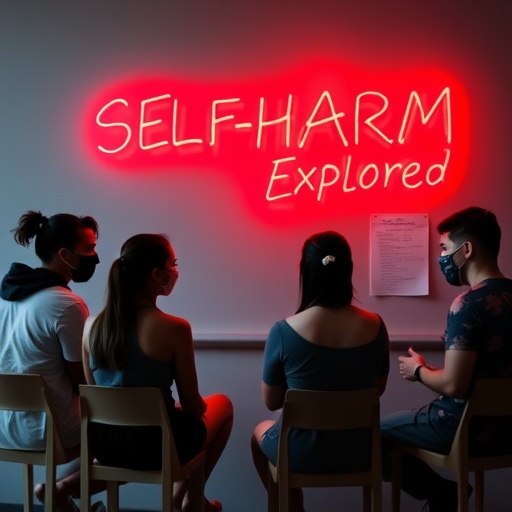
In a startling exploration of the mental health landscape among young people, a groundbreaking study from Sweden reveals the disturbing trend of sexual behavior as a form of self-injury among youth clinic visitors. Conducted by an interdisciplinary team of researchers, including Ek, Fredlund, and Hammarström, this research not only sheds light on the burgeoning phenomenon but also raises critical questions about societal attitudes towards sexual health and youth mental well-being. Set to be published in the renowned journal “Archives of Sexual Behavior,” this study promises to spark widespread discussion and debate among clinicians, educators, and policymakers.
The research focused on a significant cohort of adolescents attending youth clinics across Sweden, where mental health services are increasingly becoming crucial in addressing self-destructive behaviors. The researchers meticulously analyzed self-reported data from clinic visitors, utilizing both qualitative and quantitative methodologies to gauge the prevalence of sexual behaviors linked to self-harm. The findings pinpoint that a notable percentage of these youth engage in sexual activities not purely for pleasure but as a mechanism to cope with emotional distress.
The implications of such behavior are profound, particularly in a society that often stigmatizes discussions around sexual health and mental illness. Adolescents are at a critical juncture in their development, grappling with identity, independence, and social pressures. When sexual behavior is framed as a tool for self-injury, it challenges existing paradigms about adolescent sexuality and mental health. The researchers argue that this indicates a pressing need for mental health interventions that specifically address the nuances of sexual behaviors in relation to self-injury.
Through in-depth interviews, the study also explored the emotional and psychological underpinnings of these behaviors. Many participants disclosed feelings of inadequacy, loneliness, and societal pressure, all of which contributed to their engagement in sexual activity as a maladaptive coping mechanism. These narratives reveal deeper issues regarding self-worth and the search for validation, suggesting that sexual behavior may sometimes be mistakenly viewed as empowerment when it is, in fact, a sign of emotional turmoil.
The role of social media and peer dynamics also came into play in the findings. Many youth cited peer influence and the omnipresent nature of sexual content online as significant factors contributing to their behavior. This highlights a critical intersection where technology and adolescent development converge, necessitating a reevaluation of how sexuality is portrayed in digital spaces. Educators and health professionals are called upon to engage with young people proactively, providing the tools they need to navigate these complex interactions.
Further complicating the issue are the societal reactions to youth sexuality and mental health. The study stresses the importance of fostering an open dialogue around these topics to dispel stigma and create safe spaces for adolescents to discuss their feelings and experiences. Interventions that focus on building self-esteem and emotional resilience may be essential to addressing the root causes of self-injurious sexual behavior.
In addition to clinical implications, this study serves as a clarion call for policymakers to rethink public health approaches. As youth mental health continues to deteriorate—exacerbated by external pressures such as economic instability and social isolation—there is an urgent need for comprehensive services that address both sexual health and psychological well-being. This research underscores the integrative nature of health, emphasizing that mental health and sexual health are not isolated but rather interconnected aspects of overall well-being.
In light of the findings, the authors advocate for multi-faceted educational programs aimed at adolescents. These programs should target awareness around the potential misinterpretations of sexual activity and provide insights into healthier coping strategies. Engaging youth in dialogue and encouraging them to share their stories can facilitate a supportive community, which could, in turn, reduce the reliance on maladaptive behaviors.
As the research makes clear, understanding the psychology behind sexual behavior among youth is critical for developing effective intervention strategies. Clinicians and mental health professionals must be equipped to recognize warning signs and provide appropriate support. By addressing the underlying emotional grievances that contribute to self-injury through sexual behavior, there exists the potential for meaningful change in the lives of affected adolescents.
Ultimately, this research will likely pave the way for future studies, encouraging a more nuanced understanding of how sexual behaviors function within the complex realm of adolescent mental health. By encouraging exploration in this sensitive area, the hope is to enrich the broader conversation around youth wellbeing, sexuality, and emotional health. This pivotal study invites researchers, health professionals, and society at large to reflect on the broader implications of young people’s sexuality, and to take decisive action that fosters healthier futures for all youth.
As we anticipate the publication of this groundbreaking research in 2026, the findings are poised to generate considerable discussion among various sectors. Whether in academic circles, healthcare facilities, or community organizations, the study is expected to catalyze an important reevaluation of how society views and addresses the intersection of mental health and sexuality among youth.
The impact of this research is not confined to academia; it resonates within the fabric of community support systems and clinical practices. It urges everyone to contribute to an essential dialogue that not only recognizes the challenges adolescents face but also celebrates their resilience. In doing so, we may begin to create a society where young people can thrive, unencumbered by stigma, and empowered to seek help in times of need.
In the end, the conversation is just beginning. With this vital research, a foundation has been laid that could potentially lead to transformative change in how we support adolescent sexual health and mental wellbeing. As we move forward, it will be critical to keep the lines of communication open between youth and those tasked with guiding, supporting, and protecting them.
Cite Scienmag News
Courtney Benton. (January 4, 2026). Youth Clinic Visitors: Sex as Self-Harm Explored. Scienmag. https://scienmag.com/youth-clinic-visitors-sex-as-self-harm-explored/
Courtney Benton. "Youth Clinic Visitors: Sex as Self-Harm Explored." Scienmag, 4 January 2026, https://scienmag.com/youth-clinic-visitors-sex-as-self-harm-explored/. Accessed 3 September 2026.
Courtney Benton. "Youth Clinic Visitors: Sex as Self-Harm Explored." Scienmag. January 4, 2026. https://scienmag.com/youth-clinic-visitors-sex-as-self-harm-explored/


