


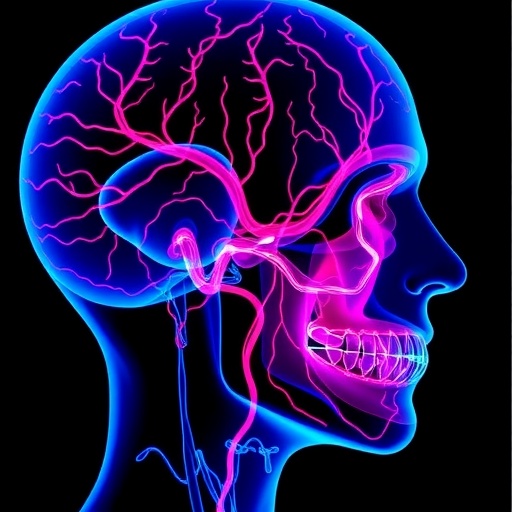
In recent years, the understanding of primary hemifacial spasm—an involuntary contraction of the muscles on one side of the face—has been significantly enhanced through the application of advanced computational tools. A groundbreaking study that delves into the hemodynamic features of the vessels associated with this condition provides new insights into its underlying mechanisms. This study, led by a team of researchers including You, Y., You, C., and Zhang, Y., offers a thorough correction to previously published findings within the discipline of biomedical engineering.
By harnessing the power of computational fluid dynamics (CFD), the researchers meticulously analyzed the blood flow characteristics in the vessels implicated in primary hemifacial spasm. This innovative approach not only reveals the intricacies of hemodynamic interactions but also highlights the potential correlations between vascular patterns and the onset of this neurological disorder. Understanding these interactions is vital, as it may pave the way for novel therapeutic strategies targeting the vascular components involved in hemifacial spasm.
Central to this study is the recognition of how abnormalities in the blood vessels can contribute to the pathophysiology of primary hemifacial spasm. The research team utilized high-resolution imaging technology to reconstruct the vascular topology surrounding the facial nerve. From there, they employed sophisticated CFD simulations to visualize blood flow dynamics. These simulations provided a detailed view of how altered flow patterns might exert pressure on the nerve, leading to spasms.
One of the primary objectives of this research was to quantify the flow characteristics in the offending vessels. The researchers meticulously analyzed factors such as velocity, turbulence, and shear stress within these vessels. They hypothesized that near the sites of vascular compression, both increased shear stress and disrupted flow could play a significant role in the initiation of muscle spasm. Their findings indicate that patients with primary hemifacial spasm often exhibit distinct hemodynamic signatures that lay the groundwork for future individualized treatment approaches.
The complexity of hemodynamics cannot be understated. The researchers unearthed the importance of factors such as laminar versus turbulent flow in the context of vascular health and disease. Their results suggest that turbulence may be particularly detrimental, leading to localized areas of high stress that negatively impact the nerve’s function. Further analysis demonstrated that the geometry of offending vessels, along with the dynamics of blood flow, could predict regions of potential nerve irritation.
Moreover, the implications of these findings extend beyond purely academic interest. By understanding the hemodynamic landscapes associated with primary hemifacial spasm, clinicians can refine their diagnosis and treatment protocols. Specifically, this study opens the door to the possibility of using diagnostic imaging combined with computational modeling to tailor interventions that address the unique hemodynamic profiles of individual patients.
As the publication of this research progresses, it catalyzes a wave of interest in the broader biomedical community. The avenues opened by CFD studies are paving the way for interdisciplinary collaborations in understanding dynamic physiological systems. Clinicians and researchers alike are beginning to see the potential for applying such techniques beyond hemifacial spasm to other disorders where vascular components play a pivotal role.
This study’s significance is underscored by its focus on personalized medicine. The ability to visualize and comprehend the specific hemodynamic features of a patient’s vascular network could enhance treatment efficacy. Advanced algorithms can help develop predictive models that not only track disease progression but also forecast the therapeutic outcomes based on the unique vascular dynamics observed in each individual.
Furthermore, the research emphasizes how crucial it is to integrate computational techniques into routine clinical settings. As technology advances, the tools developed can assist in preoperative planning for patients diagnosed with primary hemifacial spasm, potentially leading to a higher success rate for decompression surgeries. Such a shift towards incorporating computational modeling in routine practice speaks volumes about the potential future of patient care.
As the field of biomechanics continues to blossom with innovations such as CFD, interdisciplinary approaches combining engineering, medicine, and biology will remain paramount. The insights gained here not only enhance our understanding of primary hemifacial spasm but also contribute to the overarching narrative of how computational methods can reshape diagnostic and therapeutic landscapes for a myriad of neurological conditions.
In summary, the study involving You, Y., You, C., and Zhang, Y. marks a pivotal step in unraveling the hemodynamic mechanisms behind primary hemifacial spasm. By integrating computational fluid dynamics into their research framework, these investigators have illuminated the nuanced interactions between vascular structure and neurological outcomes. The results of their work call upon the scientific community to further explore the intricate world of hemodynamics, striving for breakthroughs that could ultimately transform how we approach treatment for many vascular-dependent disorders.
The implications of this research extend far beyond simply understanding primary hemifacial spasm. Rather, it showcases the transformative potential of computational tools in biomedicine—paving the way for a future where the complexities of human physiology can be modeled, understood, and treated more effectively than ever before. The advancement of interdisciplinary methodologies in medicine heralds a new era of precision health, where individualized care can finally take center stage, improving outcomes and quality of life for countless patients.
You, Y., You, C., Zhang, Y. et al. Correction: Hemodynamic Features of Offending Vessels in Primary Hemifacial Spasm: A Computational Fluid Dynamics Study. Ann Biomed Eng (2025). https://doi.org/10.1007/s10439-025-03965-y
Cite Scienmag News
Audrey Campbell. (December 31, 2025). Fluid Dynamics Reveal Hemifacial Spasm Vessel Insights. Scienmag. https://scienmag.com/fluid-dynamics-reveal-hemifacial-spasm-vessel-insights/
Audrey Campbell. "Fluid Dynamics Reveal Hemifacial Spasm Vessel Insights." Scienmag, 31 December 2025, https://scienmag.com/fluid-dynamics-reveal-hemifacial-spasm-vessel-insights/. Accessed 4 September 2026.
Audrey Campbell. "Fluid Dynamics Reveal Hemifacial Spasm Vessel Insights." Scienmag. December 31, 2025. https://scienmag.com/fluid-dynamics-reveal-hemifacial-spasm-vessel-insights/


