


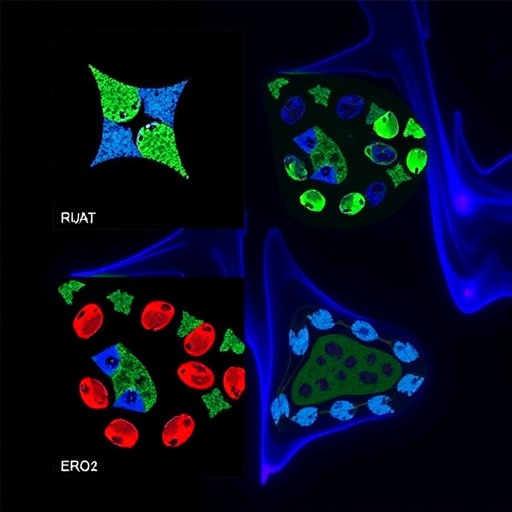
In the ongoing fight against cancer, researchers consistently untangle the complex web of cellular mechanisms that underlie tumor growth and metastasis. A groundbreaking study published in J Transl Med unveils key insights into the role of ERO1A in bladder cancer, revealing how this protein not only fuels the proliferation of cancer cells but also enhances their migratory and invasive capabilities. The findings suggest that ERO1A operates through the ALOX5 enzyme to activate the JAK-STAT signaling pathway, thus highlighting a potential target for therapeutic intervention.
The role of endoplasmic reticulum (ER) stress in cancer biology has garnered increasing attention, as it can influence cell fate decisions. ERO1A, an enzyme primarily involved in oxidative protein folding within the ER, has been linked to the promotion of ER stress. In cancer cells, this stress can paradoxically aid in survival and proliferation, making ERO1A a compelling candidate for research into tumorigenesis pathways. The study, spearheaded by Huang and colleagues, meticulously elucidates how ERO1A reprograms cellular pathways in bladder cancer, suggesting its importance in the disease’s progression.
Upon investigation, the researchers found a direct correlation between ERO1A expression levels and aggressive tumor characteristics in bladder cancer specimens. Elevated ERO1A levels were associated with increased cell proliferation rates and heightened migratory potential. These observations raise important questions about the signaling cascades that mediate the relationship between ERO1A and tumor behavior, particularly concerning its interaction with the ALOX5 enzyme.
ALOX5, or arachidonate lipoxygenase 5, plays a pivotal role in lipid signaling. It catalyzes the conversion of arachidonic acid to leukotrienes, which are inflammatory mediators involved in numerous physiological and pathological processes, including cancer progression. The study confirms a robust link between ERO1A and ALOX5, indicating that ERO1A may enhance ALOX5 activity, thus increasing the production of leukotrienes, which in turn may promote invasive properties of bladder cancer cells.
The JAK-STAT signaling pathway represents a vital communication network within cells, integrating external signals, particularly those from cytokines and growth factors, to elicit cellular responses. The research highlights that upon stimulation through ERO1A-mediated ALOX5 activation, bladder cancer cells exhibited increased JAK-STAT signaling activity. This observation not only clarifies the underlying mechanisms of ERO1A’s oncogenic role but also underscores the potential for targeting this pathway in therapeutic strategies.
Furthermore, the team conducted various in vitro experiments, which demonstrated that the inhibition of ERO1A led to marked reductions in cell proliferation and invasive capabilities, further supporting its role as a regulatory node in cancer progression. The researchers employed a range of molecular techniques, including gene silencing and pharmacological inhibitors, to dissect the relationship between these key players in bladder cancer.
In vivo data collected from mouse models of bladder cancer reinforced these findings. The administration of ERO1A inhibitors in these models resulted in significantly reduced tumor size and spread, providing compelling evidence for the potential clinical applicability of targeting this pathway. Such outcomes may pave the way for novel therapeutic options that could complement existing treatments, particularly for patients with aggressive forms of bladder cancer.
The implications of this research are far-reaching, suggesting that the ERO1A-ALOX5-JAK-STAT axis could be a promising focus for future investigations. Given the increasing incidence of bladder cancer globally, understanding the molecular mechanisms behind its progression is urgent. Potential therapeutic agents that inhibit ERO1A or disrupt ALOX5 activity could offer new hope for patients grappling with this challenging disease.
Moreover, the study calls for further exploration into how microenvironmental factors interact with the ERO1A-ALOX5 signaling pathway. Cancer cells do not exist in isolation; they interact with surrounding stromal and immune cells. Understanding these interactions may reveal additional layers of regulation that can be exploited for therapeutic benefit.
Despite the promising findings, the researchers acknowledge several limitations in their study, including the need for multicentric trials to validate the results across diverse patient populations and the necessity to investigate other cancers where ERO1A might play a similar role. Additionally, the broader implications of ERO1A in other signaling pathways and microenvironments warrant thorough examination.
As the scientific community continues to unravel the complexities of cancer biology, research like that of Huang et al. is critical. Their work not only enhanced our understanding of bladder cancer mechanisms but potentially illuminated a path toward innovative treatments that could make a measurable difference in patient outcomes. As insights into tumor biology advance, the hope is that novel therapies targeting the ERO1A-ALOX5-JAK-STAT axis will soon move from bench to bedside, offering patients new avenues for survival and quality of life.
Cancer research is an ever-evolving arena, and each new study contributes to a more comprehensive understanding of the disease. By identifying and elucidating specific pathways such as those involving ERO1A, researchers can develop targeted therapies that could significantly improve the lives of millions affected by bladder cancer and other malignancies. The journey isn’t over, but significant strides are being made, guided by the discoveries of today.
As we look forward, collaborative efforts across laboratories and institutions will be crucial in translating these discoveries into viable clinical therapies. The research landscape is ripe for innovation, and the fight against bladder cancer is gaining momentum, fueled by studies aiming to decode the language of cancer at a molecular level.
In conclusion, the work of Huang and colleagues stands as a testament to the power of scientific inquiry. Their discovery regarding the role of ERO1A in bladder cancer progression opens new frontiers in cancer research, paving the way for potential breakthroughs in therapy and ultimately enhancing survival for patients facing this daunting disease.
Huang, J., Chen, D., Ji, G. et al. ERO1A promotes the proliferation, migration and invasion of bladder cancer through ALOX5 mediated activation of JAK-STAT signaling pathway.
J Transl Med (2025). https://doi.org/10.1186/s12967-025-07613-w
Cite Scienmag News
Rowan B. (December 25, 2025). ERO1A Enhances Bladder Cancer Growth via JAK-STAT. Scienmag. https://scienmag.com/ero1a-enhances-bladder-cancer-growth-via-jak-stat/
Rowan B. "ERO1A Enhances Bladder Cancer Growth via JAK-STAT." Scienmag, 25 December 2025, https://scienmag.com/ero1a-enhances-bladder-cancer-growth-via-jak-stat/. Accessed 28 August 2026.
Rowan B. "ERO1A Enhances Bladder Cancer Growth via JAK-STAT." Scienmag. December 25, 2025. https://scienmag.com/ero1a-enhances-bladder-cancer-growth-via-jak-stat/


