


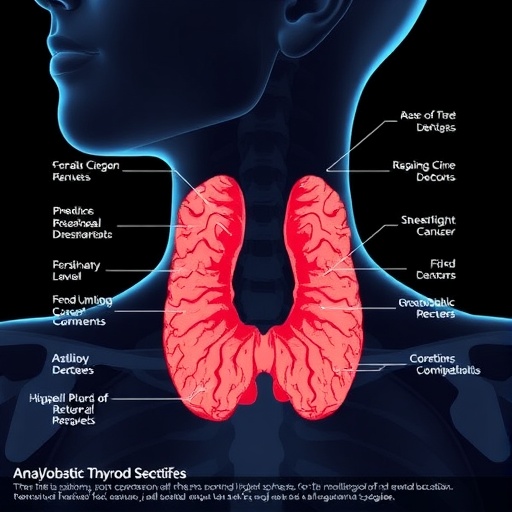
Anaplastic thyroid cancer (ATC) remains one of the most aggressive forms of thyroid malignancies, characterized by rapid progression and poor prognosis. Recent research by Augustin and colleagues has illuminated the significant impact of comorbidities on treatment management and prognosis for patients diagnosed with this formidable disease. ATC, although rare, poses severe challenges not only due to its inherent biological aggressiveness but also due to the multifaceted nature of patient health, which can complicate therapeutic strategies.
The complexity of cancer treatment in the context of comorbidities is an underexplored territory, necessary to address for optimizing patient outcomes. Comorbidities, such as cardiovascular diseases, diabetes, and other systemic disorders, can severely affect the efficacy of traditional cancer treatments, including surgery, chemotherapy, and radiotherapy. This research emphasizes the need for oncologists to adopt a holistic approach when considering treatment plans for patients.
Understanding the biology of ATC is crucial for contextualizing these findings. This cancer type develops from differentiated thyroid tissue that undergoes dedifferentiation, leading to a loss of typical thyroid function and aggressive clinical behavior. As ATC progresses, its capacity to invade local and distant tissues escalates, often resulting in significant morbidity and mortality. Clinicians often find themselves facing a dual challenge: managing the cancer itself while simultaneously addressing other health issues that the patient might have.
A critical element of Augustin et al.’s study highlights how comorbidities can alter treatment decisions. For instance, patients suffering from cardiovascular issues may not tolerate aggressive chemotherapy regimens designed for ATC, which in turn requires a re-evaluation of treatment goals. The researchers advocate for an individualized assessment, taking into account each patient’s comorbid conditions. Such a strategy not only involves oncologists but also requires the collaboration of various medical specialists to optimize the care continuum.
Moreover, treatment protocols for ATC have historically focused on curing the cancer as the primary goal. However, this research prompts a discussion about quality of life as a vital component of patient care. Patients with significant comorbidities may prioritize less aggressive treatments that better suit their overall health status, maintaining a quality of life that is often compromised by relentless cancer therapies.
The implications of comorbidities extend beyond immediate treatment strategies; they also influence prognosis. For instance, studies indicate that patients with significant underlying health issues may experience higher rates of treatment-related complications, leading to decreased survival rates. Understanding these dynamics allows for better prognosis predictions and fosters more open discussions between patients and physicians regarding potential outcomes and expectations.
This research raises essential questions about the extent to which chronic conditions should be factored into clinical decision-making processes in oncology. The urgency stems from the recognition that the presence of these conditions can significantly shift the balance between risks and benefits of proposed therapies. By incorporating insights from multiple disciplines, including geriatrics, cardiology, and endocrinology, a more comprehensive treatment paradigm can be established.
The authors also delve into the psychological dimensions impacting individuals facing simultaneous challenges of ATC and comorbidities. The emotional toll of navigating both a life-altering cancer diagnosis and existing chronic health issues can lead to decreased adherence to treatment protocols. Addressing these psychological factors becomes paramount; thus, integration of mental health support within the treatment framework emerges as a vital necessity.
In the burgeoning field of personalized medicine, the insights gleaned from Augustin et al.’s work beckon further exploration into tailored interventions that consider the patient’s entire health landscape. Future research can pivot toward identifying specific comorbidity patterns that require unique treatment adaptations, ultimately evolving the standards of care for ATC patients across the globe.
Furthermore, the role of multidisciplinary teams cannot be overstated in managing the layered complexities of ATC amidst various comorbidities. Institutions that embrace comprehensive care models, where oncologists, primary care physicians, specialists, and support services collaborate closely, see improved outcomes and enhanced patient satisfaction. This coordinated approach serves not only to treat the malignancy at hand but also to safeguard the patients’ overall well-being.
As a call to action, it becomes imperative for clinicians, researchers, and healthcare policymakers to prioritize the integration of comorbidity considerations in cancer care protocols. Ensuring that patient-centered care becomes the norm rather than the exception can lead to a transformative shift in addressing the health challenges posed by anaplastic thyroid cancer.
Ultimately, the takeaway from Augustin et al.’s work is clear: the interplay between anaplastic thyroid cancer and comorbidities is intricate, demanding a nuanced approach to treatment and care. Embracing this complexity—and the individual narratives of patients—will define the future trajectory of ATC management and improve the quality of life for those battling this aggressive malignancy.
Cite Scienmag News
Nathaniel Bowman. (December 23, 2025). Comorbidities Shape Anaplastic Thyroid Cancer Treatment Outcomes. Scienmag. https://scienmag.com/comorbidities-shape-anaplastic-thyroid-cancer-treatment-outcomes/
Nathaniel Bowman. "Comorbidities Shape Anaplastic Thyroid Cancer Treatment Outcomes." Scienmag, 23 December 2025, https://scienmag.com/comorbidities-shape-anaplastic-thyroid-cancer-treatment-outcomes/. Accessed 1 September 2026.
Nathaniel Bowman. "Comorbidities Shape Anaplastic Thyroid Cancer Treatment Outcomes." Scienmag. December 23, 2025. https://scienmag.com/comorbidities-shape-anaplastic-thyroid-cancer-treatment-outcomes/


