


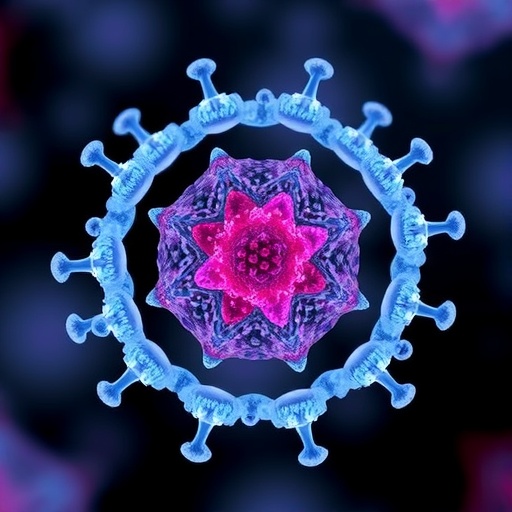
In a groundbreaking advancement poised to revolutionize the fields of vaccinology and nanomedicine, researchers have developed a novel binary self-amplifying expression platform capable of producing vaccines and nanomedicines without the need for lipid nanoparticles (LNPs). This innovative technology, published in the prestigious journal Nature Communications in 2025, could herald an era of safer, more efficient, and scalable vaccine production by circumventing several limitations associated with current lipid nanoparticle-based delivery systems.
For years, lipid nanoparticles have served as essential vehicles in the delivery of mRNA vaccines, exemplified by the rapid development and deployment of COVID-19 vaccines. However, while effective, these lipid nanoparticles present significant challenges, including manufacturing complexity, storage requirements, and potential for adverse immune reactions. The newly introduced self-amplifying platform sidesteps these barriers by engineering a binary system that autonomously amplifies the expression of therapeutic proteins within host cells without relying on encapsulation within lipid-based carriers.
The core of this system relies on a sophisticated molecular design that separates the replication machinery from the payload genetic material into two discrete components. Upon co-delivery into target cells, these two components orchestrate a highly efficient self-amplification process, effectively boosting the intracellular production of proteins necessary for eliciting immunity or therapeutic effects. This separation and coordinated expression strategy enable a robust and controlled amplification that ultimately reduces the dosage requirements and mitigates the need for complex delivery vehicles.
One of the most remarkable aspects of this platform is its ability to maintain high levels of protein expression without the protective lipid envelopes traditionally required to preserve nucleic acid stability and facilitate cellular uptake. The binary system leverages endogenous cellular mechanisms and optimized molecular constructs that enhance RNA stability and efficient translation, ensuring potent antigen or drug production. Consequently, this innovation not only simplifies the formulation but also holds promise for enhanced safety profiles by avoiding lipid-associated toxicities and hypersensitivity reactions frequently reported with LNP-based formulations.
From a manufacturing perspective, this lipid nanoparticle-free approach streamlines vaccine production workflows. The elimination of lipid components reduces the dependency on complex lipid synthesis and purification processes, which are often technical bottlenecks and sources of batch-to-batch variability. Additionally, the platform’s modularity and adaptability enable rapid redesign to target emerging pathogens or tailor to personalized therapeutic regimens, enhancing responsiveness in pandemic scenarios or precision medicine.
Notably, the platform demonstrates remarkable versatility, being compatible with different nucleic acid formats including RNA and DNA constructs. This broad compatibility expands its potential applications beyond prophylactic vaccines to therapeutic nanomedicines targeting diseases such as cancer, genetic disorders, and chronic infections. The self-amplifying nature ensures sustained intracellular production of therapeutic proteins, potentially reducing treatment frequency and improving patient compliance.
Preclinical studies highlighted in the publication reveal impressive immunogenicity and efficacy profiles. Animal models exhibited strong and durable immune responses after administration of vaccines developed using the binary platform, comparable or superior to those achieved with traditional LNP-formulations. Moreover, safety evaluations indicated minimal adverse events and absence of significant inflammatory responses, underscoring the biocompatibility of this approach.
The platform’s design also incorporates cutting-edge molecular engineering to optimize codon usage, untranslated regions, and RNA secondary structures, all tailored to maximize translation efficiency and stability. Such optimizations are critical in ensuring that the self-amplification circuit functions effectively within diverse cellular environments, including primary human cells, which can pose translation bottlenecks not always recapitulated in immortalized cell lines.
Attention was also given to delivery strategies compatible with this system. Techniques such as electroporation or newly developed polymeric carriers have been explored as alternatives to lipid nanoparticles. These methods facilitate the cellular internalization of the binary components efficiently without provoking undesired immune activation or cytotoxicity, indicating practical translational potential for clinical application.
The implications of this technology extend to global health equity. By simplifying logistics, removing cold-chain dependencies, and enabling cost-effective manufacturing without specialized lipid infrastructure, the binary platform could democratize access to advanced vaccines and nanomedicines in resource-limited settings. This innovation aligns with the urgent need for scalable solutions addressing emerging infectious diseases globally.
Looking forward, the research team plans to expand the platform’s utility by integrating additional regulatory elements such as inducible promoters and tissue-specific targeting motifs. These enhancements aim to further refine the control over gene expression kinetics and spatial distribution, broadening the clinical applicability and safety margins, particularly for therapeutic interventions requiring precise dosing and localization.
Moreover, potential combination therapies leveraging this platform with traditional adjuvants or immunomodulators are under investigation. The binary system’s capacity for customizable expression profiles allows synergy with other therapeutic modalities, potentially amplifying treatment outcomes in complex diseases like cancer immunotherapy or chronic viral infections.
This binary self-amplifying expression platform marks a paradigm shift in the delivery and production of nucleic acid-based medicines and vaccines. By challenging the dogma that lipid nanoparticles are indispensable, it opens the door to a new class of safer, more accessible, and highly efficient biotherapeutics. As development progresses, clinical trials will be paramount to validate efficacy and safety in humans, setting the stage for widespread adoption and transformative impact on public health.
In conclusion, the innovative strategy unveiled by Jefferies, Choi, Ribeca, and colleagues represents a monumental leap forward, with the potential to reshape the vaccine and nanomedicine landscapes fundamentally. By harnessing the power of self-amplification through a cleverly designed binary system, they have delivered a platform that could overcome persistent challenges in nucleic acid delivery and manufacturing. This work not only exemplifies scientific ingenuity but also sets a bold vision for the future of medicine, inspiring continued exploration and investment in this exciting domain.
Cite Scienmag News
Kristina Jarvis. (December 22, 2025). Lipid-Free Binary Platform Boosts Vaccine and Nanomedicine Delivery. Scienmag. https://scienmag.com/lipid-free-binary-platform-boosts-vaccine-and-nanomedicine-delivery/
Kristina Jarvis. "Lipid-Free Binary Platform Boosts Vaccine and Nanomedicine Delivery." Scienmag, 22 December 2025, https://scienmag.com/lipid-free-binary-platform-boosts-vaccine-and-nanomedicine-delivery/. Accessed 5 September 2026.
Kristina Jarvis. "Lipid-Free Binary Platform Boosts Vaccine and Nanomedicine Delivery." Scienmag. December 22, 2025. https://scienmag.com/lipid-free-binary-platform-boosts-vaccine-and-nanomedicine-delivery/


