


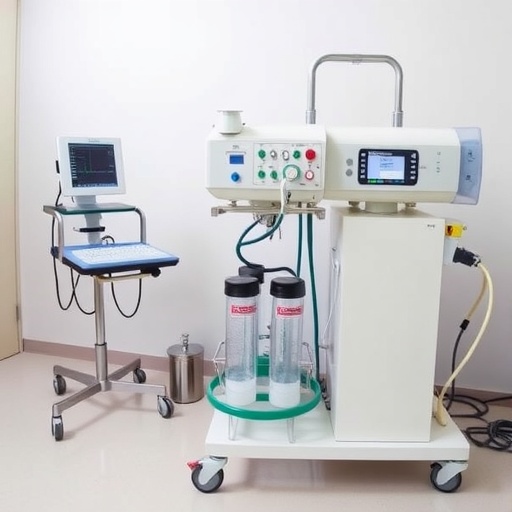
Researchers have made significant strides in understanding the pharmacokinetics of amiodarone, a critical drug utilized in the management of serious heart rhythm disorders. This research sheds light on the compound’s movement through the body and its extraction during continuous renal replacement therapy (CRRT). With the alarming rise in patients undergoing CRRT due to acute kidney injury, understanding the efficacy of drug extraction is paramount. The ex vivo study conducted by Green and colleagues meticulously examines how amiodarone reacts under simulated conditions that closely mimic those found in clinical settings.
The integration of amiodarone into cardiac care has been widely accepted, given its ability to control atrial fibrillation and various ventricular tachyarrhythmias. However, its complex pharmacological profile complicates the dosing and administration. One of the central challenges in treating patients requiring CRRT is ensuring optimal drug levels. Too little can lead to ineffective treatment, while too much can be toxic. This research focuses on determining how CRRT impacts amiodarone levels in the bloodstream, and whether the existing protocols are adequate in maintaining therapeutic ranges.
In the conducted ex vivo study, the team simulated CRRT conditions to investigate amiodarone removal from a biological matrix. Through a sequence of meticulously controlled experiments, they aimed to quantify the extent to which amiodarone could be extracted from the system over varying durations and flow rates commonly employed in clinical practice. The results indicated that while substantial amounts of amiodarone can be removed during CRRT, the effectiveness largely depends on several factors, including blood flow rates and the efficiency of the filtration system used.
The results are timely, considering the increasing prevalence of acute kidney injuries among the severely ill, who may present with complex medication regimens. The data from this research could prompt healthcare providers to rethink their approach to managing drug therapies in patients undergoing CRRT. With cardiovascular stability being a critical aspect of care, understanding the interplay between renal replacement therapies and drug pharmacodynamics has never been more crucial.
Furthermore, the study’s implications extend beyond just amiodarone. The methodologies applied may also be relevant for evaluating other medications commonly administered during CRRT, allowing for a comprehensive understanding of drug removal processes. This could lead to the development of evidence-based guidelines that aid in optimizing medication management for critically ill patients, potentially improving overall outcomes.
One significant takeaway from this research is the highlighted need for continuous monitoring of drug levels in patients undergoing CRRT. Just as one must adjust insulin therapy based on blood glucose levels, similar principles may apply to other medications where extraction rates can significantly alter therapeutic effectiveness. This revelation may catalyze further research into the pharmacokinetics of various drugs in conjunction with CRRT protocols.
Another key aspect of the study was its focus on individual variability. Depending on patient characteristics such as age, weight, renal function, and comorbid conditions, the extraction rates of amiodarone may vary widely among patients. The research underscores the importance of personalized medicine, advocating for tailored approaches to therapy that account for each patient’s unique physiological profile.
Moving forward, the integration of real-time drug monitoring technologies may be beneficial in clinical settings. Devices capable of measuring drug concentrations as they fluctuate could empower healthcare providers to make immediate adjustments to dosing regimens. This would simultaneously enhance patient safety and therapeutic efficacy, closing the gap between clinical practice and pharmacological science.
The excitement surrounding these findings is palpable, as they not only contribute to the body of knowledge regarding amiodarone and CRRT but also inspire broader discussions around renal therapy and medication management. Future studies should aim to replicate these findings in live patients to determine the implications of these results outside of ex vivo simulations.
Moreover, continued innovation in biocompatible materials and CRRT technologies could yield even further enhancements in drug removal efficiencies. With the healthcare landscape continually evolving, it is crucial that advancements in technology keep pace with our understanding of pharmacokinetics in critically ill patients.
As the research lays the groundwork for further inquiry, it is essential for healthcare professionals to stay abreast of developments in the field. Understanding these dynamics will be key in creating treatment regimens that are both effective and safe for patients facing the complexities of acute kidney injury and requiring renal replacement therapy.
In summary, this ex vivo study serves as a catalyst for future investigative pursuits, igniting interest in the intersection between drug therapy and renal support mechanisms. By fostering a collaborative environment among clinicians, researchers, and technologists, the goal of optimized patient care becomes increasingly attainable. With the stakes high in managing patients with intricate health concerns, the commitment to deepening our understanding of foundational pharmacological principles remains a vital pursuit.
This newfound knowledge about the extraction of amiodarone could also fuel discussions about broader implications for drug safety and efficacy in severely ill populations. In the quest for enhanced patient outcomes, this research reiterates the necessity of integrating laboratory findings with real-world clinical practices.
Green, D.J., McKnite, A.M., Hunt, J.P. et al. Amiodarone extraction by continuous renal replacement therapy: results from an ex vivo study. J Artif Organs 28, 275–279 (2025). https://doi.org/10.1007/s10047-024-01475-7
Cite Scienmag News
Ophelia Keating. (December 13, 2025). Amiodarone Cleared via Continuous Renal Replacement Therapy. Scienmag. https://scienmag.com/amiodarone-cleared-via-continuous-renal-replacement-therapy/
Ophelia Keating. "Amiodarone Cleared via Continuous Renal Replacement Therapy." Scienmag, 13 December 2025, https://scienmag.com/amiodarone-cleared-via-continuous-renal-replacement-therapy/. Accessed 3 September 2026.
Ophelia Keating. "Amiodarone Cleared via Continuous Renal Replacement Therapy." Scienmag. December 13, 2025. https://scienmag.com/amiodarone-cleared-via-continuous-renal-replacement-therapy/


