


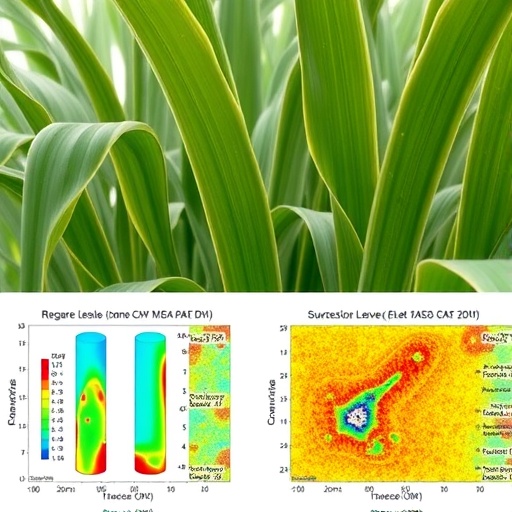
In a groundbreaking study that promises to redefine biomass valorization processes, researchers from Thailand have embarked on a thorough investigation into the sulfonation-based pretreatment of sugarcane leaves. Their research shines a spotlight on the potential of utilizing agricultural residues, specifically sugarcane leaves, as a sustainable feedstock for biochemical production and bioenergy. This process, cultivated under mild conditions, aims to enhance the efficiency of sugarcane leaves as a source of valuable biochemicals, thus addressing the pressing need for sustainable solutions in biomass utilization.
The study, titled “Simulation-Based Process Design and Preliminary Techno-Economic Assessment of Sulfonation-Based Pretreatment of Sugarcane Leaves Under Mild Conditions,” employs advanced simulation techniques for process design, ensuring that the strategies they propose are not only innovative but also feasible in real-world applications. Researchers utilized sophisticated modeling to analyze the impacts of various pretreatment parameters on the efficiency of the sulfonation process. This methodology ensures that every aspect of the process is optimized for maximum yield and operational efficiency.
One of the standout features of the research is its focus on mild reaction conditions. Traditional pretreatment methods often require high temperatures or aggressive chemicals, increasing energy consumption and operational costs. By exploring mild conditions, the researchers provide an environmentally conscious alternative that minimizes the ecological footprint of biomass processing. These advancements could prove essential for countries looking to boost their bio-based economies without exacerbating climate change.
The simulation-based approach empowers researchers to identify optimal conditions for the sulfonation process, such as reaction time, temperature, and concentration of reagents. By utilizing simulations, the team could efficiently analyze numerous scenarios and subsequently determine the optimal reaction conditions before even conducting physical experiments. This predictive capability not only speeds up the research process but also enhances the accuracy of the outcomes, laying the foundation for more reliable biomass treatment methods.
The techno-economic assessment conducted as part of the study evaluates the financial viability of the proposed pretreatment process. This step is critical, as it translates technical innovations into practical applications that can be commercially viable. The researchers calculated various economic indicators, including capital investment, operational costs, and potential revenue from the biochemicals produced. Such assessments are essential for stakeholders in the industry, and they provide a clear picture of the economic landscape associated with biomass valorization.
Moreover, the findings reveal significant insights into the yield of biochemicals achieved after sulfonation pretreatment. Understanding the conversion efficiencies not only highlights the advantages of this method but also demonstrates the potential market value of the resulting products. The economic benefits of using sugarcane leaves as a feedstock become increasingly apparent when juxtaposed with the rising costs of traditional fossil-based processes.
What sets this study apart is the researchers’ focus on sustainability and the circular economy. By utilizing residues from the sugarcane industry, which would otherwise be discarded, the study champions waste reduction and resource optimization. This embraces the principles of circular economy that advocate for reducing waste and making the most out of available resources. The implications extend beyond the immediate benefits of improved yield and cost efficiency; they signal a paradigm shift in how biomass can be perceived and utilized effectively.
The impact of this research stretches well beyond the laboratory. Policymakers in agricultural and environmental sectors may find the results particularly relevant. As global efforts toward sustainability intensify, findings from such studies can guide the formulation of regulations and incentives that promote the adoption of innovative biomass processing technologies. There is an urgent need for holistic approaches that address the challenges posed by agricultural waste while simultaneously fostering economic growth in rural areas.
Engagement with local farmers and stakeholders is anticipated as the researchers aim to facilitate the transfer of this technology from theory to practice. For farmers, the potential for creating a new revenue stream from what was previously considered waste could transform local economies, especially in sugarcane-producing regions. The adoption of such sustainable practices creates a win-win situation: reducing waste while promoting economic resilience.
As the researchers continue to refine their findings, expectations are high for subsequent innovations that may stem from this work. It sets the stage for the exploration of other agricultural residues, inviting further investigation into how various biomass sources can be treated sustainably. The implications for food security, renewable energy, and the bioproducts market are expansive, indicating a bright future for ongoing research in this area.
In summary, the study conducted by Panjapornpon et al. outlines a transformative approach to biomass valorization that could revolutionize the way we think about agricultural waste. By focusing on the sulfonation-based pretreatment of sugarcane leaves under mild conditions, the research not only paves the way for more sustainable biomass processing methods but also underscores the economic and environmental benefits associated with utilizing agricultural residues efficiently. The takeaways from this paper are sure to resonate within both academic circles and industry forums, fueling discussions about the future of biomass utilization and sustainable resource management.
With its innovative approach and clear implications for sustainability, this research is poised to make significant contributions to the field. It challenges existing paradigms and opens avenues for new research. This study is more than just an exploration of a specific process; it represents a step forward in establishing a more sustainable future, where every component of agricultural production is respected and utilized to its maximum potential.
Cite Scienmag News
Denise Maddox. (December 12, 2025). Sulfonation Pretreatment of Sugarcane Leaves: Simulation Insights. Scienmag. https://scienmag.com/sulfonation-pretreatment-of-sugarcane-leaves-simulation-insights/
Denise Maddox. "Sulfonation Pretreatment of Sugarcane Leaves: Simulation Insights." Scienmag, 12 December 2025, https://scienmag.com/sulfonation-pretreatment-of-sugarcane-leaves-simulation-insights/. Accessed 3 September 2026.
Denise Maddox. "Sulfonation Pretreatment of Sugarcane Leaves: Simulation Insights." Scienmag. December 12, 2025. https://scienmag.com/sulfonation-pretreatment-of-sugarcane-leaves-simulation-insights/


