


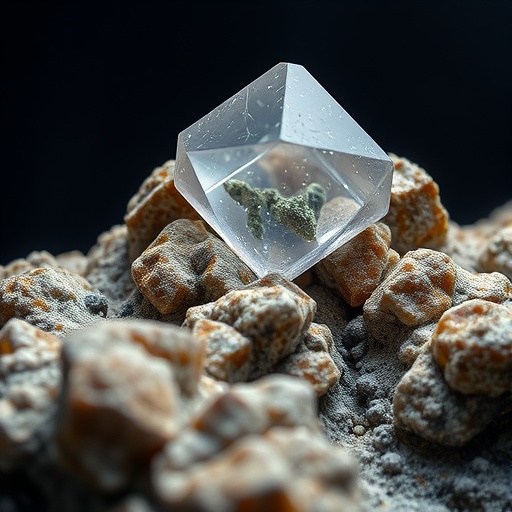
In the world of mineral identification, researchers are continuously exploring innovative methodologies to improve accuracy and efficiency. A groundbreaking study by Liao, Ji, Yang, and their team, titled “Mineral Identification Based on Multimodal and Knowledge Distillation,” sheds light on a sophisticated approach that leverages multimodal data inputs along with knowledge distillation techniques. This research, published in 2025 in Nature Resources Research, signifies a major leap forward in the application of machine learning and artificial intelligence within the geosciences.
Harnessing a combination of data sources is instrumental in mineral identification. Traditional methods often rely on single-source data which can limit the robustness of results. The researchers introduced a multimodal framework that integrates diverse data formats—including spectral data, imaging data, and textual descriptions—enabling a more holistic understanding of mineral properties. This multi-faceted approach is aimed at overcoming the challenges posed by data scarcity and noise which can distort identification outcomes.
Knowledge distillation plays a critical role in this research, acting as a bridge between complex models and their more simplistic counterparts. By leveraging the knowledge garnered from large, intricate models, the researchers aimed to train smaller models without sacrificing performance. This is crucial, as resource constraints in many geological assessments demand faster yet efficient methodologies. Through this distillation process, the team effectively compressed significant knowledge into a more manageable framework, ultimately broadening the accessibility of advanced mineral identification tools.
Furthermore, this research highlights the importance of feature extraction techniques, which are vital in distinguishing between different mineral classes. Utilizing deep learning algorithms, the team was able to identify salient features from various data inputs, helping to generate a comprehensive dataset that reflects the intricate nuances of mineral compositions. This meticulous attention to detail not only refined the results but also underscored the significance of tailored algorithms in the realm of mineralogy.
An essential aspect of the study was the extensive training conducted on various datasets which included both labeled and unlabeled data. By applying semi-supervised learning techniques, the researchers were able to enhance model performance by utilizing unlabeled data effectively. This method addresses a common bottleneck in machine learning, allowing participants to maximize the utility of available information, regardless of its labeled status. The implications of effective semi-supervised learning extend beyond mineral identification and could potentially be applied to numerous similar fields.
Moreover, rigorous testing of the developed models against traditional identification methods showcased significant improvements in terms of accuracy and efficiency. The researchers presented robust evidence that their multimodal framework not only outperforms existing techniques but also demonstrates an ability to adapt to various geological contexts. This adaptability is particularly beneficial for geologists working in diverse environments, offering a scalable solution that can be tailored to specific requirements.
One striking advantage of the proposed methodology is the reduction in time and resources required for identification tasks. Typically, mineral identification processes can be time-consuming, often demanding detailed manual analysis and expertise. However, the implementation of this advanced framework allows for swift preliminary assessments, which can streamline operational workflows in mining and exploration sectors. The potential for increased operational efficiency can translate into significant economic benefits for industries reliant on mineral extraction.
Additionally, the significance of collaboration amongst researchers is evident in this study. The multidisciplinary nature of mineral identification means that inputs from various fields such as geology, machine learning, and data science are invaluable. The collaborative approach adopted by the research team serves as a reminder of the power of cross-disciplinary synergy in fostering innovative solutions to complex problems.
The study not only contributes to the field of mineralogy but also raises questions regarding the future possibilities of machine learning applications in geosciences. As algorithms continue to evolve and data becomes increasingly abundant, it is crucial for researchers to remain vigilant to the ethical implications of these technologies. The ability to predict and identify geological materials in real-time could revolutionize resource management, but it also necessitates a thoughtful consideration of the environmental impacts associated with resource extraction.
Furthermore, the potential scalability of this multimodal approach presents exciting prospects for future research. By refining and adapting their methodologies, the researchers can envision applications extending beyond minerals into various realms such as environmental monitoring and resource conservation. The convergence of machine learning with geological sciences inspires optimism for sustainable practices that align with global ecological goals.
In summary, Liao and colleagues’ study presents a transformative methodology for mineral identification that incorporates multimodal data and leverages knowledge distillation techniques. As the geoscience community stands on the precipice of a new era of exploration and resource management powered by artificial intelligence, this research epitomizes the potential of innovative methodologies to reshape our understanding of the natural world.
The road ahead will entail continuous iterations and improvements of these models, especially in the pursuit of enhanced accuracy and generalizability across different geological settings. The necessity for ongoing collaboration across various sectors remains, as the truly groundbreaking advances in this domain will inevitably arise from the fusion of diverse perspectives and expertise. In an ever-evolving landscape, the journey toward advanced mineral identification not only opens new doors for exploration but also highlights our collective responsibility towards sustainable resource management.
As we delve into the findings and methodologies outlined in this study, it becomes evident that the future of mineral identification is not only about technological advancements but also about fostering a deeper understanding of the ecological dynamics at play. The implications are profound, and the momentum generated by this research could potentially lay the groundwork for innovative strategies aimed at responsibly harnessing the Earth’s mineral wealth while minimizing our ecological footprint.
The exploration of minerals through the lenses of artificial intelligence and machine learning compels us to rethink traditional paradigms. By embracing new technologies, researchers are not just advancing science; they are contributing to a future where mineral identification can be conducted in harmony with the environment. This shift toward sustainable practices is crucial as we navigate the challenges posed by resource scarcity and environmental degradation.
In conclusion, Liao et al.’s research represents a significant milestone in the field of mineral identification, illustrating the confluence of machine learning techniques and geological sciences. By employing multimodal data and knowledge distillation, the team not only enhances our understanding of mineral properties but sets a precedent for future studies seeking innovative solutions to complex geological inquiries.
Liao, H., Ji, X., Yang, M. et al. Mineral Identification Based on Multimodal and Knowledge Distillation.
Nat Resour Res (2025). https://doi.org/10.1007/s11053-025-10602-x
Cite Scienmag News
Violet Maxwell. (December 12, 2025). Revolutionizing Mineral Identification with AI Techniques. Scienmag. https://scienmag.com/revolutionizing-mineral-identification-with-ai-techniques/
Violet Maxwell. "Revolutionizing Mineral Identification with AI Techniques." Scienmag, 12 December 2025, https://scienmag.com/revolutionizing-mineral-identification-with-ai-techniques/. Accessed 5 September 2026.
Violet Maxwell. "Revolutionizing Mineral Identification with AI Techniques." Scienmag. December 12, 2025. https://scienmag.com/revolutionizing-mineral-identification-with-ai-techniques/


