


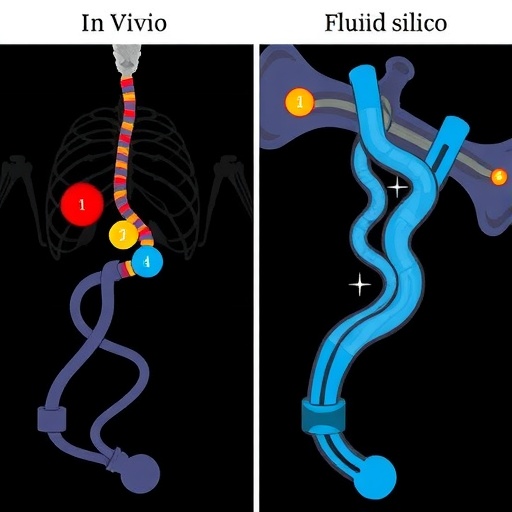
In the domain of critical care and trauma management, fluid resuscitation stands as a cornerstone intervention for patients suffering from hemorrhagic shock or severe dehydration. As the medical community seeks to refine and optimize these life-saving techniques, researchers are delving into the comparative assessment of in vivo (in living organisms) and in silico (computer-simulated) evaluations of automated fluid resuscitation controllers. The recent study spearheaded by Chalumuri, Sampson, and Shah is a groundbreaking exploration into the efficacy and accuracy of these automated systems, revealing striking insights that hold the potential to revolutionize patient care protocols.
Fluid resuscitation is vital for restoring hemodynamic stability in critically ill patients. Traditionally, this process has relied on the expertise of medical personnel to assess and administer the appropriate volume and type of fluids. However, as technology advances, automated systems are emerging as powerful allies in this area. These systems aim to enhance the precision of fluid administration while minimizing human error, a significant factor in high-stakes medical situations. The integration of graphical interfaces and algorithms designed to evaluate patient data dynamically could herald a new age of automated medical responses.
In the context of the study under discussion, the researchers conducted a comparative evaluation to identify the advantages and limitations of both in vivo and in silico models in assessing these automated fluid resuscitation controllers. The in vivo studies generally involve actual clinical settings where real-time patient data can provide valuable insights. The versatility and adaptability of these models exemplify the complexity of human biology; however, ethical constraints and logistical challenges often limit their usage.
Simultaneously, the in silico evaluations present an attractive alternative. By using computational models, researchers are not bound by ethical concerns or patient variability, making it possible to rapidly simulate scenarios that would be impractical or impossible in a real-world environment. This approach allows for extensive testing of various algorithms and control strategies, thus accelerating the development of next-generation automated systems. The study’s aim was to juxtapose these two evaluation paradigms to yield a holistic understanding of the potential for risk and efficacy in automated fluid management.
Through a series of meticulously designed experiments and simulations, the researchers gathered data that illuminated the performance discrepancies between in vivo and in silico assessments. One critical finding of the study is the notable variance in outcomes produced by both evaluation strategies. While in vivo testing provided a more dynamic and realistic representation of patient responses, it was evident that in silico models could explore a broader array of scenarios without the constraint of time or ethical limitations. The confluence of these insights could foster a more robust framework for refining automated fluid resuscitation systems.
Another fascinating aspect of the study focused on the algorithms employed within these automated systems. The researchers meticulously analyzed how different computational strategies influenced the rate and volume of fluid administered to patients. The complexity of fluid resuscitation demands algorithms that can adapt to changing patient conditions, and this study underscores the importance of dynamic modeling in achieving optimal treatment outcomes. The balance between delivering adequate fluid volume while preventing complications like fluid overload is a challenge that these algorithms must navigate successfully.
The findings from Chalumuri and colleagues not only underscore the importance of using both evaluation strategies but also highlight a roadmap for future research endeavors. By understanding the strengths and weaknesses inherent in each method, engineers and clinicians can collaboratively refine automated fluid resuscitation technologies. Building more versatile algorithms that can be fine-tuned based on in vivo insights can lead to innovations that more closely align with the complexities of human physiology.
Additionally, the study’s implications extend far beyond the immediate context of fluid management. The success of automated health interventions relies heavily on capturing real-time patient responses to guide decision-making. As machine learning and artificial intelligence continue to permeate healthcare, integrating data from both in vivo and in silico assessments could lay the groundwork for smarter, self-optimizing systems that continuously learn and improve from both clinical practices and simulated environments.
As automated fluid resuscitation controllers gain traction, the study prompts important ethical considerations regarding the reliance on technology in clinical settings. While these systems present numerous advantages, such as reducing the workload for healthcare professionals and potentially improving patient outcomes, they also raise questions about accountability. As these algorithms make increasingly autonomous decisions, it is essential to establish clear protocols for monitoring and intervention should unexpected outcomes arise.
In conclusion, the comparative assessment of in vivo and in silico evaluations of automated fluid resuscitation controllers reveals a rich tapestry of insights that could shape the future of critical care. With a focus on enhancing precision and minimizing error, the research spearheaded by Chalumuri, Sampson, and Shah indicates a promising pathway toward integrating innovative technology in medicine. As the evolution of automated systems continues, the lessons learned from this study could serve as a catalyst for breakthroughs that not only save lives but also set a new standard for patient care excellence across healthcare systems worldwide.
The journey of exploration and innovation is ever-present in the realm of medicine, and as research unfolds, the spotlight remains on the interplay of technology and patient care. The full realization of automated fluid resuscitation systems could illuminate a path towards optimizing interventions in fluid management, illustrating how far we’ve come and how much further we can go in our commitment to improving patient outcomes.
Ultimately, the study’s findings echo an important truth within the medical community: the future of healthcare lies in the symbiosis between human expertise and technological advancement. Whether through in vivo assessments reflecting real-life scenarios or in silico simulations providing limitless possibilities, the advancements in automated fluid resuscitation are set to redefine patient management strategies as we navigate the complexities of critical care.
Chalumuri, Y.R., Sampson, C.M., Shah, S.A. et al. Comparative Assessment of In Vivo and In Silico Evaluation of Automated Fluid Resuscitation Controllers.
Ann Biomed Eng (2025). https://doi.org/10.1007/s10439-025-03929-2
Cite Scienmag News
Ophelia Keating. (December 11, 2025). Comparing In Vivo and In Silico Fluid Resuscitation. Scienmag. https://scienmag.com/comparing-in-vivo-and-in-silico-fluid-resuscitation/
Ophelia Keating. "Comparing In Vivo and In Silico Fluid Resuscitation." Scienmag, 11 December 2025, https://scienmag.com/comparing-in-vivo-and-in-silico-fluid-resuscitation/. Accessed 6 September 2026.
Ophelia Keating. "Comparing In Vivo and In Silico Fluid Resuscitation." Scienmag. December 11, 2025. https://scienmag.com/comparing-in-vivo-and-in-silico-fluid-resuscitation/


