


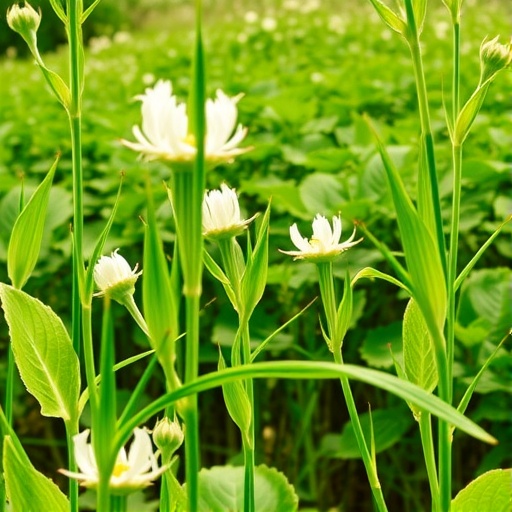
In recent years, the quest for sustainable agricultural practices has garnered unprecedented attention, particularly in the context of weed management. As the global population continues to burgeon, so too does the need for effective and environmentally friendly farming techniques. Traditional chemical herbicides, while effective at controlling unwanted vegetation, have been associated with numerous negative environmental impacts, including soil degradation and harm to non-target species. In light of these concerns, innovative alternatives are urgently needed. A groundbreaking study by El-Wakeel and Zaki explores the potential of natural oils as herbicides, specifically focusing on rocket and mustard oils and their nano-emulsions in controlling weeds associated with faba bean crops.
At the heart of this investigation lies the recognition of the adverse ecological effects that synthetic herbicides can inflict on the environment. These chemicals not only disrupt local ecosystems but can also lead to the development of resistant weed populations, rendering conventional control measures less effective over time. The research conducted by El-Wakeel and Zaki provides a fresh perspective on managing these challenges by utilizing natural products that are not just effective but also safer for the ecosystem.
The utilization of rocket and mustard oils as alternatives to chemical herbicides is particularly promising. Both of these oils possess unique biochemical properties that allow them to act as potent weed suppressants. They contain various natural compounds, including phenolics, essential fatty acids, and sulfur-containing compounds, which are known for their herbicidal activity. Rocket oil, derived from the seeds of the Eruca sativa plant, and mustard oil, derived from Brassica species, have been historically recognized for their culinary uses but are now being evaluated for their herbicidal properties.
One of the most fascinating aspects of this study is the application of nano-emulsions, which are formulations that improve the efficacy and stability of active ingredients. Nano-emulsions are composed of tiny droplets that can effectively encapsulate these natural oils, enhancing their penetration and distribution within plant tissues. This is critical for achieving optimal herbicidal effects, as it can significantly increase the bioavailability of key compounds, enabling them to disrupt the physiological processes of target weeds.
Through a series of meticulously designed experiments, the researchers assessed the efficacy of both rocket and mustard oils, as well as their nano-emulsions, against a variety of weed species commonly found in faba bean production systems. The results indicated that both natural oils exhibited significant herbicidal properties, with their nano-emulsions providing even greater control over weed growth. This suggests that incorporating these innovative formulations into agricultural practices could offer farmers a viable and sustainable alternative to traditional herbicides.
Moreover, the study delves into the mechanism by which these oils exert their herbicidal effects. It posits that the natural compounds present in rocket and mustard oils disrupt critical metabolic processes within the weed plants. For instance, the oils may interfere with photosynthesis, respiration, and nutrient uptake, ultimately leading to reduced growth and viability of the targeted weed species. This biochemical insight underscores the potential of harnessing natural plant-based solutions in modern agriculture.
The implications of this research extend beyond just weed control; they pave the way for a more integrated approach to pest management that emphasizes biodiversity and soil health. Utilizing natural herbicides like those derived from rocket and mustard oils encourages the maintenance of beneficial insect populations and minimizes the risk of soil and water contamination. As the agricultural community grapples with the challenges of sustainability and crop resilience, studies like this provide critical evidence that supporting ecological balance can be both achievable and effective.
In light of the findings from El-Wakeel and Zaki’s study, it becomes increasingly clear that the future of agriculture lies in adopting practices that are not only beneficial for crop yields but also harmonious with the environment. By prioritizing eco-friendly alternatives and decreasing reliance on synthetic chemicals, farmers can not only enhance their productivity but also contribute to global efforts aimed at reducing environmental degradation.
As awareness of the dangers posed by chemical herbicides continues to grow among consumers and agricultural stakeholders alike, the timing of this research could not be more crucial. Increasingly, buyers are seeking products cultivated through sustainable and organic methods, pushing farmers to reevaluate their practices. The study highlights an urgent need for more research and investment into natural herbicide solutions, which could meet the rising demands for organic produce while safeguarding ecosystems.
Furthermore, the publication of this study in a prestigious journal underscores its significance within the broader scientific community. This research serves as a vital contribution to the ongoing discourse surrounding sustainable agriculture and offers a tangible solution to an age-old problem faced by farmers across the globe. El-Wakeel and Zaki’s innovative exploration of rocket and mustard oils invites a new wave of scientific inquiry into plant-based weed management strategies.
In conclusion, the efficacy of rocket and mustard oils and their nano-emulsions presents an exciting frontier in weed management. As evidence mounts in favor of natural herbicides, the agricultural sector must embrace this shift towards holistic and sustainable farming. With studies like this shedding light on the potential of eco-friendly alternatives, the dream of smarter, greener farming practices is within reach.
The implications of this study reach far beyond the laboratory. It challenges farmers to think critically about the tools they utilize in their fields and inspires them to explore non-synthetic options that promise both efficacy and environmental stewardship. As more farmers adopt such practices, the collective impact on ecosystems could be transformative, ushering in a new era of sustainable agriculture that prioritizes health, biodiversity, and resilience against the backdrop of climate change.
In essence, as we advance toward future agricultural paradigms, the efforts led by El-Wakeel and Zaki are but a glimpse into what could become a revolutionary shift in how we perceive and manage weeds. The exploration of natural herbicidal functions of plant oils lays a foundation for further advancements in agricultural practices that respect the delicate balance of our planet’s ecosystems while still providing food security for the growing global population. The integration of such practices could redefine farming and ultimately lead us toward a more balanced and sustainable agricultural future.
El-Wakeel, M.A., Zaki, F.S.A. Efficacy of rocket and mustard oils and their nano-emulsions as alternatives to chemical herbicides for controlling weeds associated faba bean.
Sci Rep (2025). https://doi.org/10.1038/s41598-025-29915-1
Cite Scienmag News
Alan Morgan. (December 10, 2025). Natural Oils and Nano-Emulsions: Herbicide Alternatives for Weeds. Scienmag. https://scienmag.com/natural-oils-and-nano-emulsions-herbicide-alternatives-for-weeds/
Alan Morgan. "Natural Oils and Nano-Emulsions: Herbicide Alternatives for Weeds." Scienmag, 10 December 2025, https://scienmag.com/natural-oils-and-nano-emulsions-herbicide-alternatives-for-weeds/. Accessed 3 September 2026.
Alan Morgan. "Natural Oils and Nano-Emulsions: Herbicide Alternatives for Weeds." Scienmag. December 10, 2025. https://scienmag.com/natural-oils-and-nano-emulsions-herbicide-alternatives-for-weeds/


