

Friday, September 4, 2026
Science
No Result
View All Result
  • Login
  • HOME
  • SCIENCE NEWS
  • CONTACT US
  • HOME
  • SCIENCE NEWS
  • CONTACT US
No Result
View All Result
Scienmag
No Result
View All Result
Home Science News Technology and Engineering

SwRI breaks ground on new hypersonic engine research facility

June 17, 2024
in Technology and Engineering
Denise Maddox
By Denise Maddox Scienmag Editorial Profile - Mechanical Engineering
Reading Time: 3 mins read
0
SwRI breaks ground on new hypersonic engine research facility
68
SHARES
614
VIEWS
Share on FacebookShare on Twitter
ADVERTISEMENT

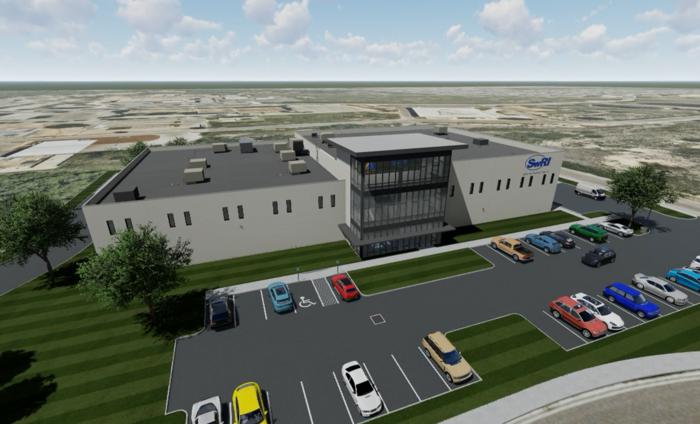
SAN ANTONIO — June 17, 2024 —Southwest Research Institute (SwRI) today celebrated the groundbreaking of the Center for Accelerating Materials and Processes (CAMP), a new facility that will support research and development for tomorrow’s high-speed aerospace engines.

“This project will help ensure the U.S. is a leader in high-speed propulsion research and development,” said Dr. Barron Bichon, director of SwRI’s Materials Engineering Department. “SwRI is committed to advancing this vital technology on behalf of Texas and the nation.”

Market forces including growth in global defense, air travel, delivery and transportation needs are driving the demand for high-speed engines. Initial projects in the new CAMP facility will focus on demonstrating faster, more efficient techniques for manufacturing high-speed propulsion systems.

Once construction on the new two-story, 36,600 square-foot facility is complete, SwRI will begin evaluating new materials and processes designed to produce a high-speed engine in a considerably shorter amount of time than current production timelines.

“This new facility will see the development of innovative technology that reflects SwRI’s mission of serving humankind,” said Dr. Ben Thacker, vice president of SwRI’s Mechanical Engineering Division. “Advancing high-speed propulsion systems propels us toward a future with stronger defense capabilities and greater global connectivity.”

One of the CAMP facility’s initial projects will involve procuring and installing manufacturing process test equipment. Under a contract from the Office of the Secretary of Defense’s Manufacturing Science and Technology Program, SwRI engineers will demonstrate how the facility will reduce production times and costs. The Institute will invest $34 million in the construction of the CAMP facility.

For more information, visit https://www.swri.org/technical-divisions/mechanical-engineering.

CAMP RESEARCH FACILITY

Credit: Southwest Research Institute

SAN ANTONIO — June 17, 2024 —Southwest Research Institute (SwRI) today celebrated the groundbreaking of the Center for Accelerating Materials and Processes (CAMP), a new facility that will support research and development for tomorrow’s high-speed aerospace engines.

“This project will help ensure the U.S. is a leader in high-speed propulsion research and development,” said Dr. Barron Bichon, director of SwRI’s Materials Engineering Department. “SwRI is committed to advancing this vital technology on behalf of Texas and the nation.”

Market forces including growth in global defense, air travel, delivery and transportation needs are driving the demand for high-speed engines. Initial projects in the new CAMP facility will focus on demonstrating faster, more efficient techniques for manufacturing high-speed propulsion systems.

Once construction on the new two-story, 36,600 square-foot facility is complete, SwRI will begin evaluating new materials and processes designed to produce a high-speed engine in a considerably shorter amount of time than current production timelines.

“This new facility will see the development of innovative technology that reflects SwRI’s mission of serving humankind,” said Dr. Ben Thacker, vice president of SwRI’s Mechanical Engineering Division. “Advancing high-speed propulsion systems propels us toward a future with stronger defense capabilities and greater global connectivity.”

One of the CAMP facility’s initial projects will involve procuring and installing manufacturing process test equipment. Under a contract from the Office of the Secretary of Defense’s Manufacturing Science and Technology Program, SwRI engineers will demonstrate how the facility will reduce production times and costs. The Institute will invest $34 million in the construction of the CAMP facility.

For more information, visit https://www.swri.org/technical-divisions/mechanical-engineering.


Subject of Research: Technology and Engineering

Article Title: SwRI breaks ground on new hypersonic engine research facility

Article References: Original research article

Image Credits: AI Generated

DOI: Not provided

Keywords: Not provided

Cite Scienmag News

Denise Maddox. (June 17, 2024). SwRI breaks ground on new hypersonic engine research facility. Scienmag. https://scienmag.com/swri-breaks-ground-on-new-hypersonic-engine-research-facility/

Denise Maddox. "SwRI breaks ground on new hypersonic engine research facility." Scienmag, 17 June 2024, https://scienmag.com/swri-breaks-ground-on-new-hypersonic-engine-research-facility/. Accessed 4 September 2026.

Denise Maddox. "SwRI breaks ground on new hypersonic engine research facility." Scienmag. June 17, 2024. https://scienmag.com/swri-breaks-ground-on-new-hypersonic-engine-research-facility/

Share27Tweet17
Previous Post

Scientists develop 3D printed vacuum system that aims to trap dark matter

Next Post

On robust cross-view consistency in self-supervised monocular depth estimation

Related Posts

Agricultural waste turned into sustainable supramolecular fibers via wet spinning
Technology and Engineering

Agricultural waste turned into sustainable supramolecular fibers via wet spinning

September 4, 2026
Ferroelectricity discovered in ultrathin two-dimensional gallium oxide films
Technology and Engineering

Ferroelectricity discovered in ultrathin two-dimensional gallium oxide films

September 4, 2026
AI-designed heritage: how audiences respond to authentic cultural designs
Technology and Engineering

AI-designed heritage: how audiences respond to authentic cultural designs

September 4, 2026
Hierarchical Dynamic Object Removal Boosts Dual-Stage LiDAR-Inertial SLAM Performance
Technology and Engineering

Hierarchical Dynamic Object Removal Boosts Dual-Stage LiDAR-Inertial SLAM Performance

September 4, 2026
Anti-swelling biphasic conductive hydrogels enable 3D-printed implantable bioelectronics
Technology and Engineering

Anti-swelling biphasic conductive hydrogels enable 3D-printed implantable bioelectronics

September 4, 2026
Shape-memory polymer nanocoatings redistribute stress in brittle battery cathodes
Technology and Engineering

Shape-memory polymer nanocoatings redistribute stress in brittle battery cathodes

September 4, 2026
Next Post
On robust cross-view consistency in self-supervised monocular depth estimation

On robust cross-view consistency in self-supervised monocular depth estimation

  • Mothers who receive childcare support from maternal grandparents show more optimized

    Mothers who receive childcare support from maternal grandparents show more parental warmth, finds NTU Singapore study

    27656 shares
    Share 11059 Tweet 6912
  • University of Seville Breaks 120-Year-Old Mystery, Revises a Key Einstein Concept

    1061 shares
    Share 424 Tweet 265
  • Bee body mass, pathogens and local climate influence heat tolerance

    682 shares
    Share 273 Tweet 171
  • Researchers record first-ever images and data of a shark experiencing a boat strike

    546 shares
    Share 218 Tweet 137
  • Groundbreaking Clinical Trial Reveals Lubiprostone Enhances Kidney Function

    531 shares
    Share 212 Tweet 133
Science

Embark on a thrilling journey of discovery with Scienmag.com—your ultimate source for cutting-edge breakthroughs. Immerse yourself in a world where curiosity knows no limits and tomorrow’s possibilities become today’s reality!

RECENT NEWS

  • Agricultural waste turned into sustainable supramolecular fibers via wet spinning
  • How genes and sex jointly shape cognition in Philadelphia youth cohort
  • Warming and ammonium exposure in larvae shape adult frog outcomes
  • Does community health care cut hospital use? Australian evidence says yes

Categories

  • Agriculture
  • Anthropology
  • Archaeology
  • Athmospheric
  • Biology
  • Biotechnology
  • Blog
  • Bussines
  • Cancer
  • Chemistry
  • Climate
  • Earth Science
  • Editorial Policy
  • Marine
  • Mathematics
  • Medicine
  • Pediatry
  • Policy
  • Psychology & Psychiatry
  • Science Education
  • Social Science
  • Space
  • Technology and Engineering

Subscribe to Blog via Email

Enter your email address to subscribe to this blog and receive notifications of new posts by email.

Join 5,151 other subscribers

© 2025 Scienmag - Science Magazine

Welcome Back!

Login to your account below

Forgotten Password?

Retrieve your password

Please enter your username or email address to reset your password.

Log In
No Result
View All Result
  • HOME
  • SCIENCE NEWS
  • CONTACT US

© 2025 Scienmag - Science Magazine

Discover more from Science

Subscribe now to keep reading and get access to the full archive.

Continue reading