


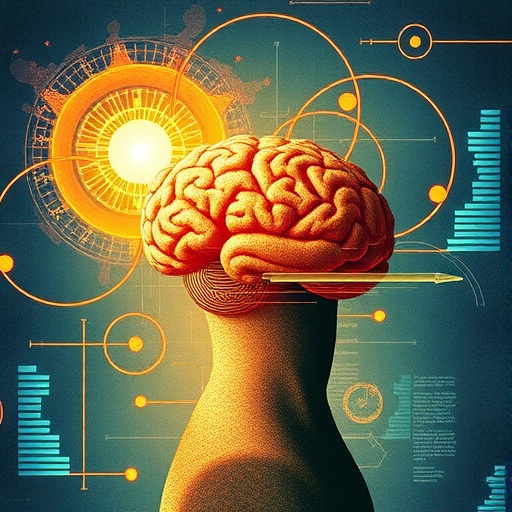
In the ever-evolving landscape of neuroscience and cognitive science, the quest to unravel the profoundly enigmatic nature of consciousness persists as one of the most formidable scientific challenges of the 21st century. A newly published work by B.J. He, appearing in Communications Psychology, titled “On the Role of Theories in Consciousness Science,” provides a timely, rigorous, and transformative discourse on how theoretical frameworks are not merely accessory but essential to the advancement of consciousness studies. This article serves as a pivotal contribution toward elucidating the interplay between conceptual models and empirical inquiry within this multidisciplinary domain.
At the crux of He’s argument lies the assertion that theories in consciousness science operate as both the scaffolding and the compass directing experimental design, interpretation of data, and the synthesis of disparate findings. Unlike purely descriptive or correlational research, theoretical approaches afford a mechanistic lens through which phenomena related to awareness and subjective experience can be systematically interrogated. This paradigm is crucial given how consciousness defies straightforward measurement, lacking concrete physical referents and presenting as inherently private and subjective.
He methodically critiques the historical trajectory of consciousness science, highlighting how rudimentary frameworks such as the Global Workspace Theory and Integrated Information Theory have propelled the field forward by producing testable predictions and fostering technological innovations—including neuroimaging techniques like fMRI and EEG—that allow researchers to probe neural correlates of consciousness with unprecedented precision. These theories, while imperfect and sometimes contentious, serve as experimental hypotheses that challenge scientists to refine or refute them based on empirical data.
The article further delineates the distinction between data-driven and theory-driven research paradigms, emphasizing that while big data and advanced computational methods have revolutionized brain science, the absence of guiding theoretical constructs risks yielding voluminous yet fragmented or even spurious findings. Theory, therefore, acts as a critical filter and organizer of information, enabling meaningful integration of results across scales—from molecular neurobiology to cognitive phenomenology.
One of the more compelling sections of He’s work delves into the epistemological challenges unique to consciousness research. The author deftly navigates the complex terrain where subjective reports must be translated into objective data without succumbing to reductionism or oversimplification. This necessity of bridging first-person experiential accounts with third-person scientific observations necessitates advanced theoretical models that can accommodate both perspectives coherently.
He’s exposition also touches on the collaborative nature of consciousness science, underscoring the value of interdisciplinary theory-building involving neuroscientists, psychologists, philosophers, and even physicists. Such cross-pollination fosters conceptual breakthroughs, such as quantum models of consciousness and predictive coding frameworks, which challenge traditional neuroscientific dogmas and open new vistas for exploration.
A vital insight advocated in the article is the dynamic, iterative relationship between theory and experiment. Rather than being static blueprints, theories are living hypotheses subject to continuous refinement as new data emerges. This dialectical process nurtures scientific progress by preventing dogmatism and encouraging pluralism, wherein competing theories can coexist and be evaluated on their explanatory power and empirical robustness.
Furthermore, He proposes that future advancements in consciousness science will rely heavily on the development of computational models that simulate neural activity linked to conscious states. Such models must incorporate not only neurophysiological parameters but also incorporate nuanced representational and functional features derived from theoretical considerations, enabling predictive simulations that can be empirically validated.
The article does not shy away from acknowledging the limitations and controversies surrounding dominant theories. For instance, Integrated Information Theory faces critiques related to its mathematical complexity and interpretive ambiguity, while Global Workspace Theory is sometimes challenged for its reliance on metaphorical constructs. He argues that these debates are both inevitable and healthy, driving deeper scrutiny and innovation.
He also addresses the practical implications of refined theoretical understanding in consciousness science. Enhanced theories promise advances in clinical interventions for disorders of consciousness, such as coma and vegetative states, by informing diagnostic criteria and therapeutic targets. Moreover, theories guiding brain-machine interfaces and artificial intelligence may ultimately lead toward machines capable of rudimentary awareness, raising profound ethical considerations.
In highlighting the methodological rigor required, He advocates for transparency in theoretical assumptions, encouraging researchers to explicitly state the scope and limitations of their models. This clarity facilitates critical peer evaluation and reproducibility, essential pillars of robust scientific practice that are sometimes neglected in consciousness studies due to the field’s inherent complexity.
A notable proposition is the establishment of standardized theoretical benchmarks that can integrate multifaceted data—from behavioral patterns to neural dynamics—into cohesive explanatory systems. Such benchmarks could promote cumulative knowledge building rather than isolated discoveries, fostering consensus and accelerating understanding.
The role of technological innovation is further underscored, with He envisioning a future where advanced neurotechnologies, such as optogenetics and high-resolution brain imaging, synergize with theory to experimentally manipulate and observe conscious processes in ways previously unimaginable. This convergence is poised to transform abstract theoretical insights into concrete, testable phenomena.
Lastly, the article culminates in a call for the scientific community to embrace epistemic humility. The complexity of consciousness demands the acknowledgment that no single theory is likely to offer a complete explanation. Instead, a mosaic of complementary theories, each illuminating different facets of conscious experience, is a more realistic and productive epistemic stance.
In this seminal article, B.J. He not only underscores the indispensable role of theories in advancing consciousness science but also offers a visionary roadmap for integrating conceptual innovation with empirical rigor. The work stands as a clarion call to researchers and theorists alike, emphasizing that unlocking the mysteries of consciousness is as much about refining our scientific theories as it is about amassing data. This paradigm shift promises to galvanize future research, paving the path toward deeper insights into one of humanity’s most profound and enduring enigmas.
Cite Scienmag News
Glenn Wilkins. (November 26, 2025). The Crucial Role of Theories in Consciousness Science. Scienmag. https://scienmag.com/the-crucial-role-of-theories-in-consciousness-science/
Glenn Wilkins. "The Crucial Role of Theories in Consciousness Science." Scienmag, 26 November 2025, https://scienmag.com/the-crucial-role-of-theories-in-consciousness-science/. Accessed 3 September 2026.
Glenn Wilkins. "The Crucial Role of Theories in Consciousness Science." Scienmag. November 26, 2025. https://scienmag.com/the-crucial-role-of-theories-in-consciousness-science/


