


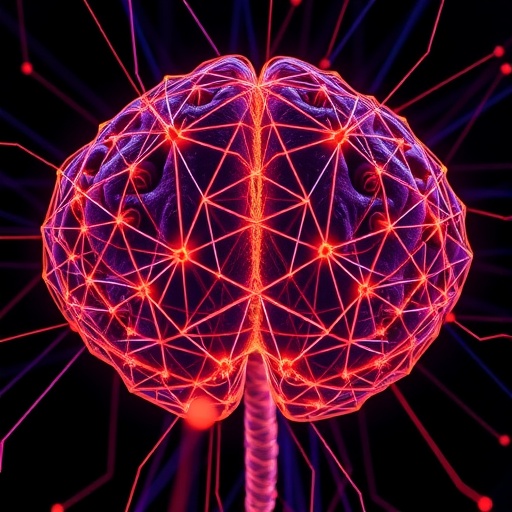
In an extraordinary leap forward in our understanding of brain circuitry, a newly published study unveils the intricate connectivity patterns underpinning motor cortex activity during natural, goal-directed behavior in mice. Remarkably, this work explores the spontaneous neural coding of movement and reward without the confounding effects of extended training, offering profound insights into how brain networks organize and adapt to guide complex actions seamlessly.
At the crux of this investigation lies the motor cortex—the brain’s command center orchestrating intentional movement. While prior research predominantly focused on sensory cortices and stimulus-driven responses, this study shifts the spotlight onto motor cortex neurons as mice engage in multidirectional tongue-reaching tasks to retrieve rewards. This ethologically relevant behavior occurs without prior conditioning, thereby capturing neural dynamics in their unperturbed, innate state.
The researchers meticulously charted neural activity patterns from layer 2/3 of the motor cortex, revealing that individual neurons exhibit selective tuning both to the spatial goals of movements and the outcomes of rewarded actions. These neural signals are not confined to the moments during movement itself but also extend into periods immediately following the action, suggesting sustained representations of behaviorally salient information.
To unravel the microcircuit architecture driving these activity patterns, the team leveraged powerful all-optical methods that allowed causal elucidation of effective neural connections with unparalleled precision. By simultaneously stimulating and recording from a prodigious number of excitatory neurons—more than twenty million pairwise connections evaluated—they painted a comprehensive map of synaptic influences shaping motor cortex processing.
A defining feature emerging from this connectomic landscape is a multi-scale, columnar organization within the excitatory networks. Neurons preferentially formed local “like-to-like” excitatory connections within a fine spatial scale under 100 microns, grouped according to their directional tuning to movement targets. Complementing this local excitation was a broader pattern of spatially extended inhibition, establishing a balance ramped across cortical space.
Interestingly, the connectivity did not conform to a simplistic all-or-nothing pattern but rather exhibited a continuous spectrum. Most neurons were sparsely connected, engaging with relatively few partners, whereas a rare subset functioned as densely connected hubs with extensive influence over their neighbors. These hub neurons exhibited a paradoxical weak tuning to specific movement targets and reward outcomes yet wielded outsized network control, likely playing a modulatory role.
The implications of these findings are profound. The interplay of finely tuned local excitatory circuits with wider inhibitory regulation and the presence of hub nodes suggests a versatile substrate capable of rapidly encoding and updating motor goals. This architecture may be evolutionarily optimized to enable swift learning and flexible adjustment of complex, goal-directed behaviors pivotal for survival.
Beyond deepening our grasp of motor cortex microcircuitry, this work establishes a technological roadmap for probing causal connectivity at scale in vivo. The all-optical approach, combining precise neuronal perturbations with high-resolution functional imaging, surmounts longstanding technical obstacles that previously limited mechanistic insight into large-scale neural networks underpinning behavior.
Moreover, since the study examines naturalistic behavior absent of training, it captures the foundational wiring and coding frameworks from which learning and plasticity can emerge. Dissecting these primal networks lays essential groundwork not only for neuroscience but also for neuromorphic computing and the development of brain-inspired robotic control systems.
The discovery that neural hubs—despite weak sensory tuning—assert broad control points to a sophisticated organizational principle. Such nodes may coordinate widespread cortical dynamics, integrating diverse inputs and orchestrating coherent motor commands critical for achieving multiple goals under varying contexts.
This comprehensive map of motor cortex connectivity harmonizes with longstanding theories positing that efficient movement control relies on balanced excitation and inhibition sculpted at multiple spatial and temporal scales. By detailing how these forces manifest at the cellular and microcircuit level, the study bridges scales from molecules to behavior.
Crucially, this research underscores the importance of studying cortical circuits in ethologically valid settings. Artificial training protocols may obscure intrinsic wiring motifs or introduce plasticity artifacts absent in natural behavior. Thus, observing the brain’s default architecture offers a more faithful window into how neural ensembles encode and execute voluntary actions.
Taken together, these insights elevate our knowledge of the neural basis of purposeful movement and pave avenues for future investigations into how hierarchical and distributed cortical networks collaborate during learning, decision-making, and adaptation. Such understanding holds promise not only for treating motor dysfunction but also for designing intelligent machines capable of fluid, adaptive behaviors.
As we stand on the cusp of a new era in systems neuroscience, this landmark study exemplifies how merging cutting-edge optical technologies with behavioral paradigms can unlock the deepest secrets of brain connectivity—secrets that ultimately define who we are as behaving, goal-driven beings.
Cite Scienmag News
Cassandra Pierce. (November 19, 2025). Motor Cortex Connectivity Drives Goal-Directed Behavior. Scienmag. https://scienmag.com/motor-cortex-connectivity-drives-goal-directed-behavior/
Cassandra Pierce. "Motor Cortex Connectivity Drives Goal-Directed Behavior." Scienmag, 19 November 2025, https://scienmag.com/motor-cortex-connectivity-drives-goal-directed-behavior/. Accessed 4 September 2026.
Cassandra Pierce. "Motor Cortex Connectivity Drives Goal-Directed Behavior." Scienmag. November 19, 2025. https://scienmag.com/motor-cortex-connectivity-drives-goal-directed-behavior/


