


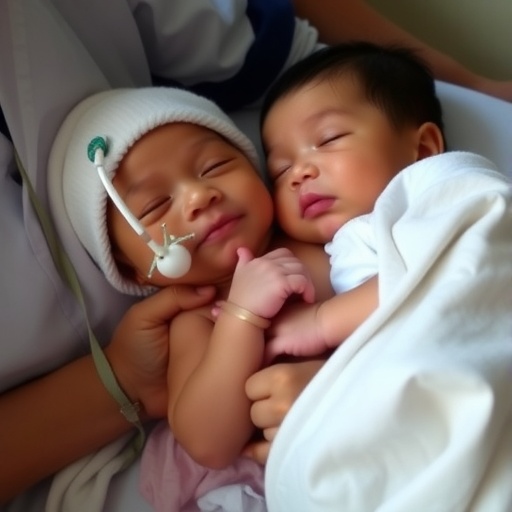
Newborn jaundice is so common that it can appear almost routine in the first days of life. Yet behind the yellowing of a baby’s skin lies a rapidly changing biochemical process that can, in some infants, progress to a medical emergency. A prospective multicenter study from the Philippines is now examining whether a bilirubin measurement taken at exactly 24 hours of life can identify term infants most likely to develop significant hyperbilirubinemia by 72 hours.
The investigation, conducted by the Philippine Society of Newborn Medicine Bilistick Study Group, focuses on Filipino infants born at 37 weeks of gestation or later. Its central question is clinically important: can a single early plasma bilirubin value provide a reliable warning signal before bilirubin levels reach a potentially dangerous range? If so, the measurement could help clinicians decide which newborns require closer monitoring, repeat testing, earlier discharge planning, or preventive treatment.
Bilirubin is produced when the body breaks down red blood cells. In newborns, production is relatively high because they have a greater red-cell mass and a shorter red-cell lifespan than older children and adults. At the same time, the neonatal liver is still developing its ability to process bilirubin. The pigment must be chemically modified through a process called conjugation before it can be efficiently excreted into bile. When production exceeds clearance, unconjugated bilirubin accumulates in the bloodstream and may become visible as jaundice.
For most newborns, this rise is temporary and harmless. The concern begins when bilirubin concentrations increase rapidly or reach levels that pose a risk to the brain. Unconjugated bilirubin can cross the blood-brain barrier, particularly when it is not adequately bound to plasma proteins. In severe cases, it can injure vulnerable regions of the nervous system, causing acute bilirubin encephalopathy and, in its permanent form, kernicterus. Phototherapy remains the standard treatment for reducing bilirubin toxicity, while exchange transfusion is reserved for the most serious cases.
The Philippine study is motivated by the country’s particular risk profile. Filipino newborns are generally classified within the broader East Asian population, a demographic group associated in clinical guidelines with a higher likelihood of developing significant jaundice. The Philippines also has a substantial prevalence of glucose-6-phosphate dehydrogenase, or G6PD, deficiency. This inherited enzyme disorder can leave red blood cells vulnerable to oxidative damage, triggering hemolysis and a sudden increase in bilirubin production.
The presence of G6PD deficiency does not mean that every affected infant will develop severe jaundice, but it can make bilirubin levels more difficult to predict. An apparently well newborn may deteriorate after exposure to oxidative stress or simply during the normal transition of the first days of life. This is one reason why timing matters. A bilirubin value obtained at 24 hours may not represent the eventual peak, but it could reveal an early trajectory that allows clinicians to intervene before the infant reaches a dangerous threshold.
The researchers are seeking an effective plasma bilirubin cut-off at the 24th hour of life, defined as a value associated with the development of significant hyperbilirubinemia at the 72nd hour. In practical terms, the study compares early bilirubin measurements with later outcomes to determine how well the first test predicts clinically important elevation three days after birth. A useful cut-off would need to balance sensitivity, identifying nearly all infants at risk, with specificity, avoiding unnecessary testing or treatment in babies who are unlikely to become severely jaundiced.
This type of prediction is more complex than simply labeling a bilirubin concentration as “high” or “low.” Neonatal bilirubin levels normally change with postnatal age, so the same laboratory value may carry different significance at 24 hours and 72 hours. Clinicians therefore interpret measurements using age-specific nomograms, gestational age, feeding status, weight loss, hemolysis risk, and the infant’s overall clinical condition. A prospective, multicenter design can strengthen the evidence by testing the proposed relationship across different hospitals and patient populations rather than relying on a single institution.
The study’s focus on plasma bilirubin also reflects the need for dependable measurement in settings where laboratory resources may vary. Point-of-care technologies such as the Bilistick system are designed to provide bilirubin estimates from a small blood sample, potentially allowing hospitals to obtain results rapidly. Faster testing can be especially valuable when a newborn is approaching discharge or when clinicians must decide whether additional observation is necessary. However, any device-based measurement must be assessed against clinically meaningful outcomes and interpreted within established treatment guidelines.
The researchers’ findings could have consequences beyond one laboratory threshold. An accurately validated 24-hour cut-off could support earlier risk stratification, improve follow-up after discharge, and help direct limited neonatal-care resources toward infants most likely to need them. It could also contribute to more locally relevant clinical protocols, rather than depending exclusively on data generated in populations with different genetic backgrounds, disease prevalence, healthcare access, and patterns of newborn care. The study is published in Pediatric Research and represents an effort to make neonatal jaundice screening more precise for Filipino families.
At the same time, an early bilirubin value cannot replace clinical judgment. Feeding difficulties, dehydration, bruising, infection, prematurity, blood-group incompatibility, and G6PD deficiency may all alter an infant’s risk. The significance of the Philippine study will ultimately depend on the performance of its proposed threshold in real-world care: whether it reliably detects infants who later develop significant hyperbilirubinemia without creating a burden of unnecessary alarms. By linking a measurement taken during the first day of life with outcomes at 72 hours, the researchers are testing whether a small, early biochemical signal can become a powerful safeguard against one of newborn medicine’s most common and preventable threats.
Publication Date: 06 August 2026
Cite Scienmag News
Harold Sullivan. (August 6, 2026). 24-Hour Bilirubin Predicts Significant Hyperbilirubinemia in Filipino Term Infants, Multicenter Study Finds. Scienmag. https://scienmag.com/24-hour-bilirubin-predicts-significant-hyperbilirubinemia-in-filipino-term-infants-multicenter-study-finds/
Harold Sullivan. "24-Hour Bilirubin Predicts Significant Hyperbilirubinemia in Filipino Term Infants, Multicenter Study Finds." Scienmag, 6 August 2026, https://scienmag.com/24-hour-bilirubin-predicts-significant-hyperbilirubinemia-in-filipino-term-infants-multicenter-study-finds/. Accessed 3 September 2026.
Harold Sullivan. "24-Hour Bilirubin Predicts Significant Hyperbilirubinemia in Filipino Term Infants, Multicenter Study Finds." Scienmag. August 6, 2026. https://scienmag.com/24-hour-bilirubin-predicts-significant-hyperbilirubinemia-in-filipino-term-infants-multicenter-study-finds/


