


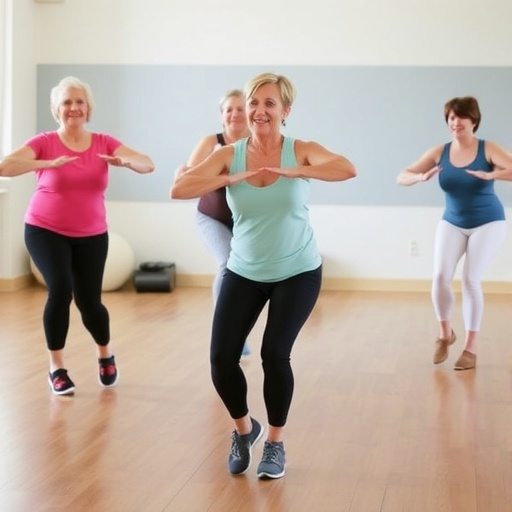
In recent years, the intersection of urban design and public health has become an increasingly significant topic among researchers and policymakers worldwide. A groundbreaking empirical study published in the International Journal for Equity in Health investigates a novel urban health intervention strategy — the implementation of 15-minute fitness circles — and its impact on the physical activity levels and overall well-being of older adults in China. This multi-dimensional study explores how structured, easily accessible exercise environments within communities can foster healthier lifestyles, reduce health disparities, and promote equity in aging populations.
The concept of 15-minute fitness circles refers to micro-scale fitness zones embedded in neighborhoods so that physical exercise opportunities are reachable within a 15-minute walk from one’s home. This strategy finds its roots in sustainable urban planning theories emphasizing pedestrian-friendly environments, compact urban development, and enhanced social cohesion. What makes this intervention particularly appealing to public health experts is its potential to mitigate age-related decline by encouraging regular, low-impact exercise among older adults who face mobility restrictions or social isolation.
The study conducted by Niu, Zhang, Ma, and colleagues is pioneering in its empirical approach to evaluating these micro-environments using a large cohort of older Chinese adults. The research relied on a robust methodological framework combining cross-sectional surveys, objective physical activity measurements via wearable devices, and advanced statistical models to unpack the mediating role of physical activity in the relationship between access to fitness circles and health outcomes. This methodological rigor ensures that the findings offer credible insights into the mechanisms underpinning how urban interventions translate into tangible health benefits.
Crucially, the research team identified physical activity as a mediator — a key process through which the presence of a fitness circle indirectly influences health markers such as cardiovascular fitness, mental health, and functional mobility. By quantifying physical activity levels and correlating these with standard health indicators, the study reveals not simply a correlation but a causal pathway, reinforcing the theoretical model of exercise as a determinant of healthy aging. This nuance marks a significant advance over earlier descriptive studies that lacked such interpretative depth.
One of the distinctive contributions of this study is its focus on equity in health, specifically among older adults in diverse socio-economic and geographic settings across China. The 15-minute fitness circles were shown to reduce disparities in physical activity engagement between urban and rural populations, as well as across income brackets. Such findings underscore the importance of equitable urban planning and the potential of tailored public health initiatives to bridge health gaps within rapidly urbanizing and demographically aging societies.
At the population level, the public health implications are vast. By incorporating small-scale fitness infrastructures within existing urban fabrics, policymakers can leverage these micro-environments as cost-effective tools to alleviate the growing burden of non-communicable diseases and disability among elders. Moreover, the integration of fitness circles aligns well with China’s broader “Healthy China 2030” framework, which emphasizes building supportive environments for health and promoting lifestyle modifications to extend healthy life expectancy.
The social dimensions of the fitness circles also merit attention. The study highlights a symbiotic relationship where environmental accessibility stimulates social interaction and community connectedness, which in turn fosters sustained engagement in physical activity routines. This interplay demonstrates how urban design interventions can create ripple effects impacting mental health, reducing loneliness, and encouraging peer support networks — critical factors in holistic wellness for older adults.
Importantly, the research approach incorporated multidisciplinary perspectives, merging insights from epidemiology, urban planning, kinesiology, and social science. Such a concerted analytical lens enriches understanding of how interventions operate in complex real-world environments where behavioral, environmental, and social determinants intertwine. This integrative method sets a benchmark for future research seeking to evaluate multi-component public health interventions.
From a technical standpoint, the study utilized accelerometry-based measurements to objectively capture physical activity intensity and duration, mitigating biases inherent in self-reported data. This data was then analyzed using mediation analysis techniques, allowing the research team to partition direct effects of the fitness circle on health outcomes from indirect effects operating through physical activity. These sophisticated statistical tools enhance confidence in the causal inferences drawn and illustrate the increasing sophistication of health equity research.
Beyond China, the implications for global aging populations are profound. Countries grappling with the double burden of aging demographics and urban sprawl can consider the fitness circle model as a replicable, adaptable intervention. However, cultural contexts, urban design norms, and infrastructural constraints will necessitate careful localization. Thus, the study serves as both evidence and inspiration for international efforts to foster inclusive, health-promoting urban environments.
As urban planners and public health officials seek scalable solutions to global aging challenges, integrating physical activity infrastructure within community contexts emerges as an actionable priority. The findings affirm that empowering older adults to engage in convenient, socially supported exercise activities can yield measurable improvements in physical and mental health outcomes, contributing to longer, more autonomous lives.
Future research directions highlighted by the authors include longitudinal evaluations of fitness circle usage patterns and health trajectories, as well as qualitative investigations into older adults’ perceptions and barriers to participation. Additionally, integrating environmental sensors and real-time data analytics can advance personalized health interventions tailored to individual needs while monitoring community-level health metrics.
The study’s relevance is further accentuated in the context of post-pandemic recovery, where sedentary behavior and social isolation have intensified health risks for older adults globally. Fitness circles can thus be conceptualized as critical infrastructural investments that promote resilience, encourage safe outdoor socialization, and diversify physical activity options minimizing indoor crowding.
Moreover, technological innovations intersect with this urban health paradigm. Mobile applications can be developed to guide users through fitness circle workouts, track activity, and facilitate virtual community engagement, amplifying the accessibility and appeal of these fitness zones. Such digital integration can harness behavioral economics principles like nudging to encourage sustained participation.
Environmental sustainability also dovetails with the fitness circle initiative, as it encourages active transportation modes such as walking and cycling, reducing reliance on motorized vehicles. This multi-benefit approach aligns well with broader planetary health frameworks that recognize the interdependence of human and environmental well-being.
In conclusion, the empirical evidence presented by Niu et al. heralds a paradigm shift in promoting healthy aging by embedding accessible exercise opportunities directly within community lifeways. Their rigorous analysis elucidates the pathways through which urban design promotes physical activity, equity, and health among Chinese older adults, offering an inspiring blueprint for future public health strategies worldwide. The seamless integration of fitness with environment and community underscores the vital role of interdisciplinarity in addressing the complex challenges of aging populations in the 21st century.
Cite Scienmag News
Courtney Benton. (September 29, 2025). 15-Minute Fitness Circles Boost Older Adults’ Health. Scienmag. https://scienmag.com/15-minute-fitness-circles-boost-older-adults-health/
Courtney Benton. "15-Minute Fitness Circles Boost Older Adults’ Health." Scienmag, 29 September 2025, https://scienmag.com/15-minute-fitness-circles-boost-older-adults-health/. Accessed 3 September 2026.
Courtney Benton. "15-Minute Fitness Circles Boost Older Adults’ Health." Scienmag. September 29, 2025. https://scienmag.com/15-minute-fitness-circles-boost-older-adults-health/


