


Natural selection is an important evolutionary force that enables humans to adapt to new environments and fight disease-causing pathogens. However, the unique footprints of natural selection in our genome can be buried beneath those left by other evolutionary forces. Thus, by leveraging information about multiple evolutionary forces, researchers can identify signatures of natural selection in the human genome, and ultimately determine its role in human adaptation and disease.

Credit: Florida Atlantic University
Natural selection is an important evolutionary force that enables humans to adapt to new environments and fight disease-causing pathogens. However, the unique footprints of natural selection in our genome can be buried beneath those left by other evolutionary forces. Thus, by leveraging information about multiple evolutionary forces, researchers can identify signatures of natural selection in the human genome, and ultimately determine its role in human adaptation and disease.
Low-cost DNA sequencing has provided researchers with an abundance of genomic data, enabling them to search for evidence of natural selection in different species. However, various nonadaptive factors can sometimes obscure these signals, making it essential to develop sophisticated statistical methods that can account for multiple factors influencing genetic variation.
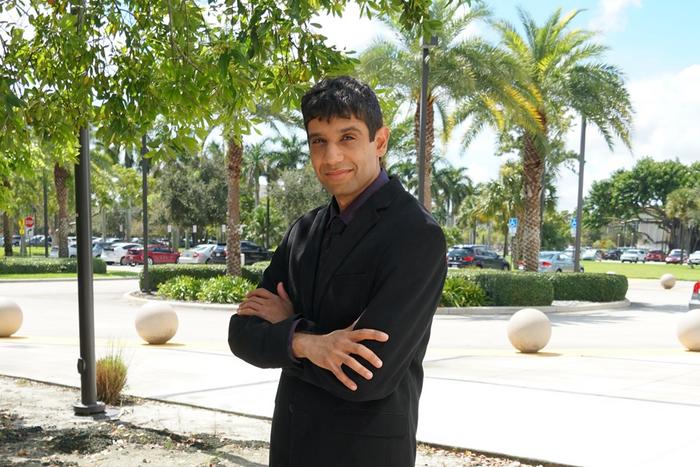
Michael DeGiorgio, Ph.D., in the College of Engineering and Computer Science at Florida Atlantic University, has received a five-year $1,874,360 grant from the National Institute of General Medical Sciences (NIGMS) of the United States National Institutes of Health (NIH) to further his research on designing and applying statistical methods to identify regions of the genome affected by natural selection. The project titled, “Identifying Complex Modes of Adaptation from Population-genomic Data,” is an NIH NIGMS Maximizing Investigators Research Award for Established Investigators.
This research aims to develop powerful tools for identifying diverse modes of adaptation from genetic data and to better understand the evolutionary mechanisms underlying traits like disease resistance and pathogen defense.
“To truly grasp how human genetic variation has evolved and is distributed, it’s essential to study the evolutionary mechanisms at play,” said Stella Batalama, Ph.D., dean, FAU College of Engineering and Computer Science. “The advent of advanced high-throughput sequencing technologies, along with significant boosts in computational capabilities, has equipped geneticists with powerful new tools. This important grant from the National Institutes of Health will enable our outstanding research team led by professor DeGiorgio to delve deeper into understanding the evolutionary forces that contribute to the diversity observed across human populations.”
DeGiorgio and his research team work on detecting natural selection, which affects the frequency of traits within populations and leaves subtle genetic signals in the DNA sequences of individuals within these populations. Over the past four years, his team has made significant advances in this field, developing some of the first, most powerful and state-of-the-art model-based methods for unearthing genomic signals of a diverse array of adaptive events through analysis of DNA within and across species. These methods draw from a broad array of statistical and engineering techniques, by leveraging and integrating the strengths of probabilistic, machine learning, and signal processing frameworks.
“Our methods have led to several novel insights,” said DeGiorgio, associate chair and associate professor, FAU Department of Electrical Engineering and Computer Science, and Department of Biomedical Engineering. “For example, we found evidence of convergent positive selection in Europeans and East Asians that may explain differences in insulin response between these populations. We also discovered positive selection in olfactory genes affecting scent and behavior of rats in New York City for navigating harsh and noisy urban environments, and identified balancing selection in venom genes that may play a role in predator-prey interactions in rattlesnakes.”
Recent advancements in AI, especially deep learning, have greatly improved outcome prediction using complex data like genetic information. These algorithms learn from training data and apply this knowledge to new, unseen data. Their strength lies in handling complex features and adapting to various data types. However, they often face challenges when the new data differs from the training data, a problem known as “domain shift.”
“To enhance prediction accuracy, it’s crucial to adapt to changing data conditions and refine feature selection and modeling,” said DeGiorgio.
In the coming five years, DeGiorgio plans to advance this research by developing improved statistical, machine learning, and signal processing approaches. These methods will aim to detect complex patterns of adaptation by considering how various evolutionary forces simultaneously shape genetic diversity. Specifically, researchers will focus on creating novel frameworks to identify positive and balancing selection while accounting for genomic, temporal and spatial factors.
DeGiorgio and his research team will work on methods to detect regions with complex patterns of selection from ancient genetic variation, use signal processing techniques to analyze genomic data from images for machine learning models, and develop innovative procedures to address uncertainties in genetic and demographic parameters when training these models.
“With these advanced techniques, researchers can now study adaptation in a wider variety of organisms, from well-researched models to those less frequently examined,” said Javad Hashemi, Ph.D., inaugural chair and professor, FAU Department of Biomedical Engineering, and associate dean for research and professor in the College of Engineering and Computer Science. “This broader focus will not only increase inclusivity in this research but also deepen the understanding of how different species adapt to their environments. By applying these novel methods to diverse organisms – such as primates, rodents, snakes, insects and plants – our researchers will tackle significant evolutionary questions and uncover new insights across a range of biological contexts.”
– FAU –
About FAU’s College of Engineering and Computer Science:
The FAU College of Engineering and Computer Science is internationally recognized for cutting-edge research and education in the areas of computer science and artificial intelligence (AI), computer engineering, electrical engineering, biomedical engineering, civil, environmental and geomatics engineering, mechanical engineering, and ocean engineering. Research conducted by the faculty and their teams expose students to technology innovations that push the current state-of-the art of the disciplines. The College research efforts are supported by the National Science Foundation (NSF), the National Institutes of Health (NIH), the Department of Defense (DOD), the Department of Transportation (DOT), the Department of Education (DOEd), the State of Florida, and industry. The FAU College of Engineering and Computer Science offers degrees with a modern twist that bear specializations in areas of national priority such as AI, cybersecurity, internet-of-things, transportation and supply chain management, and data science. New degree programs include Master of Science in AI (first in Florida), Master of Science and Bachelor in Data Science and Analytics, and the new Professional Master of Science and Ph.D. in computer science for working professionals. For more information about the College, please visit eng.fau.edu.
About Florida Atlantic University:
Florida Atlantic University, established in 1961, officially opened its doors in 1964 as the fifth public university in Florida. Today, the University serves more than 30,000 undergraduate and graduate students across six campuses located along the southeast Florida coast. In recent years, the University has doubled its research expenditures and outpaced its peers in student achievement rates. Through the coexistence of access and excellence, FAU embodies an innovative model where traditional achievement gaps vanish. FAU is designated a Hispanic-serving institution, ranked as a top public university by U.S. News & World Report and a High Research Activity institution by the Carnegie Foundation for the Advancement of Teaching. For more information, visit www.fau.edu.
Cite Scienmag News
Denise Maddox. (September 3, 2024). $1.8 million NIH grant to FAU engineering fuels quest to decode human evolution. Scienmag. https://scienmag.com/1-8-million-nih-grant-to-fau-engineering-fuels-quest-to-decode-human-evolution/
Denise Maddox. "$1.8 million NIH grant to FAU engineering fuels quest to decode human evolution." Scienmag, 3 September 2024, https://scienmag.com/1-8-million-nih-grant-to-fau-engineering-fuels-quest-to-decode-human-evolution/. Accessed 3 September 2026.
Denise Maddox. "$1.8 million NIH grant to FAU engineering fuels quest to decode human evolution." Scienmag. September 3, 2024. https://scienmag.com/1-8-million-nih-grant-to-fau-engineering-fuels-quest-to-decode-human-evolution/

