


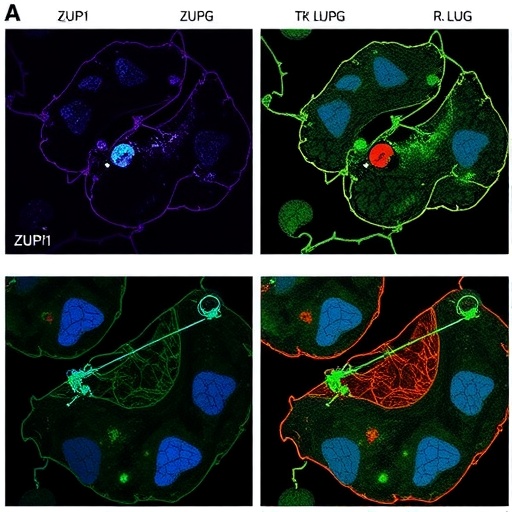
Scientists investigating why some patients with non–small cell lung cancer stop responding to cisplatin, one of the most widely used chemotherapy drugs in the world, have identified a molecular player that appears to sit at the crossroads of two of the disease’s most stubborn defenses: the repair of chemotherapy-induced DNA damage and the recruitment of immunosuppressive regulatory T cells. The protein, known as ZUP1, is a deubiquitinating enzyme, and new research published in Scientific Reports suggests that elevated or overactive ZUP1 contributes directly to cisplatin resistance in lung tumor cells while simultaneously shaping a regulatory T cell–related signaling environment that dampens antitumor immunity. The findings, reported by Xiong, Deng, Ding and colleagues in the 2026 issue of the journal, add a previously underappreciated layer to the biology of treatment failure in lung cancer and point to a target that could, in principle, be attacked with small-molecule inhibitors already being explored in other contexts.
Cisplatin and its close chemical relatives, carboplatin and oxaliplatin, have been cornerstones of cancer chemotherapy for more than four decades. These platinum-based compounds work by forming covalent adducts on DNA, preferentially at neighboring guanine bases, which creates bulky intrastrand and interstrand crosslinks. Replication forks stall when they encounter these lesions, transcription collapses across affected genes, and the accumulated damage triggers a cascade of checkpoint signaling that culminates in apoptosis, the controlled death of the tumor cell. Yet the clinical story of cisplatin is also a story of resistance. Tumors can evade platinum killing in several well-characterized ways: by pumping the drug out through efflux transporters such as the copper transporter CTR1 and ATP7A/AT7B; by detoxifying platinum adducts with intracellular thiols like glutathione; by ramping up nucleotide excision repair, the pathway responsible for excising platinated DNA segments; by increasing tolerance of DNA crosslinks through translesion synthesis polymerases; and by muting the apoptotic response downstream of the damage. What the new study highlights is that ubiquitin signaling—an unexpected participant in this familiar landscape—helps orchestrate several of these defenses at once.
ZUP1, formally known as ZUFSP, or zinc finger with UFM1-specific peptidase domain protein, is a cysteine protease encoded by a gene on chromosome 6. Unlike most deubiquitinating enzymes, which cleave ubiquitin chains linked through lysine 48 or lysine 63 residues, ZUP1 was identified through its unusual specificity for linear methionine-1–linked ubiquitin chains, a chain type that acts as a master regulatory scaffold in innate immune and inflammatory signaling complexes. The enzyme contains a zinc-finger ubiquitin-binding domain and a catalytic triad characteristic of the papain-like protease superfamily. Since its initial characterization, ZUP1 has been implicated in genome stability: cells lacking ZUP1 show spontaneous DNA damage, hypersensitivity to replication stress, and defects in the recruitment of repair factors to stalled forks. This makes intuitive sense, because ubiquitin chains laid down at sites of DNA damage serve as landing pads for proteins such as 53BP1, RAD18 and the translesion synthesis machinery, and deubiquitinating enzymes are needed both to fine-tune these signals and to reset them once repair is complete.
The new research connects this enzymatic background to a concrete clinical problem. Working with non–small cell lung cancer, the category that accounts for roughly 85 percent of all lung cancers and includes lung adenocarcinoma and squamous cell carcinoma, the team found that ZUP1 expression or activity correlated with reduced sensitivity to cisplatin. The mechanistic picture that emerges is that ZUP1 strips ubiquitin marks from chromatin around DNA lesions, and in doing so changes how the repair machinery is deployed. By modulating the ubiquitin landscape at damaged DNA, ZUP1 may allow tumor cells to process platinum adducts more efficiently, through better-coordinated nucleotide excision repair or fork-protective pathways, so that the lethal signaling that normally follows cisplatin treatment never reaches its threshold. In practical terms, a tumor with high ZUP1 activity experiences the same drug exposure as a sensitive tumor but translates that damage into far less cell death. This is a subtle form of resistance, harder to detect than drug efflux pumps or detoxifying enzymes, precisely because the cell’s repair apparatus is not overexpressed in a gross way but is merely regulated differently.
Perhaps the more provocative part of the study concerns the tumor immune microenvironment. Regulatory T cells, or Tregs, are a specialized subset of CD4-positive lymphocytes defined by the transcription factor FoxP3 and the high expression of markers such as CD25 and CTLA-4. Their physiological job is to prevent autoimmunity by suppressing effector immune responses, but in cancer they are frequently co-opted, accumulating within tumors where they suppress cytotoxic T cells, secrete immunosuppressive cytokines such as interleukin-10 and transforming growth factor beta, and correlate with poor prognosis in many solid tumors, lung cancer included. Platinum chemotherapy, beyond its direct cytotoxic effect, is known to influence the immune system in complex ways; in some settings it increases tumor antigen presentation and promotes immunogenic cell death, while resistance to platinum is often accompanied by a more immunosuppressive, Treg-enriched microenvironment. The new study reports that ZUP1 contributes to Treg-related signaling in non–small cell lung cancer, suggesting that the same deubiquitinase that helps tumor cells survive platinum damage also helps shape the immune milieu in a way that favors immune escape.
The link between ubiquitin biology and Treg function is not arbitrary. T cell receptor signaling, interleukin-2 signaling and NF-kappa B activation—all central to Treg development and stability—are heavily regulated by ubiquitination and deubiquitination. Linear ubiquitin chains in particular are assembled by the LUBAC complex and serve as essential signals in NF-kappa B pathway activation, and enzymes that disassemble M1 chains, ZUP1 among them, can therefore tune the intensity and duration of immune signaling. If ZUP1 activity in tumor cells or in the surrounding stromal and immune compartment biases signaling toward a regulatory, suppressive state, then high-ZUP1 tumors would present a double obstacle to therapy: they resist the cell-killing effect of cisplatin and simultaneously maintain an immune shield that blunts both natural antitumor responses and the benefit of checkpoint immunotherapy, which is now routinely combined with platinum chemotherapy as first-line treatment for metastatic non–small cell lung cancer.
The clinical implications are considerable. Current standard of care for many patients with advanced non–small cell lung cancer is a platinum doublet combined with a PD-1 or PD-L1 checkpoint inhibitor. When this regimen fails, options narrow sharply, and physicians have few tools to predict which patients will lose响应 early. A biomarker such as ZUP1 expression, measurable by immunohistochemistry on routine biopsy material or by transcriptomic profiling of tumor samples, could in principle identify patients unlikely to benefit from platinum-based regimens before treatment begins, allowing earlier switches to alternative strategies. Beyond prediction, the therapeutic opportunity lies in inhibition. Deubiquitinating enzymes have historically been considered difficult drug targets, but the last decade has seen steady progress: inhibitors of USP7, USP14 and several other DUBs have entered preclinical and early clinical development, and covalent inhibitors targeting the active-site cysteine of cysteine protease DUBs have proven chemically tractable. A selective ZUP1 inhibitor, by disabling a fork-protection and repair-tolerance mechanism, could re-sensitize tumors to cisplatin, and by disrupting Treg-related signaling it might simultaneously relieve immunosuppression—an attractive combination for a disease treated with chemo-immunotherapy.
The authors’ findings also fit into a broader re-evaluation of the DNA damage response as an immune-modulatory circuit. Accumulating evidence over the past several years has shown that DNA damage and repair events inside the nucleus send signals to the innate immune system: cytosolic DNA from damaged nuclei activates the cGAS-STING pathway, replication stress can induce inflammatory signaling, and repair proteins physically and functionally interact with immune signaling complexes. Ubiquitin chains are a common language in both worlds, decorating damaged chromatin and immune receptors alike. ZUP1, by virtue of its linear-chain specificity, sits at a node where these languages overlap. The new study’s demonstration that a single DUB influences both cisplatin resistance and Treg-related signaling is a clear example of how one enzyme can couple two processes that clinicians have long treated as separate: drug resistance measured by tumor shrinkage on a scan, and immune evasion measured by infiltrating lymphocyte populations.
As with any preclinical or early translational finding, important caveats remain. Correlation between ZUP1 levels and resistance does not by itself prove causation in every patient tumor, and the precise ubiquitin substrates through which ZUP1 acts in lung cancer cells will need to be mapped in detail. Whether ZUP1 activity can be safely inhibited in humans is unknown, and because ubiquitin signaling is used ubiquitously across tissues, systemic ZUP1 blockade could produce side effects in immune and proliferating cells. Clinical validation will require large patient cohorts in which ZUP1 status is correlated with platinum response, progression-free survival and immune infiltration. Nonetheless, the study adds to a growing list of deubiquitinating enzymes—including USP1, USP11, OTUB1 and BRCC36—that regulate DNA repair and thereby modulate platinum sensitivity, while its connection to regulatory T cell signaling gives it a dimension that most repair-associated DUBs do not share.
For the roughly two million people diagnosed with lung cancer worldwide each year, the vast majority with non–small cell histology, treatment failure after an initially promising platinum response remains one of oncology’s most consequential problems. Research that dissects the molecular logic of that failure, ubiquitin link by ubiquitin link, is essential if clinicians are to stay ahead of resistant disease. The identification of ZUP1 as a contributor to both cisplatin resistance and Treg-related signaling in non–small cell lung cancer offers a hypothesis-rich target for the next generation of combination therapies, and a reminder that the chemistry of a chemotherapy drug is only half of the story; the other half is the signaling network the tumor deploys to survive it.
Cite Scienmag News
Nathaniel Bowman. (September 10, 2026). ZUP1 drives cisplatin resistance and Treg signaling in lung cancer. Scienmag. https://scienmag.com/zup1-drives-cisplatin-resistance-and-treg-signaling-in-lung-cancer/
Nathaniel Bowman. "ZUP1 drives cisplatin resistance and Treg signaling in lung cancer." Scienmag, 10 September 2026, https://scienmag.com/zup1-drives-cisplatin-resistance-and-treg-signaling-in-lung-cancer/. Accessed 10 September 2026.
Nathaniel Bowman. "ZUP1 drives cisplatin resistance and Treg signaling in lung cancer." Scienmag. September 10, 2026. https://scienmag.com/zup1-drives-cisplatin-resistance-and-treg-signaling-in-lung-cancer/


