


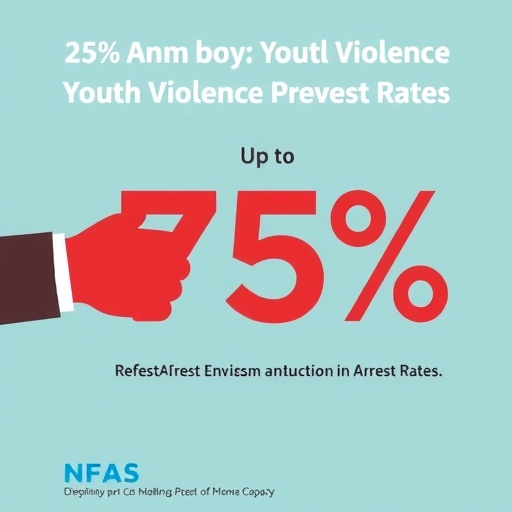
A groundbreaking initiative led by the University of Colorado Boulder has made remarkable strides in confronting youth violence within some of Denver’s most afflicted neighborhoods. New research published in the American Journal of Criminal Justice illustrates that a community-driven prevention effort has been tied to an astonishing 75% reduction in arrests involving violent crimes such as murder, assault, and robbery among youth over recent years. This achievement signals a beacon of hope for urban areas grappling with entrenched violence, underscoring how strategic, evidence-based community mobilization can produce tangible, transformative outcomes.
The initiative, known as the Youth Violence Prevention Center—Denver (YVPC-Denver), adopts a comprehensive framework called Communities That Care (CTC). Developed and overseen by the Centers for Disease Control and Prevention (CDC) in the wake of the 1999 Columbine High School tragedy, CTC represents one of the few enduring federally supported efforts aimed at mitigating the complex public health crisis posed by youth violence. It embodies a paradigm shift away from reactive measures, emphasizing instead proactive, data-driven interventions coupled with robust community engagement.
At the core of YVPC-Denver’s strategy is the construction of a “violence prevention infrastructure,” a conceptual and practical scaffold designed to sustain long-term reductions in youth violence. According to CSPV director Beverly Kingston, the methodology mirrors the investment model typically employed for physical infrastructure projects like roads and bridges. This infrastructure is built around the life-course perspectives of youth development, recognizing that violence prevention requires systemic, continuous support mechanisms integrated into the environments where children live, learn, and socialize.
Beginning in 2011, the YVPC-Denver team partnered closely with key organizations across the Montbello and Park Hill neighborhoods, regions historically marred by elevated rates of youth violence. Their approach was multifaceted, featuring collaboration with elementary schools, after-school programs, faith-based groups, and local sports organizations. Through these alliances, the program delivered anger management training and conflict resolution skills to over 3,000 young people aged between six and eighteen years, empowering the next generation with tools to navigate interpersonal challenges peacefully and constructively.
Beyond educational outreach, the initiative extended its impact into clinical settings by working alongside pediatricians to implement systematic screenings aimed at identifying children at heightened risk of violent behavior. This health-focused intervention facilitated early diagnosis and connected at-risk youth with necessary services, thus embodying a holistic approach that merges social, behavioral, and medical perspectives. Additionally, small grants were provided to community groups that intentionally connected positive adult mentors with adolescents in need, reinforcing prosocial relationships that contribute to resilience and positive identity formation.
The most visible and culturally resonant aspect of the effort may be the Power of One Campaign, a youth-led movement that leverages social media platforms, podcasts, neighborhood block parties, and other grassroots tactics to reshape social norms around violence. This campaign centers on “Game Changers,” a diverse cadre of young activists who bravely confront violence through storytelling, advocacy, and peer support. One such group produced a poignant documentary titled “Breaking the Cycle: Stories of Strength and Survival of Gun Violence,” which chronicles personal narratives of trauma and healing, amplifying the voices often unheard in traditional public discourse.
Moreover, the Game Changers recently launched a peer-support app designed to address urgent challenges facing vulnerable youth, including food insecurity, mental health struggles, and gang involvement. This innovative digital platform enables young people to seek assistance in a peer-to-peer fashion without the immediate resort to law enforcement, reflecting a nuanced understanding of the multifactorial nature of violence and its prevention. As Annecya Lawson, a member of the Game Changers, poignantly pointed out, many youths who engage in violent behavior are grappling with hardships at home and a lack of accessible help, making peer-led interventions particularly impactful.
The scientific rigor underpinning these findings was validated through an in-depth analysis of arrest records maintained by the Denver Police Department. Researchers examined data spanning ten years, covering five years before (2012–2016) and five years after (2017–2021) the implementation of Communities That Care in the Park Hill area. Statistical analyses revealed a striking 75% decrease in youth arrests post-implementation—dropping from 1,086 arrests per 100,000 individuals in 2016 to merely 276 per 100,000 in 2021. This dramatic decline starkly contrasted with broader trends across Denver’s 74 neighborhoods, where youth arrest rates fell by a more modest 18% on average, emphasizing the localized effectiveness of the intervention.
Complementing these outcomes, Montbello—a neighborhood that adopted the program earlier than Park Hill—consistently exhibited stable and comparatively low arrest rates throughout the study period. This stability persisted despite the overall spike in youth arrests observed during the COVID-19 pandemic years, indicating that the prevention infrastructure created by YVPC-Denver offers durable protection even amid societal disruptions. Such findings strongly suggest that investment in community-informed, science-backed prevention systems produces sustainable reductions in youth crime.
Unfortunately, despite overwhelming evidence of success, the program faces existential threats due to potential funding cuts. The current five-year grant cycle, amounting to $1.2 million, is at risk of being revoked. Beverly Kingston expressed profound concern that the loss of these resources would cripple the operations of the Game Changers and dismantle YVPC-Denver’s capacity to continue its groundbreaking work. The implications extend far beyond Denver’s city limits; this program serves as a scalable model for other urban communities desperate for effective violence prevention strategies.
This initiative exemplifies how integrating epidemiological surveillance, behavioral science, and robust community engagement can disrupt cycles of violence. It demonstrates the power of collaboration across sectors—educational, medical, social service, and youth-led activism—unifying to create environments where children can grow up free from the pervasive threat of violence. The CTC system utilized by YVPC-Denver not only transforms individual lives but also fosters systemic resilience, underscoring the importance of sustained investment in community health infrastructures.
In a time when youth violence is recognized as a serious public health issue—being the third leading cause of death for people aged 10 to 24 and the leading cause among Black youth—the implications of this research are profound. It imparts an urgent call for policymakers, funders, and stakeholders nationwide to prioritize evidence-based, community-centered approaches to violence prevention. The success of YVPC-Denver stands as a testament to what is achievable when scientific rigor meets community passion and dedication.
Ultimately, this research emphasizes that violence prevention is not merely about reducing crime statistics but about fostering healthy, safe, and hopeful environments compelling enough to steer young lives away from violence. By demonstrating a scalable blueprint that intertwines research, practice, and youth empowerment, the program sets a new standard in how urban violence can be addressed. The survival and expansion of such initiatives hinge on informed, sustained support that values prevention as fundamentally as infrastructure for physical cityscapes.
News Publication Date: 12-Jul-2025
Web References:
- https://link.springer.com/article/10.1007/s12103-025-09811-0
- https://www.cdc.gov/youth-violence/php/yvpcs/index.html
- https://www.colorado.edu/today/2024/04/24/teen-game-changers-confronting-youth-violence-crisis-head
- https://www.colorado.edu/today/2024/09/18/denver-youth-help-struggling-peers-without-involving-law-enforcement
References: DOI: 10.1007/s12103-025-09811-0
Cite Scienmag News
Ophelia Keating. (August 13, 2025). Youth Violence Prevention Program Demonstrates Up to 75% Reduction in Arrest Rates. Scienmag. https://scienmag.com/youth-violence-prevention-program-demonstrates-up-to-75-reduction-in-arrest-rates/
Ophelia Keating. "Youth Violence Prevention Program Demonstrates Up to 75% Reduction in Arrest Rates." Scienmag, 13 August 2025, https://scienmag.com/youth-violence-prevention-program-demonstrates-up-to-75-reduction-in-arrest-rates/. Accessed 3 September 2026.
Ophelia Keating. "Youth Violence Prevention Program Demonstrates Up to 75% Reduction in Arrest Rates." Scienmag. August 13, 2025. https://scienmag.com/youth-violence-prevention-program-demonstrates-up-to-75-reduction-in-arrest-rates/


