


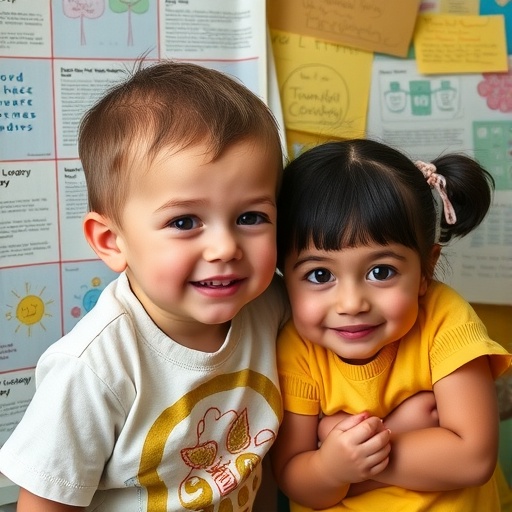
In the realm of early childhood education, understanding how children develop intergroup attitudes is critical for fostering inclusivity and social harmony. A recent study conducted by Xia, Niu, and Yu delves into the intricacies of these attitudes among children aged 3 to 5 years. Their findings reveal compelling evidence of a ubiquitous effect influencing intergroup perceptions at an impressively young age. This research sheds light on the importance of early interactions and their implications for long-term social development.
The research was driven by a pressing question: at what age do children begin to form attitudes about different social groups? The investigation involved observing children in naturalistic settings, allowing for a more nuanced understanding of how they perceive others based on group characteristics such as ethnicity, gender, and socioeconomic status. The researchers utilized a combination of observational techniques and structured play scenarios to capture genuine interactions and reactions among young peers.
One of the study’s most significant revelations is the early emergence of group-based preferences. By the age of three, many children display a marked tendency to favor peers from their own group. This finding not only highlights the innate social dynamics present in early childhood but also raises questions about the factors influencing these preferences. Are they a result of inherent biases, or are they learned behaviors based on the social environment children are immersed in?
The implications of this research extend beyond mere observation; they challenge educators and parents to reconsider how social dynamics are navigated within early childhood settings. For instance, creating opportunities for diverse interactions can counteract the instinctual group preferences some children exhibit. The potential for fostering empathy and understanding at this formative stage of development underscores the importance of intentional programming within early education frameworks.
Moreover, the study points to the role of implicit biases in shaping children’s viewpoints. Children are not inherently divisive; rather, their attitudes reflect broader societal narratives and stereotypes that permeate their environments. This insight urges caregivers and educators to engage in reflective practices, examining the messages children receive through media, peer interactions, and even adult conversations. By addressing these biases proactively, adults can help shape a more inclusive mindset among the youngest members of society.
The significance of peer interactions cannot be overstated. The researchers found that children who engaged with peers from diverse backgrounds exhibited a more nuanced understanding of intergroup relations. These interactions seemed to mitigate blinkered perspectives, fostering a sense of commonality rather than division. The study suggests that environments promoting diversity and collaboration can significantly influence how children understand and relate to others, providing critical insights for policy-makers and educational leaders.
This investigation also examines the role of adult influence in shaping children’s attitudes. Parents and educators play a pivotal role in guiding the development of social beliefs in children. Encouraging open discussions about diversity, inclusion, and the value of different perspectives is a crucial step in dismantling prejudice before it solidifies into more rigid beliefs. The authors advocate for the integration of social-emotional learning programs that can help young children navigate their interpersonal relationships more effectively.
Another dimension of this research is its examination of the broader societal implications of early childhood attitudes. With children developing their understanding of intergroup relations in formative years, there can be lasting effects on social cohesion and community dynamics as they grow. The early establishment of inclusive attitudes could contribute to reduced bias and discrimination in later stages of life, promoting healthier societal interactions.
As the findings of Xia, Niu, and Yu circulate through academic and educational circles, they highlight the urgency of reviewing current curricula and teaching practices. Educators are encouraged to seek professional development opportunities focused on incorporating diversity and inclusivity in their teaching strategies. Through dedicated training, teachers can equip themselves with the tools necessary to foster a culture of equity within their classrooms.
Furthermore, the research ignites a conversation about the role of media in shaping young children’s perceptions. Given that children’s media often reinforces stereotypes and social divides, there is a clear call for more representative and inclusive children’s programming. Creators and producers of children’s content are urged to prioritize narratives that promote empathy and understanding, ensuring that children are exposed to a wide array of perspectives from an early age.
The study highlights a crucial intersection between early childhood education and societal well-being. By recognizing that intergroup attitudes begin to form at such a young age, we can better understand how to create supportive environments that cultivate acceptance and kindness. Investing in early education that actively addresses these issues could ultimately lead to more harmonious communities, reducing social tensions and fostering collective well-being.
In conclusion, the research conducted by Xia, Niu, and Yu provides invaluable insights into the formation of intergroup attitudes in early childhood. It urges society to take proactive steps in shaping young children’s perceptions and attitudes toward diversity. Addressing biases and promoting inclusive environments is not merely an educational endeavor but a vital step toward nurturing a more equitable society.
Cite Scienmag News
Courtney Benton. (November 7, 2025). Young Children’s Biases: Insights from New Research. Scienmag. https://scienmag.com/young-childrens-biases-insights-from-new-research/
Courtney Benton. "Young Children’s Biases: Insights from New Research." Scienmag, 7 November 2025, https://scienmag.com/young-childrens-biases-insights-from-new-research/. Accessed 4 September 2026.
Courtney Benton. "Young Children’s Biases: Insights from New Research." Scienmag. November 7, 2025. https://scienmag.com/young-childrens-biases-insights-from-new-research/


