


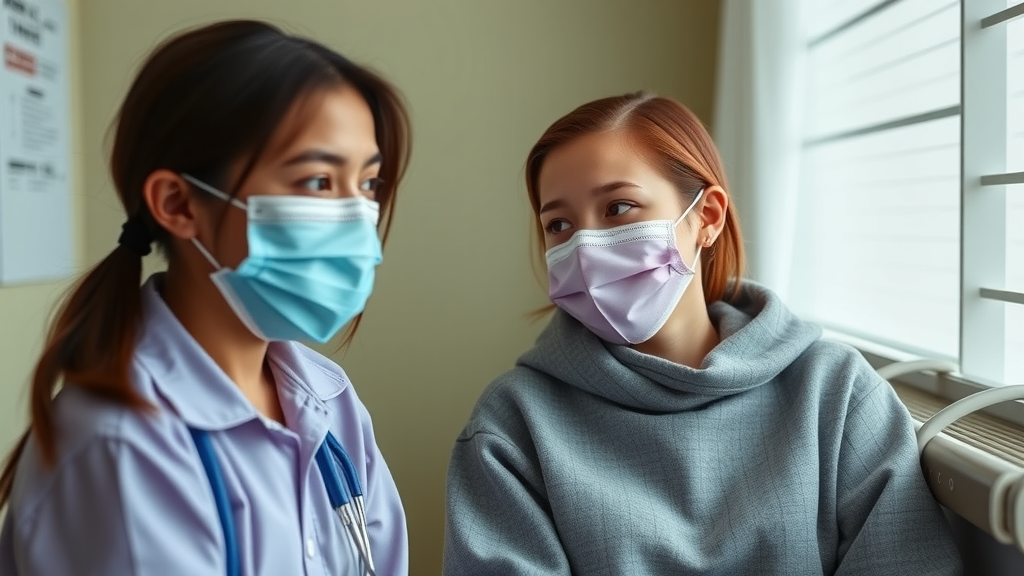
For adolescents and young adults who have fought cancer and won, the end of treatment is often celebrated as a finish line. In reality, it is the start of a different kind of challenge: a lifetime of monitoring for late effects, the lingering physical and psychological consequences of aggressive therapies delivered at a formative stage of life. A new study published in the Journal of Cancer Survivorship reveals just how rarely young survivors connect with the specialized clinics designed to guide them through this transition. Among 836 adolescent and young adult survivors—defined as people diagnosed between the ages of 15 and 39—who were eligible for the parent trial from which the study drew its participants, only 38 individuals, or a striking 4.5 percent, had ever been seen in a dedicated survivorship clinic. The finding exposes a profound gap between the care that national guidelines recommend and the care that young patients actually receive.
The research, conducted by Jean C. Yi, Sheri Ballard, Emily Jo Artim, Casey Walsh, and K. Scott Baker at Fred Hutchinson Cancer Center, took a mixed methods approach, combining hard utilization data from the electronic health record with in-depth qualitative interviews. All participants were one to five years past the end of cancer treatment, a window when survivorship care is considered especially critical. The team queried the electronic health record to determine which survivors had been seen in the Survivorship Clinic, then conducted qualitative interviews with a randomly selected subset of participants drawn from a larger parent study testing a digital health intervention. That parent trial, known as INSPIRE—the INteractive survivorship program to improve health care REsources—is designed to test a digital intervention with stepped care telehealth to improve outcomes for adolescent and young adult survivors.
The demographic profile of the small group that did use the clinic was telling. Among the 38 clinic users, 86.8 percent were female, 71.1 percent were White, 86.8 percent were not Hispanic, and 65.7 percent had been treated for breast cancer. This skew toward female, White, and breast cancer populations raises questions about equitable reach, though the study’s primary focus was on understanding why utilization was so low across the board. The picture that emerged from the electronic health record was unambiguous: survivorship services, even when available at the very institution where these patients had been treated, were being used by fewer than one survivor in twenty.
To understand the reasons behind those numbers, the researchers screened a subset of 147 participants enrolled in the parent trial for approach to qualitative interviews, ultimately completing forty interviews. The interviewees had a mean age of 38.4 years, with half having had breast cancer; 78 percent were female, 83 percent were White, and 92 percent had attained a college degree or higher education. Despite being well educated and demographically similar to the clinic-using group, only one of the forty interview participants had ever visited the Survivorship Clinic. That single data point may be the most arresting in the study: even among survivors engaged enough to enroll in a survivorship research trial, virtually none had accessed the clinic down the hall.
Through content analysis of the interview transcripts, the researchers identified a set of barriers that fell into distinct but interconnected categories. The most significant was simple lack of awareness: many survivors simply did not know the survivorship clinic existed or what services it offered. This was compounded by avoidance—a psychological reluctance to confront cancer again after treatment had ended—and by lack of time, as young adults juggle careers, education, caregiving responsibilities, and the reestablishment of normal life. For a population at the busiest and most transitional stage of adulthood, an additional medical appointment that they had never heard of and did not fully understand carried little apparent urgency.
The interviews also illuminated what would have made a difference. Participants identified referrals from their oncology care teams, concrete information about the services the clinic provides, and the availability of telehealth as factors that would have facilitated them seeking survivorship care. In other words, the barriers were not primarily about motivation or health literacy alone; they were structural and communicative. Survivors needed a trusted clinician to tell them, at the end of treatment, that a survivorship clinic exists and why it matters. They needed to know what would happen during a visit—what late effects would be screened, what symptoms could be addressed, what psychosocial support was available. And they needed flexible access options compatible with the realities of young adult life, including remote participation.
The study arrives at a moment when survivorship care is being formalized at the national level. The National Standards for Cancer Survivorship Care propose health system policies to develop survivorship programs, and the National Comprehensive Cancer Network’s survivorship guidelines, updated in 2025, call for structured follow-up care including survivorship care plans. Yet this research shows that the existence of a clinic, even within a comprehensive cancer center, does not guarantee uptake. Prior work has documented low attendance among childhood cancer survivors and among Hodgkin lymphoma survivors, and studies of rural childhood cancer survivors have similarly pointed to awareness and access as limiting factors. The new study extends that evidence into the adolescent and young adult population, which is demographically and clinically distinct from both pediatric and older adult populations.
That distinctiveness is part of why the gap matters so much. Adolescents and young adults diagnosed with cancer face decades of life after cure, during which late effects—cardiac dysfunction, secondary malignancies, infertility, endocrine problems, cognitive changes, and psychosocial distress—may emerge and progress. Research has consistently shown that this age group experiences unique biology and unique psychosocial burdens, and that their survival gains have historically lagged behind those of children and older adults. Survivorship clinics are designed to catch these late effects early, coordinate surveillance, and connect survivors with interventions. When fewer than five percent of eligible survivors walk through the clinic door, the potential of that model goes largely unrealized, and preventable morbidity may accumulate silently for years.
The implications drawn by the authors are pointed. Lack of awareness of the survivorship clinic was the most significant barrier, and a referral from their oncology care team would have facilitated them scheduling a visit. This suggests a relatively low-cost, high-impact intervention: embedding an explicit survivorship referral into the standard end-of-treatment workflow, paired with clear patient-facing information about what the clinic offers and telehealth options to reduce logistical friction. The study’s connection to the INSPIRE digital health trial also hints at a broader strategy—meeting young survivors where they already are, on their phones, rather than waiting for them to find a clinic they have never heard of. As health systems implement national survivorship standards, the lesson of this study is that building clinics is only half the task; the other half is making sure the patients who need them know they exist.
For survivors themselves, the message is equally practical: late effects are real, monitoring is worthwhile, and help is available beyond the end of treatment. For oncology teams, the message is that the handoff from active treatment to survivorship care cannot be left to chance. A single sentence from a trusted oncologist—a referral, an explanation, an invitation—may be the difference between a young survivor who falls through the cracks and one who receives the long-term surveillance that modern cancer care promises. With 4.5 percent utilization as the baseline, there is enormous room for improvement, and this study offers a clear, evidence-based map of where to begin.
Subject of Research: Utilization of survivorship clinics by adolescent and young adult cancer survivors
Article Title: A mixed methods study of adolescent and young adult cancer survivors and their utilization of a survivorship clinic: Barriers and facilitators
Article References: Yi, J. C., Ballard, S., Artim, E. J., Walsh, C., & Baker, K. S. (2026). A mixed methods study of adolescent and young adult cancer survivors and their utilization of a survivorship clinic: Barriers and facilitators. Journal of Cancer Survivorship. https://doi.org/10.1007/s11764-026-02125-y
Image Credits: AI Generated
DOI: 10.1007/s11764-026-02125-y
Keywords: adolescent and young adult oncology, cancer survivorship, survivorship clinic, late effects, mixed methods, qualitative interviews, telehealth, health care utilization, barriers and facilitators, cancer survivorship care standards, Fred Hutchinson Cancer Center, digital health intervention
Cite Scienmag News
Nathaniel Bowman. (September 21, 2026). Young Cancer Survivors Are Skipping the Clinics Meant to Help Them. Scienmag. https://scienmag.com/young-cancer-survivors-are-skipping-the-clinics-meant-to-help-them/
Nathaniel Bowman. "Young Cancer Survivors Are Skipping the Clinics Meant to Help Them." Scienmag, 21 September 2026, https://scienmag.com/young-cancer-survivors-are-skipping-the-clinics-meant-to-help-them/. Accessed 4 October 2026.
Nathaniel Bowman. "Young Cancer Survivors Are Skipping the Clinics Meant to Help Them." Scienmag. September 21, 2026. https://scienmag.com/young-cancer-survivors-are-skipping-the-clinics-meant-to-help-them/


